
Custom take-home trays offer a gradual way to brighten natural teeth. Teeth whitening in Dover, NJ starts with understanding what is causing discoloration and what result you hope to achieve. The trays are made from an impression of your teeth to hold whitening gel against them. Whitening changes natural tooth enamel, but it does not change the color of crowns or fillings.
It is understandable to want a clear picture before beginning, especially if you are concerned about sensitivity or unsure how trays will fit into your routine. A dental consultation can assess your teeth, discuss the process, and explain how to use your trays as directed.
Learn what whitening can address, how custom take-home trays are made, and what to expect from consultation and treatment. You will also see why whitening schedules vary and how existing dental work may affect the final appearance, so you can consider your next step with confidence.
Key Takeaways
- Learn how causes such as medication stains, fluorosis, and normal enamel wear can affect the right approach to whitening.
- See how custom trays are shaped to your teeth and how wear schedules can vary with the whitening agent.
- Understand what a consultation and treatment plan can cover, including sensitivity and the appearance of existing crowns or fillings.
- Explore what to consider for maintaining brightness and when professional whitening guidance may help.
What are the details of teeth whitening?
Teeth whitening in Dover, NJ starts with identifying the discoloration and determining which teeth are natural. The cause matters because whitening changes natural enamel, not the color of fillings or crowns.
Tooth Discoloration Causes and Types
Tooth discoloration can have several causes, including fluorosis, normal wear of the outer enamel layer, and medication stains. Yellow or brown stains are another common reason patients consider whitening. These examples can look similar, but the underlying cause affects what whitening can address.
Notice whether discoloration affects natural teeth or appears beside a filling or crown. That distinction helps set realistic expectations: whitening changes natural tooth color, while existing restorations keep their current shade. Porcelain veneers are another option to discuss when the concern extends beyond natural enamel.
Whitening Tooth Enamel
Whitening lightens natural tooth enamel, but does not change the shade of fillings, crowns, or other restorations. Those areas may look different after the surrounding teeth brighten. For example, a front filling that matches a darker tooth may stand out more after whitening.
Before treatment, consider which teeth show when you smile and whether they have restorations. A dental assessment can clarify which areas are natural enamel and how existing work may affect your overall appearance. This makes your goal more specific than simply choosing a brighter shade.
Tooth Sensitivity Concerns
Some patients experience tooth sensitivity during whitening. Mild sensitivity after treatment usually fades within a day or two. Notice when discomfort starts and whether it follows each use, as that information can help the dental team advise you.
If sensitivity concerns you, discuss it before starting and follow the product directions. Do not extend wear time or add applications on your own. Use whitening agents as directed, rather than more often in hopes of faster results.
Professional and Over-the-Counter Whitening
Over-the-counter whitening products typically change tooth color by 2 to 3 shades after weeks of use. Professional whitening includes a dental assessment and guidance suited to the teeth, existing restorations, and whitening approach. The main difference is the opportunity to consider the cause of discoloration and plan use with those factors in mind.
When choosing a Dover dentist, consider whether reviews describe clear communication and follow-up, whether published credentials relate to dental care, and whether appointment timing works for you. Reviews and credentials offer different information, and neither alone establishes the result you will receive. A consultation can help you understand which whitening approach fits your teeth.
Custom take-home whitening trays
Custom take-home trays hold whitening gel against your teeth during bleaching. The process starts with an impression used to shape a mouth guard or splint for your teeth. Its close fit helps position the whitening agent against the intended surfaces. Unlike a standard product, a custom bleaching splint is made for your mouth and may suit patients who prefer to whiten at home.
After the impression, the dental practice uses it to make the trays. Custom bleach splints may be ready for pickup within a day or two. At that visit, you can learn how much whitening agent to use and how to place it in the tray. The appliance should sit as intended, without forcing it onto your teeth. Following the instructions helps you use the whitening agent correctly.
Wear time depends on the bleaching agent. Some agents can be worn for a few hours per day, while others have different schedules. Your instructions should explain when to wear the trays and how long each session lasts. Do not add extra gel or extend wear time to hurry the process. If you notice sensitivity, pause and follow the guidance you received for your treatment.
Custom trays can fit into a broader cosmetic dentistry plan, especially when you have crowns or other restorations. Whitening changes natural tooth color, but restorations don’t whiten with it. That may affect how a crown looks beside newly brightened teeth. A dental discussion can clarify how your existing work affects your goal before you begin. For a personal overview of professional teeth whitening options, consider how take-home trays fit your needs and routine.
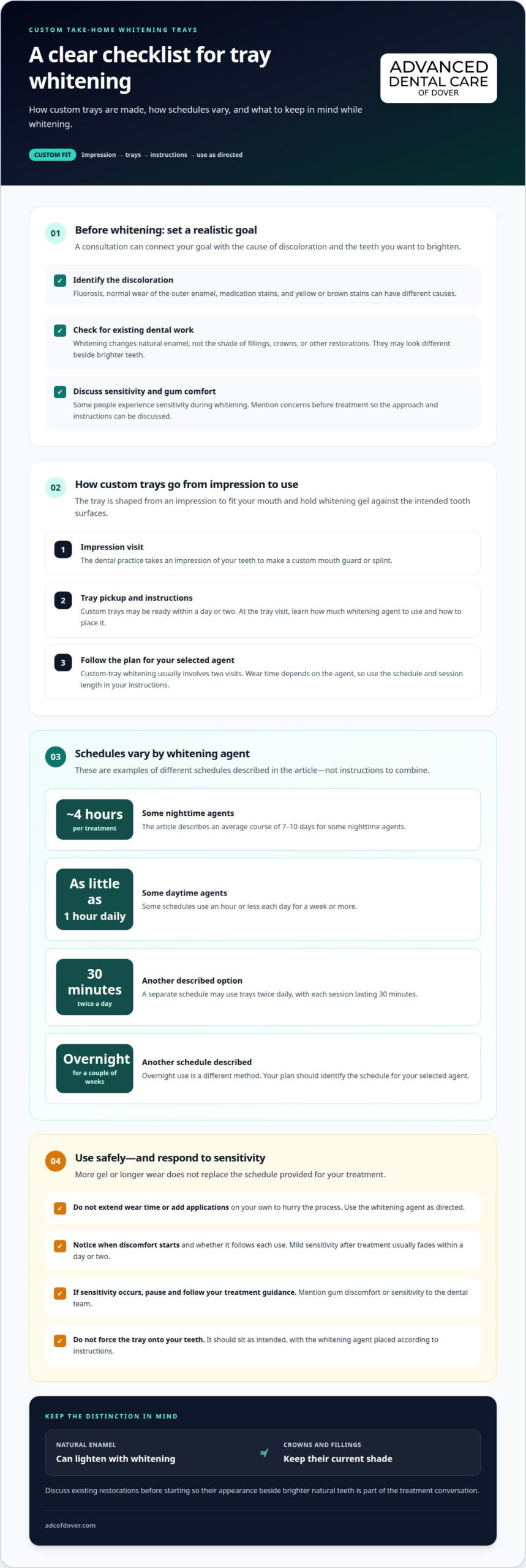
Whitening consultation and treatment process
A consultation connects your whitening goal with the cause of discoloration, existing dental work, and a practical treatment schedule. The method and wear time depend on the whitening agent selected.
Sensitivity and Gum Safety
Some whitening agents can cause sensitivity, which usually fades within a day or two after treatment. If your teeth are sensitive, ask about the wear schedule and follow the instructions for the selected agent. One method may use shorter sessions, while another follows a different schedule.
Over-the-counter bleaching products can harm gums and teeth. A consultation can address gum comfort, sensitivity, and safe use of whitening products. If your gums feel uncomfortable or your teeth are sensitive, mention this before treatment begins. The discussion can help determine whether to proceed and which approach fits.
Treatment Duration and Schedule
Custom-tray whitening usually involves two visits: one for the impression and another for the trays and instructions. Some nighttime agents are used for approximately 4 hours per treatment, averaging 7-10 days. Some daytime agents can be used for as little as an hour daily for a week or more.
Other schedules include wearing trays twice a day for 30 minutes per session, or overnight use for a couple of weeks. These are different methods, not instructions to combine. Your treatment plan should identify the agent’s schedule and how long to continue each session.
Preparation and Result Maintenance
A helpful first step is discussing your aesthetic goal, discoloration, sensitivity, and any crowns or fillings at the appointment. These details shape a personalized smile plan because whitening changes natural tooth color, not restorations. Patients of any age may use whitening, but a consultation can assess whether it suits their needs.
Occasional bleaching may help maintain brightness, and touch-ups may be needed every several years. Regular cleanings support routine dental care, while your whitening schedule should follow the instructions for the chosen method. Avoid adding extra sessions to speed results.
Teeth whitening services in New Jersey
In Dover, professional teeth whitening is available through dental practices that provide cosmetic care. A consultation can address staining, treatment methods, and how existing dental work may affect your smile. For teeth whitening in Dover, NJ, start by matching the approach to your goals and oral health.
New Jersey patients may choose professional guidance or over-the-counter products. Products used without guidance can harm gums and teeth, so dental advice can help you understand how to use whitening agents appropriately. A dentist can also discuss whether custom take-home trays fit your routine and explain how to use them.
Consider your full smile, not just the teeth with visible staining. Whitening changes natural tooth color, while fillings and crowns retain their existing shade. For example, a restoration near the front teeth may look different after the surrounding enamel brightens. Discussing this contrast before bleaching helps shape an aesthetic plan. In some cases, you may also discuss whether restorations should be replaced to match the new shade.
Maintenance is another part of a realistic whitening plan. Occasional bleaching may help maintain your desired brightness, and touch-ups may be needed every several years. Cleanings support routine dental care, while the whitening schedule should follow the instructions for the selected method. Planning for both natural teeth and dental work helps set realistic expectations.
Which dentists in Dover, NJ offer professional teeth whitening? Advanced Dental Care of Dover provides teeth whitening as part of its cosmetic dentistry services. A consultation can address staining, sensitivity, restorations, and whether take-home trays suit your goals.
Whitening is cosmetic care, not emergency treatment. If a toothache or dental injury needs attention, emergency dentistry addresses that separate concern before cosmetic decisions. To explore a whitening plan alongside veneer options, schedule a teeth-whitening consultation.
Advanced Dental Care of Dover: Teeth Whitening & Veneers
Advanced Dental Care of Dover offers teeth whitening and veneers for chipped teeth in Dover, NJ for patients considering cosmetic changes to their smiles. A consultation can help you discuss your goals, natural tooth color, and existing restorations, and understand how whitening or veneers may fit your needs. If you are also considering Invisalign or dental implants, those concerns can be part of a broader conversation about your smile.
For tooth pain or an injury, emergency dentistry addresses the urgent concern rather than a cosmetic goal. Choosing the right next step starts with sharing what you would like to change and discussing the options with the dental team.
Contact Advanced Dental Care of Dover to discuss teeth whitening or veneers.
Take the Next Step Toward a Smile That Feels Like You
Your smile goals are personal, and the right next step should reflect what matters to you. Consider the change you hope to see, the questions you still have, and how you would like treatment to fit into your routine. A thoughtful conversation can turn those priorities into a clear plan.
If you are considering teeth whitening in Dover, NJ, share your preferred shade and any concerns about comfort or existing dental work. The team at Advanced Dental Care of Dover can discuss your goals and explain your options at a comfortable pace.
When you’re ready, contact Advanced Dental Care of Dover to begin the conversation. A comfortable, confident next step can start with simply sharing what you’d like your smile to look and feel like.
Frequently Asked Questions
How Long Will My Whitening Results Last?
Whitening results last for different lengths of time, depending on ongoing staining and your maintenance routine. Follow your treatment care instructions, and discuss touch-ups when brightness begins to fade. If your teeth gradually look darker again, a dental professional can help you decide whether another whitening session fits your plan.
Is the Whitening Process Painful?
Whitening is not usually described as painful, though temporary sensitivity can occur. The experience varies with the product and your teeth. Use the whitening agent only as directed, and do not increase the amount or wear time to seek a faster change. If discomfort interrupts your routine, contact your dental team for guidance before continuing.
How much does in-office teeth whitening cost in Dover, NJ?
The cost depends on your case, and the practice provides a quote after a request. The treatment method, your whitening goals, and the scope of care can affect the quote. For example, a plan focused on natural teeth may differ from one that also considers how visible restorations fit your desired smile. No general price can account for every treatment plan.
How long does professional teeth whitening take, and how long do results last?
Professional whitening may involve appointments and at-home sessions, so the timeline depends on the method and its instructions. Results also vary with staining and maintenance. Think of it as a process, not a one-time shade change: follow the treatment plan and discuss maintenance if brightness fades over time.
What are the risks and side effects of teeth whitening?
Temporary tooth sensitivity is a possible side effect, and over-the-counter bleaching products can harm gums and teeth when used improperly. Use products according to their directions, and do not add applications or extend wear time. If you are unsure how a product fits your dental needs, discuss its use during a professional consultation.
Does dental insurance cover teeth whitening in New Jersey?
Coverage depends on your specific plan, so do not assume cosmetic whitening is included. Insurance benefits may treat cosmetic services differently from care for a dental problem. Review your plan’s benefits for whitening before budgeting. A practice accepting your insurance does not necessarily mean your plan covers every service or treatment method.