
The simpler treatment isn’t always the better match for your smile goal. Choosing veneers vs teeth whitening comes down to what you’d like to change: whitening lightens natural tooth color, while veneers can also cover chips, small gaps, and uneven shapes. Whitening generally costs less, while veneers involve a more substantial treatment.
If stains are your main concern, whitening may be a good place to start. It won’t reshape teeth, and results aren’t permanent. Veneers can change more than color, but they require tooth preparation and may need replacement over time.
This guide explains what veneers are and compares both options by cost considerations, benefits, drawbacks, and suitability. You’ll also find a simple decision guide to help connect your priorities, such as a brighter shade or a more even-looking smile, with the treatment that may fit them best.
Key Takeaways
- Match the treatment to what you want to improve, from tooth shade to visible chips, gaps, or unevenness.
- Compare the overall commitment as well as the initial cost, including maintenance and possible future veneer replacement.
- Learn why whitening may be less effective for some deep discoloration and what that means for your smile goals.
- A dental assessment can help weigh your oral health, desired changes, and treatment preferences before you choose.
Choosing a treatment based on goals and budget
Start by identifying the change you want: a brighter shade, smoother edges, or a more even smile. Whitening changes the color of natural teeth, while veneers can also cover chips, cracks, small gaps, and uneven shapes. If color is your only concern, whitening is generally less costly than other cosmetic dental treatments. Veneers can address a wider range of cosmetic concerns, but usually involve more treatment and expense.
Professional in-office whitening generally takes an hour or less and usually delivers results in one appointment. At-home professional whitening may take a few weeks longer. Some people experience sensitivity during or after treatment, so consider comfort as well as convenience. Results aren’t permanent, and periodic touch-ups may be needed.
When comparing veneers and teeth whitening, consider the area you want to change and how each treatment affects your teeth over time. Veneers can cover stains that whitening doesn’t improve, but traditional placement permanently changes tooth structure. Your dentist will also consider existing dental work: whitening brightens natural teeth, not crowns or fillings.
| Option | Best suited to | Time and upkeep | Key consideration |
|---|---|---|---|
| Professional whitening | Natural tooth discoloration | In-office treatment takes one hour or less; touch-ups may be needed | May cause sensitivity; doesn’t reshape teeth |
| Veneers | Stains, chips, cracks, gaps, or uneven shapes | Placement may take multiple appointments; veneers may need replacement over time | Traditional preparation permanently alters tooth structure |
Choose based on your main goal, budget, willingness to maintain results, and comfort with tooth preparation.
Whitening results are temporary and may need touch-ups every six months to a year. Composite veneers generally last 5-7 years; veneers can require replacement as they wear, and no general duration applies to every type.
Traditional veneers are more invasive than whitening because the dentist shapes the tooth, permanently removing some enamel. The amount depends on the tooth and treatment plan. Minimal-preparation veneers require less shaping, but still involve more tooth alteration than whitening.
Can you whiten teeth after getting veneers? Whitening products don’t change veneer color. Cleveland Clinic advises avoiding them when caring for veneers because they can scratch the surface. When planning a brighter smile, your dentist can consider the shades of your natural teeth and veneers together.
What Is Teeth Whitening?
Teeth whitening is a noninvasive cosmetic dentistry treatment that lightens natural tooth color. It uses bleaching agents, commonly hydrogen peroxide or carbamide peroxide, to break down stains through oxidation. This process can target discoloration on the surface and deeper within a tooth, helping achieve a brighter appearance without changing tooth shape. For example, whitening can address staining from coffee, while a chip or uneven edge needs a different approach.
In a professional appointment, a dentist assesses your teeth and smile goals before choosing a whitening approach. In-office treatment generally takes one hour or less, with bleaching gel applied in periods of 15 to 30 minutes. Some offices may use a high-intensity light to speed the process. A dentist may also prescribe take-home trays to support the whitening effect or help maintain results. If you prefer whitening at home, professional trays may take a few weeks longer than in-office treatment.
Whitening affects natural teeth, not porcelain veneers, crowns, or fillings. Existing dental work may therefore remain a different shade after natural teeth brighten. Your dentist can consider visible restorations when discussing your desired result. Whitening also doesn’t repair cracks, close gaps, or reshape uneven teeth. Porcelain veneers cover the front surfaces of teeth and can change more than color, but require a different treatment plan.
Some people experience sensitivity during or after whitening. Gum disease or tooth decay should be treated before whitening, so oral health is part of the decision, not an afterthought. The dentist can discuss your sensitivity concerns and the stain type before settling on a method. For guidance on the approach that fits your natural teeth and goals, explore professional teeth whitening as part of a personalized smile discussion.
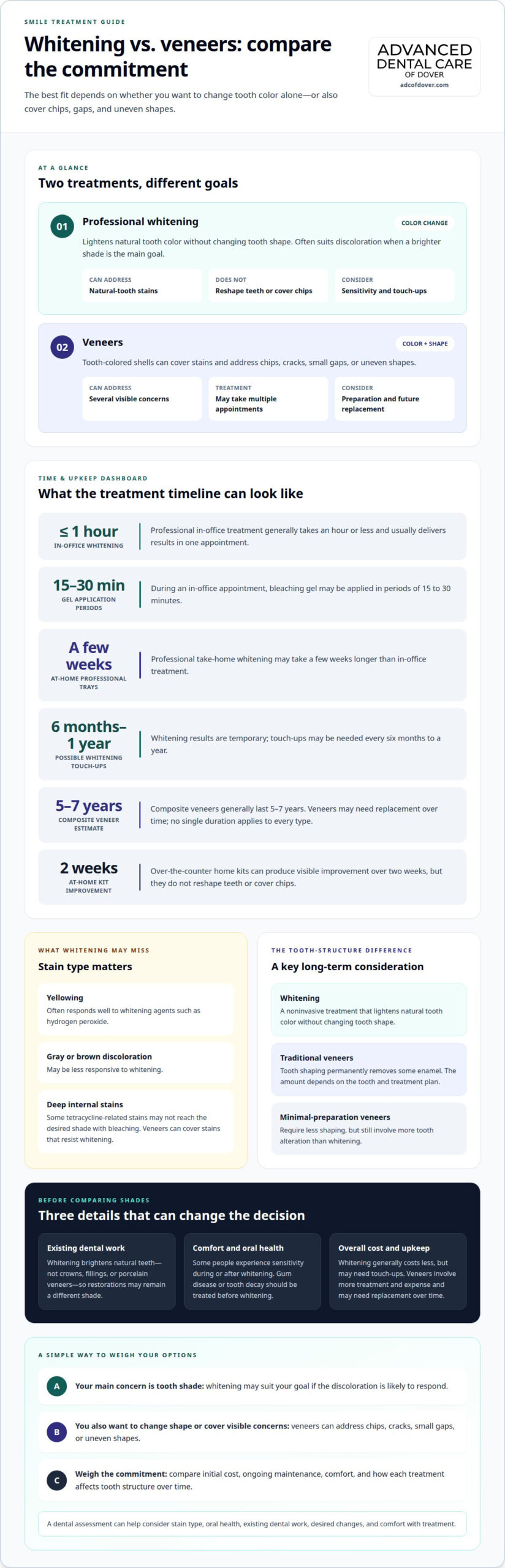
Choosing between whitening and veneers
Compare your desired change with the treatment’s upkeep and effect on tooth structure. The right fit depends on the type of staining, your dental health, and your comfort with cosmetic changes.
Smile Goals, Cost, and Lifestyle
Whitening may suit patients who want natural teeth to look brighter without changing their shape. Veneers are tooth-colored shells that can also alter shape, size, or position. Composite veneers may address several visible concerns, while whitening focuses on color. Consider ongoing care as well as initial expense: whitening may need touch-ups, while veneers may need replacement over time.
At-home options include over-the-counter whitening kits and dentist-prescribed trays. Home kits can produce visible improvement over two weeks, but neither option reshapes teeth or covers chips. Consider whether gradual color change fits your routine or whether a broader cosmetic change matters more.
Treatment for Different Discoloration
Yellowing often responds well to whitening agents such as hydrogen peroxide, which break down stains. Gray or brown discoloration may be less responsive. Deep internal staining, including some tetracycline-related stains, may not reach your desired shade with bleaching.
Veneers can cover stains that resist whitening, including discoloration on the front surface of a tooth. They may also address cracks or uneven edges, unlike whitening. The stain’s location and cause help distinguish a color concern from one that may call for coverage or reshaping. For more on how veneers for chipped teeth and other smile concerns can address visible imperfections, explore the treatment options and considerations.
Candidates for Veneers and Whitening
Whitening may suit patients whose main concern is natural tooth color and whose teeth and gums are healthy. Tooth decay or gum disease should be treated before whitening. Veneers may suit people seeking to change color while also covering chips, gaps, or uneven shapes.
Damaged, decayed, or weakened teeth, as well as severe oral health issues, may make porcelain veneers unsuitable. Your dentist will consider tooth condition alongside the cosmetic change you want, since covering a concern doesn’t resolve an underlying dental problem.
Insurance Coverage for Each Treatment
Most dental insurance plans don’t cover veneers because they’re considered cosmetic. Whitening is also cosmetic, and any benefits depend on the terms of your plan. Don’t assume the two treatments receive equal coverage.
Before choosing, compare your treatment goal with your plan’s coverage categories and exclusions. Veneers can change tooth appearance beyond color, while whitening targets natural tooth shade. Coverage doesn’t determine suitability, but it can help you plan for treatment.
Benefits and drawbacks of teeth whitening
Whitening can brighten natural teeth without reshaping them. In one appointment, a dentist may lighten teeth by several shades, which can suit patients seeking a visible color change without covering the tooth. Hydrogen peroxide breaks down stains, but doesn’t correct cracks, gaps, or uneven edges. It also won’t change the shade of porcelain veneers, crowns, or fillings.
That focused effect is both a benefit and a limitation. Bleaching often improves the appearance of yellowing, but deep internal discoloration, including some tetracycline-related stains, may not respond enough to reach your desired shade. If only one tooth looks dark, the cause matters. Whitening changes natural tooth color; it doesn’t repair damage or replace missing tooth structure.
Consider comfort and oral health before treatment. Some patients experience sensitivity during or after whitening. Tooth decay or gum disease should be treated first, so a healthy mouth is the starting point. Your dentist can consider the type of stain, existing dental work, and sensitivity history when discussing whether whitening fits your goal.
- Advantage: At-home kits can produce visible improvement over two weeks.
- Limitation: Whitening results are temporary, and maintaining them can mean periodic touch-ups.
- Important distinction: Whitening changes natural tooth color, while veneers can cover color and other visible imperfections.
Whitening is a practical option when natural teeth are healthy and staining is the main concern. It’s less suited to people seeking a different shape, coverage for persistent deep stains, or a change to dental restorations. Those goals call for a discussion about other cosmetic treatments, including the trade-offs of covering teeth rather than bleaching them.
If you’re weighing brighter natural teeth against a broader cosmetic change, schedule a smile treatment discussion to explore which approach fits your goals.
Advanced Dental Care of Dover: Teeth Whitening & Veneers
Advanced Dental Care of Dover offers teeth whitening and veneers for patients weighing a brighter shade against changes to tooth shape or visible imperfections. A personalized discussion can consider your smile goals, tooth condition, existing restorations, and comfort with treatment before you decide which approach fits.
Whitening may suit you if natural tooth color is your main concern. Veneers may be worth discussing if you also want to address chips, gaps, or uneven edges. Sharing what you hope to change helps keep the conversation focused on your priorities, rather than choosing a treatment based on appearance alone.
If you’re considering either option, contact Advanced Dental Care of Dover to discuss your smile goals.
Take a comfortable next step toward your smile goals
Your next step can be a conversation about what feels right for your smile, not a commitment to treatment. Bring one clear priority, such as feeling more at ease in photos or addressing a feature you notice when speaking. That gives your dental team a practical starting point. You can then consider veneers versus teeth whitening alongside your broader dental goals.
Advanced Dental Care of Dover offers teeth whitening and veneers, along with emergency dentistry, Invisalign clear aligners, and dental implants. You don’t need every detail settled before starting a conversation about the change you’d like to make.
Contact Advanced Dental Care of Dover to talk through your smile goals and possible next steps. An informed choice begins with sharing what matters to you, and you can take that step at your own pace.
Frequently Asked Questions
What Are Veneers?
Veneers are a dental option that covers the front surfaces of teeth. Made from porcelain or composite material, they can change a tooth’s visible color, shape, or size. For example, a veneer may cover a small chip and give the tooth a more even appearance. Traditional placement involves shaping the tooth, so veneers are a lasting change to consider carefully.
How do dental veneers compare with professional teeth whitening?
Veneers cover the front surface of a tooth and can change more than its color; professional whitening lightens natural tooth color. This difference matters if you want to address a chip or uneven edge as well as stains. Veneers require tooth preparation, while whitening doesn’t reshape teeth. Existing crowns or fillings won’t whiten along with natural teeth, so mixed restorations can affect how even the final shade looks.
What tooth discoloration can whitening treat, and what does it not treat?
Whitening can improve many surface stains and some deeper discoloration on natural teeth, but deep internal stains may remain. Some tetracycline-related discoloration can be difficult to lighten to your desired shade. Whitening also won’t change the color of veneers, crowns, or fillings. Identifying whether the concern is a natural tooth stain or a restoration helps clarify which approach may address it.
What are the risks and side effects of veneers and teeth whitening?
Whitening can cause temporary tooth sensitivity during or after treatment. Traditional veneers require permanent tooth shaping, and veneers may need replacement as they wear. Regular brushing, flossing, and dental check-ups help maintain them. Avoid overly abrasive toothpaste and biting hard objects, which can damage veneers. Whitening products don’t change veneer color and can scratch veneers, so use them with care.
How many visits and how much recovery time do veneers and whitening require?
Professional in-office whitening usually takes one appointment, while traditional veneer treatment typically involves two appointments. A dental laboratory may take a few weeks to make custom veneers. Composite veneers can sometimes restore chipped, uneven, or discolored teeth in one appointment. People can return to normal activities the same day after veneer placement, though each visit may take several hours.