
Chips, cracks, and worn edges can often be covered with porcelain veneers, thin coverings bonded to the front of teeth. Veneers for chipped teeth in Dover, NJ can also improve the appearance of stains, small gaps, or mild unevenness. To help veneers look natural, the dentist considers their shade and shape alongside your other teeth.
It’s understandable to want a smile that still feels like yours, not one that looks overly changed. This article explains how veneers can address cosmetic concerns, what treatment involves, and how veneers compare with bonding when a small gap is the main issue. You’ll also see why a tooth’s condition matters when choosing an option, so you can discuss your goals with a clearer sense of what to expect.
Key Takeaways
- Learn what porcelain veneer treatment involves, including how tooth preparation and temporary veneers fit into the process.
- See which smile concerns veneers can improve, from discoloration and small gaps to mild unevenness.
- Understand how veneers can cover chips, cracks, and worn areas, and what to consider when comparing them with bonding for a small gap.
- Find out how Advanced Dental Care of Dover’s teeth whitening and veneer care can support your next steps toward a smile that feels natural to you.
What Are Porcelain Veneers?
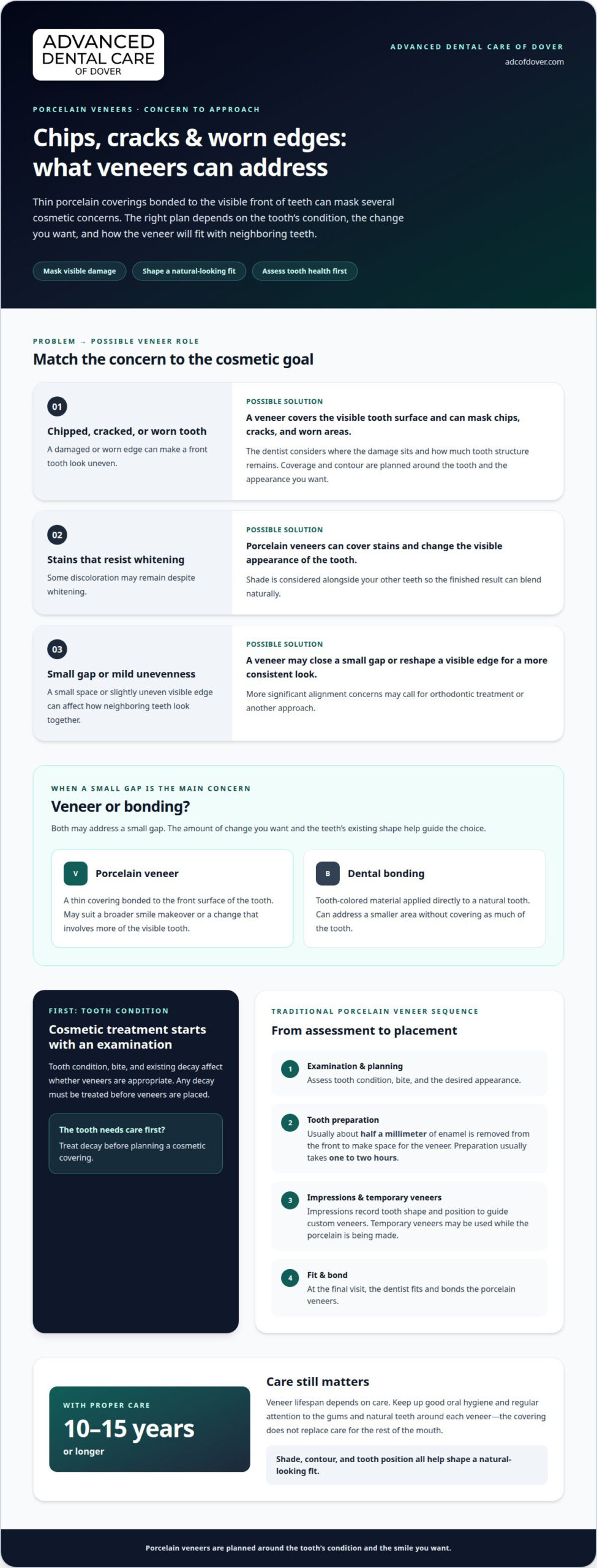
Porcelain veneers are thin coverings bonded to the visible front surfaces of teeth. They can mask chips, cracks, worn areas, and discoloration while preserving the tooth’s underlying structure. The process begins with an examination: tooth condition, bite, and existing decay affect whether veneers are appropriate. Any decay must be treated before veneers are placed. This first step helps distinguish a cosmetic concern from a problem needing care first.
For traditional porcelain veneers, preparation usually removes about half a millimeter of enamel from the front of the tooth. This creates space for the veneer to fit without adding unwanted bulk. Preparation usually takes one to two hours. Because enamel is part of the tooth’s structure, the dentist plans the shape and coverage before preparing it. The goal is a fit that supports the appearance you want.
After preparation, impressions record the teeth’s shape and position. They guide the custom veneers, including their contours and how they meet neighboring teeth. Temporary veneers may be used while the final porcelain is being made. At the final visit, the dentist fits and bonds the porcelain veneers. The examination, preparation, impressions, and placement form a planned treatment sequence.
If you’re considering Lumineers, discuss the preparation plan rather than assuming the name means no enamel removal. The right approach depends on the tooth’s position and structure, as well as the shape needed for a natural-looking fit. For example, a prominent tooth may need a different contour from a neighboring tooth with a small chip. These details guide the veneer choice and the preparation involved.
Cosmetic concerns treated with veneers
Porcelain veneers can improve the appearance of several cosmetic concerns. They may cover stains that don’t respond to whitening, close small gaps, and make mildly uneven teeth look more consistent. For example, a veneer can reshape the visible edge of a front tooth to make it look more aligned with its neighbor. More significant alignment concerns may call for orthodontic treatment or another approach.
A small gap can sometimes be addressed with either veneers or bonding. Bonding applies tooth-colored material directly to a natural tooth, while a veneer covers its front surface. The amount of change you want and the teeth’s existing shape help guide the choice. Veneers may suit a broader smile makeover, while bonding can address a smaller area without covering as much of the tooth.
Cost planning depends on the treatment involved. The price depends on the case and is provided after a quote request; factors include how many teeth are treated, the preparation needed, and whether additional dental care comes first. Financing, if used, has separate terms, so include those terms in your overall budget before choosing treatment.
Dental insurance coverage depends on your plan and the reason for treatment. Cosmetic-only work and treatment related to a damaged tooth may be handled differently, so review your plan’s terms for the proposed procedure. This distinction matters when a veneer is being considered to improve appearance and address a chipped area.
To find reviews and compare veneer dentists near Dover, NJ, look for patient comments that discuss communication, treatment explanations, and the finished appearance. Compare how each practice describes veneer planning, tooth preparation, and alternatives such as bonding, rather than relying on star ratings alone.
If you’re weighing these choices, explore veneer treatment options and consider which concerns you’d like to address.
Veneers for chipped, cracked, or worn teeth
A chipped edge can make a front tooth look uneven, even when the rest of your smile feels balanced. Porcelain veneers cover the visible tooth surface and can mask chips, cracks, and worn areas. With veneers for chipped teeth in Dover, NJ, the goal is an appearance that blends naturally with neighboring teeth. An examination helps assess the tooth before cosmetic treatment is planned.
Cracks and worn edges can have different shapes and positions. During an examination, the dentist considers where the damage sits and how much tooth structure remains. Decay must be treated before veneers are placed. That step matters because a cosmetic covering is planned for a tooth that has first received needed care. The appropriate coverage also depends on the appearance you want, such as smoothing a chipped corner or making worn front teeth look more even.
Veneers are commonly used on upper teeth, which show when you smile. They may also be placed on lower teeth for a particularly broad smile. For example, if both upper and lower front teeth show when you smile, you can discuss how their visible edges look together. Shade and contour shape the final appearance, while each tooth’s position guides how the veneer fits.
Porcelain veneers can be lasting, but their lifespan depends on care. With proper care and good oral hygiene, they can last 10-15 years or longer. Keep regular attention on the gums and natural teeth around each veneer, since the covering doesn’t replace care for the rest of the mouth. If you’re considering veneers for chipped teeth in Dover, NJ, the key takeaway is that an examination helps determine whether the tooth is ready for this cosmetic step.
Which dentists in Dover, NJ offer veneers for chipped teeth?
In Dover, NJ, choose a dentist who provides porcelain veneers and evaluates chipped teeth before recommending cosmetic treatment. A visible chip may affect only an edge, while a crack or worn area can involve more tooth structure. The assessment should consider the tooth’s condition and the appearance you want. This conversation helps clarify whether a veneer fits the concern or another treatment is more appropriate.
A useful first step is to describe what changed and where. For example, mention whether a front tooth chipped, its edge feels rough, or you notice discomfort. These details help frame the examination. The dentist can assess the tooth, discuss your desired appearance, and explain how preparation relates to its condition. If decay is present, it needs treatment before a veneer is placed.
Look for clear explanations of each step, from examination through placement. Ask how the dentist plans to shape the veneer alongside neighboring teeth, especially if a chip affects a front tooth that shows when you smile. The discussion should distinguish cosmetic coverage from care the tooth needs first. You should understand the proposed treatment and how it addresses your concern.
Reviews can add context, particularly comments about communication, treatment explanations, and how patients describe their results. Read for details that relate to your priorities rather than relying on a rating alone. For instance, a review describing a chipped-tooth visit may offer more relevant insight than one discussing an unrelated service. If you’re ready to discuss a chipped tooth and veneer options, start a conversation about treatment.
Advanced Dental Care of Dover: Teeth Whitening & Veneers
Advanced Dental Care of Dover offers teeth whitening and veneers for patients considering cosmetic changes to chipped or discolored teeth. A visit can connect your concern, such as a rough front edge or a visible stain, with a treatment discussion focused on your smile and tooth condition. Whitening addresses tooth color, while veneers can cover visible areas.
Porcelain veneers may suit some chips, while a small gap or discoloration may call for comparing cosmetic approaches. Sharing what you’d like to change helps guide the conversation. If you have a sudden dental concern, Advanced Dental Care of Dover also provides emergency dentistry during clinic hours.
Contact Advanced Dental Care of Dover to discuss veneers and your smile concerns.
Take the Next Step Toward a Smile That Feels Like Yours
Choosing cosmetic dental care is personal. You may want to soften the look of a chipped tooth while keeping your smile familiar, or understand which options fit your goals. If you’re considering veneers for chipped teeth in Dover, NJ, discussing your priorities can help you decide what to explore next. Bring up any questions about comfort, appearance, or how treatment fits your everyday needs.
Advanced Dental Care of Dover also provides emergency dentistry, Invisalign clear aligners, and dental implants for other dental concerns. Reach out when you’re ready to discuss a smile concern or want help understanding your next step. You don’t need to have every decision made before starting the conversation.
Contact Advanced Dental Care of Dover to talk about your smile goals. A thoughtful first conversation can help you move forward with greater clarity and confidence.
Frequently Asked Questions
Do veneers look like my natural teeth?
Veneers can be designed to blend with your smile by considering the color and shape of nearby teeth. For example, a veneer on one front tooth can be planned to complement the other rather than look like a separate addition. The final appearance depends on the selected shape and shade, so discuss what feels natural to you during treatment planning.
What are Dental Veneers?
Dental veneers are thin coverings bonded to the front of teeth to change their visible appearance. A veneer may cover discoloration or disguise a small chip while leaving the back of the tooth uncovered. Porcelain is one material used for veneers. They’re a cosmetic option, not a substitute for treating decay or other dental problems first.
Are veneers right for everyone?
No, veneers aren’t the right choice for every tooth or smile concern. A tooth with untreated decay needs care before cosmetic treatment, while more pronounced alignment concerns may call for orthodontic treatment. The decision also depends on the tooth’s condition and the change you want. A chipped front tooth and a tooth with a deeper problem may need different approaches.
Do you offer financing for veneers?
Yes. Advanced Dental Care of Dover lists “0% Financing Available.” Financing terms can be part of planning for veneer treatment, along with the teeth being treated and any care needed beforehand. Discussing your treatment plan and financing together can help you understand the options relevant to your situation. Specific terms depend on the financing arrangement.
How many appointments does the veneer process take?
Veneer treatment generally includes preparation and a later bonding visit, with an examination to plan the care. Preparation usually takes one to two hours, and the final bonding visit usually takes one or two hours. The sequence depends on what the examination finds and whether the teeth need treatment before veneers can be placed.
How soon can I see the results?
You see the veneer transformation when the final veneers are placed. Temporary veneers may provide an interim appearance while custom porcelain is being made, but they aren’t the final result. It may take time to get used to how the veneers feel. Your final appearance is visible at the bonding visit.