
A painful tooth doesn’t automatically need to come out. A tooth removal dentist in Dover, NJ, assesses the cause of the pain and the tooth’s condition to see whether it can be treated without extraction. The cost depends on the case, including whether the procedure is simple or surgical and where the tooth is located. Advanced Dental Care of Dover can discuss the treatment plan and estimate after an evaluation.
It’s understandable to feel uneasy when a tooth hurts or an extraction is being discussed. This guide explains what can affect the cost, how a dentist evaluates crowded or impacted wisdom teeth, and how to protect the blood clot after removal. You’ll also learn about common healing stages and signs that need follow-up, so you can feel more prepared for the conversation and recovery.
Key Takeaways
- Understand which details can affect an extraction estimate and how a tooth’s condition may shape treatment options.
- Learn what a dentist looks for when assessing wisdom teeth that are crowded, partly erupted, or impacted.
- Use gentle aftercare to help protect the extraction-site blood clot while healing begins.
- Know what recovery may involve and which changes are a reason to get in touch with your dentist.
1. How much does a tooth extraction cost in Dover?
An extraction estimate depends on the tooth’s condition and the procedure’s complexity. The price is case-dependent and is provided after a quote request. Key factors include whether removal is simple or surgical, the tooth’s position, and how many teeth need removal. A wisdom tooth may require a different approach than a visible tooth, especially if it is impacted. A tooth removal dentist in Dover, NJ can explain how these details shape a written estimate before treatment begins.
A painful or damaged tooth doesn’t always need to be removed. A dentist may consider root canal treatment if the tooth can still be restored. This treats damaged inner tissue while preserving the tooth. Extraction may be considered when the damage makes restoration difficult. The decision depends on the tooth’s condition and position, not pain alone. For example, a restorable tooth may have a different treatment path from a badly broken one.
Compare the purpose of each option, not just the immediate procedure. A root canal aims to preserve a tooth, while an extraction removes it. After removal, a dental implant, bridge, or denture may replace the missing tooth; the choice depends on the site and treatment plan. Wisdom tooth removal may involve one or several teeth, so their number and position affect the estimate. Local anesthetic is used for extraction, and you may feel pressure during the procedure.
Seven clinics in Dover offer tooth extractions. Addresses, hours, and phone numbers vary by practice, so use the specific clinic’s current contact details when arranging an evaluation. A tooth removal dentist in Dover, NJ can also discuss options for a damaged tooth and what to expect during removal.
Recovery commonly takes 3-7 days, while the extraction site initially heals over 1-2 weeks; full healing can take several months. Concerns include continued bleeding, prolonged pain, or irritation around the site. Follow the dentist’s aftercare directions, and contact the dental office if symptoms persist or the site seems not to be healing properly.
2. Evaluation of impacted or crowded wisdom teeth
An impacted wisdom tooth is angled rather than coming straight through the gum line. Some teeth remain partly covered, while others stay beneath the gum or press against nearby teeth. A crowded position can make cleaning harder and cause soreness at the back of the mouth. Evaluation considers the tooth’s position and whether it is causing problems, not simply whether it has fully erupted.
Describe where the discomfort occurs, whether it returns, and whether chewing makes it worse. Mention any swelling, tenderness, or bad taste near the back teeth. These details help the dentist assess the tooth’s position and whether it is impacted, crowded, or causing other problems. Removal may be considered for those reasons. A tooth that has broken through the gum can still cause trouble if its position makes the area difficult to keep clean.
A partly erupted tooth can leave a flap of gum tissue called an operculum. Food can collect beneath it, increasing the risk of infection. Inflammation around a partly erupted wisdom tooth is called pericoronitis. It can cause pain and swelling, even if symptoms later ease. Note whether discomfort returns around the same gum flap, since that pattern provides useful context during an evaluation.
Ask how the tooth’s position relates to symptoms and what removal would address. For example, a crowded tooth causing repeated gum irritation presents a different concern from one without problems. The assessment also helps explain the plan for any other teeth. Replacement planning for a missing tooth is separate from deciding whether a wisdom tooth is impacted. If symptoms keep returning, a dental evaluation can clarify how position and discomfort fit together. Clear answers can make the next step easier to understand.
3. Protecting the blood clot
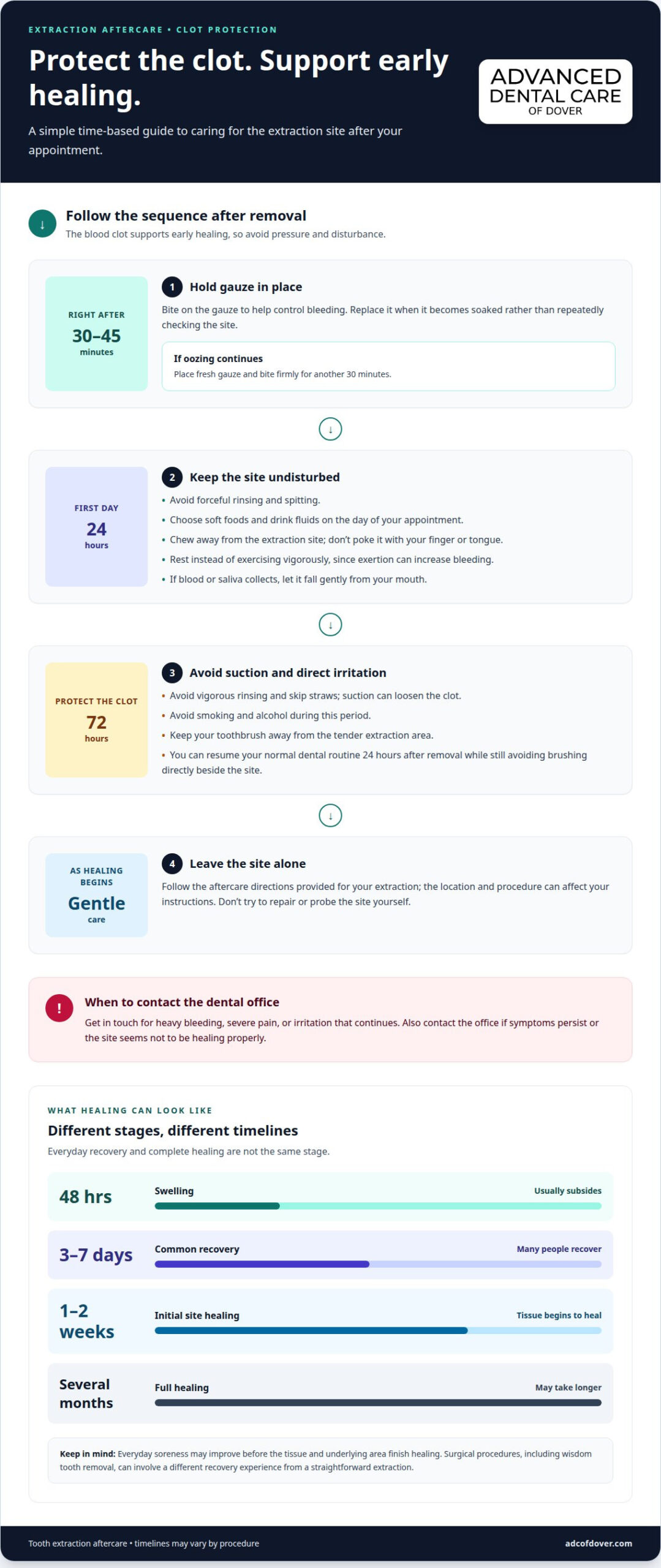
The blood clot at an extraction site supports early healing, so protect it from pressure and disturbance. After your appointment, bite on the gauze for 30-45 minutes to help control bleeding. If oozing continues, place fresh gauze and bite firmly for another 30 minutes. Replace gauze when it becomes soaked, rather than repeatedly checking the site.
For the first 24 hours, avoid forceful rinsing and spitting. These actions can disturb the clot before it settles into place. Avoid vigorous rinsing for 72 hours, too. If you need to clear your mouth, follow the dental team’s instructions instead of swishing hard. Patients who feel blood or saliva collecting should let it fall gently from the mouth.
Skip straws for 72 hours after extraction. Suction can loosen the clot and interfere with healing. Avoid smoking and alcohol during this period, and don’t brush directly beside the extraction site. You can resume your normal dental routine 24 hours after removal while still keeping the brush away from the tender area for 72 hours. This protects the clot without neglecting the rest of your teeth.
Choose soft foods and drink fluids on the day of your appointment. Chew away from the extraction site, and avoid poking it with a finger or tongue. Rest rather than exercising vigorously during the first 24 hours, since exertion can increase bleeding. These small choices help prevent avoidable pressure on the clot as the tissue begins to repair.
Contact the dental office for heavy bleeding, severe pain, or irritation that continues. If bleeding or oozing persists after the initial gauze application, use another pad for 30 minutes. Don’t try to repair or probe the site yourself. Follow the aftercare directions given for your extraction, since the location and procedure can affect your care instructions.
4. Recovery and healing timelines
After a tooth extraction, many people recover within 3-7 days. The extraction site initially heals over 1-2 weeks, while full healing may take several months. These timelines describe different stages: everyday soreness may improve before the tissue and underlying area finish healing. A surgical procedure, including wisdom tooth removal, can involve a different recovery experience from a straightforward extraction.
Swelling usually subsides within 48 hours. For comfort, apply a cold compress to the cheek in 15-minute intervals. Rest after the procedure, and prop your head on a pillow rather than lying flat. Limit vigorous exercise for 24 hours, since exertion can increase bleeding. Soft foods and plenty of fluids can make eating easier on the day of extraction.
Pay attention to the direction of symptoms, not only their presence. Pain that worsens after the third day should be checked. Contact the dental office for heavy bleeding, severe pain, a medication reaction, or swelling that continues for 2-3 days. Also reach out if bleeding lasts longer than 24 hours or the site seems not to be healing properly. These changes can help identify when follow-up is needed.
As healing progresses, follow the aftercare instructions you received for your procedure. Resume your normal dental routine 24 hours after extraction, while treating the site gently. Sutures may be used depending on the incision and extraction site; soluble sutures dissolve on their own. Keep follow-up appointments if they’re part of your care plan, especially when pain or irritation persists. For guidance on caring for your teeth after other dental procedures, see dental crown care after treatment.
Healing can feel gradual, but tracking symptoms gives you useful context. Note when swelling begins to ease and whether discomfort improves or worsens after day three. If recovery raises concerns, contact the dental office about extraction healing for guidance on your next step.
Advanced Dental Care of Dover: Emergency dentistry
Advanced Dental Care of Dover offers emergency treatment during clinic hours for urgent dental concerns, including tooth pain that needs prompt attention. If an examination shows that a tooth cannot be preserved, the team also provides tooth extractions and can explain the next steps for the extraction site.
If a tooth is missing, dental implants may be one option to discuss for replacement. The right plan depends on the tooth and surrounding area, so it helps to understand your options before moving forward. Share your symptoms and concerns with the dental team, then discuss care that fits your situation.
If you’re dealing with urgent dental pain or considering an extraction, contact Advanced Dental Care of Dover to discuss your next step.
Take the Next Step With a Clear Plan
Deciding what to do about a painful or damaged tooth can feel overwhelming, especially when you’re unsure what comes next. Bring your questions to a conversation focused on your comfort, the tooth’s condition, and your options. This can help you understand the reasoning behind a recommendation and feel more prepared to decide.
If you’re looking for a tooth removal dentist in Dover, NJ, Advanced Dental Care of Dover can discuss your concerns and explain the care options that fit your situation. You don’t need to have every decision made before reaching out. Start by sharing what’s bothering you and what you’d like clarified.
Contact Advanced Dental Care of Dover to take a comfortable next step. A thoughtful conversation can help you move forward with greater confidence.
Frequently Asked Questions
Will I definitely need an extraction if I have a painful tooth?
No, a painful tooth doesn’t automatically need removal. A dental exam considers whether the tooth can be restored, including whether root canal treatment is an option. Tell the dentist where the pain starts, what triggers it, and whether it lingers after eating. For example, pain with chewing and pain that occurs without a trigger offer different clues, but neither symptom alone determines the treatment.
Does insurance cover tooth extraction?
Coverage depends on your plan’s benefits, the reason for removal, and any limits that apply. Advanced Dental Care of Dover states that “Most Insurances Accepted,” but acceptance doesn’t mean every extraction charge is covered in full. Review your plan’s extraction benefit and ask how your expected share is calculated from the treatment estimate before proceeding.
How long does recovery take?
Everyday recovery often takes 3-7 days, while initial healing at the extraction site takes 1-2 weeks. Full healing can take several months. Plan lighter activities during the first few days, and follow any care instructions given for your procedure. The timeline can vary with the extraction and your healing; report pain that worsens after the third day.
How much does a tooth extraction cost in Dover?
The extraction price depends on the case and is provided after a quote request. Factors include whether removal is simple or surgical, the tooth’s position, and how many teeth are treated. A wisdom tooth beneath the gum can require a different approach from an erupted tooth. Request a written estimate that explains the planned treatment and related charges before proceeding.
What should I do after a tooth extraction to manage pain at home?
Follow your dentist’s written instructions and take prescribed pain medicine as directed. Keep the instruction sheet beside your medicines, and note each dose so you don’t accidentally take it again too soon. Rest and avoid disturbing the extraction site. Contact the dental office if pain becomes severe, worsens, or occurs alongside a medication reaction.
When is extraction necessary?
Extraction may be considered when a tooth is too damaged to repair, such as a severely decayed or fractured tooth that can’t be restored. A dentist assesses the damage and whether treatments like root canal therapy or a crown could preserve it. Pain alone doesn’t determine the choice; the key question is whether the tooth can still be restored and function.