
A crown usually covers and strengthens a tooth that is still present, while a bridge replaces a gap with an artificial tooth supported by neighboring teeth. A crown can also be attached to a dental implant to replace a missing tooth. So, choosing a crown or bridge for a missing tooth starts with whether the tooth is still present and what support is available.
It’s understandable if the choice feels confusing: both restorations can look natural, but they serve different purposes and involve different considerations. This guide explains how crowns and bridges differ, compares common materials, and outlines advantages and trade-offs to help you understand your options. The condition of nearby teeth, the gap’s location, and your bite can all affect which restoration may suit your needs.
Key Takeaways
- Compare porcelain, ceramic, and metal options by appearance and durability to understand which material priorities matter most to you.
- Consider the condition of the teeth beside a gap, since a traditional bridge relies on support from neighboring teeth.
- Weigh how each restoration may affect chewing, cleaning, and care over time before deciding what questions to discuss at your appointment.
- Use the decision guide to connect your tooth’s condition, the gap’s location, and your preferences with the restoration options worth exploring.
What Is a Dental Crown?
A dental crown is a custom-made cap that covers a damaged or weakened tooth, restoring its shape, size, and function. It may protect a tooth weakened by decay, a fracture, a large filling, or root canal treatment. A crown covers an existing tooth; by itself, it does not fill a gap where a tooth is missing.
For a missing tooth, a dental bridge can span the gap with an artificial tooth called a pontic. In a traditional bridge, crowns on neighboring teeth support the pontic. Fitting involves preparing the supporting teeth, then placing a bridge made to fit the gap and bite. Dental laboratories usually take about two to four weeks to make a traditional or cantilever bridge. A bridge may replace one missing tooth or a row of teeth, depending on the situation and available support.
A dental implant replaces a tooth with a surgically placed post in the jaw, an abutment, and a crown. Unlike a traditional bridge, it does not rely on neighboring teeth for support. Implants can reduce jawbone atrophy, which is linked with tooth loss. The crown may also be placed on an implant to restore the visible tooth.
Dental plans may cover part of a bridge when treatment is medically necessary. Coverage limits and waiting periods depend on the plan, so review its terms when comparing your options.
Without insurance, a bridge’s price depends on the case and is given after a quote request; factors include the materials, number of replacement teeth, and supporting teeth involved.
| Option | Purpose | Support | Key consideration |
|---|---|---|---|
| Crown | Cover an existing tooth | Tooth or implant | Doesn’t replace a gap alone |
| Bridge | Replace one or more missing teeth | Usually neighboring teeth | Needs suitable support |
| Implant | Replace a missing tooth | Post in the jaw | Includes an abutment and crown |
Start by identifying whether a tooth remains, then weigh the gap, nearby teeth, and the support each option requires.
Compatibility of crown and bridge materials
Porcelain, ceramic, metal alloys, and combinations of these materials can be used for crowns and bridges. Compare them by appearance, strength, the restoration’s position, and the demands of chewing.
Crown Materials
A crown covers a damaged or weakened tooth, and its material affects its appearance and durability. Metal crowns tend to be more durable than porcelain crowns, while porcelain may chip more easily. Porcelain offers a more natural appearance, which can matter for a visible tooth. At an appointment, compare the tooth’s position and function with each material’s appearance and durability.
Bridge Materials
A traditional bridge spans a gap using supporting crowns and an artificial tooth called a pontic. Bridge restorations can use porcelain, ceramic, metal alloys, or combinations of these materials. Consider both the visible pontic and the supporting parts, since each affects the restoration’s appearance and function. A dentist can assess the gap and bite when discussing material options.
Material Appearance
Porcelain crowns and bridges can be color-matched to surrounding teeth, helping the restoration blend into a smile. This can matter for a front tooth, where appearance is especially noticeable. Metal may offer durability, but it does not have the same natural-looking appearance as porcelain. Ceramic and combined materials offer further options; compare how each looks beside nearby teeth and suits the restoration’s role.
To make the comparison practical, note whether the restoration will cover a tooth or replace a gap, then discuss appearance, support, and chewing needs with your dentist. Crowns and bridges can be considered as part of that conversation, with material choice matched to the tooth and restoration.
What Is the Main Difference Between a Crown and a Bridge?
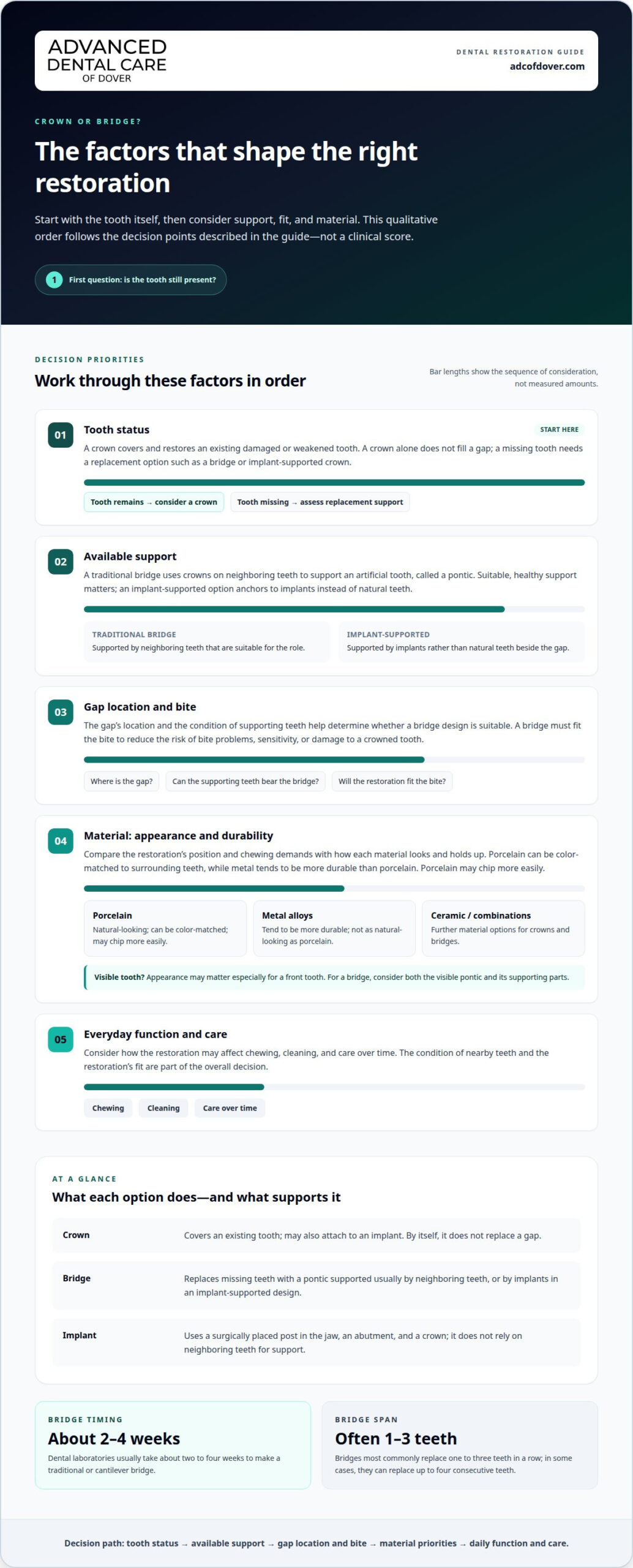
The key difference is whether a tooth remains. A crown covers an existing tooth to restore its shape and function, including a tooth weakened after root canal treatment. A bridge replaces missing teeth with artificial teeth supported by neighboring teeth or implants. A crown alone cannot span an open gap.
For a traditional bridge, crowns anchor the replacement tooth, called a pontic, to teeth on either side. Bridges most commonly replace one to three teeth in a row. In some cases, a bridge can replace up to four consecutive teeth. The gap’s location and the condition of the supporting teeth help determine whether this design is suitable.
Dental implants offer another way to support a replacement. An implant-supported bridge anchors to implants rather than natural teeth. If a crown sits beside a gap, it may support a bridge if it is secure and free from decay or damage. The existing crown may need reshaping or replacement, and a natural tooth on the other side may need preparation.
Match the restoration to the tooth and the support available. If a tooth is present but weakened, a crown may restore it without replacing it. If the tooth is missing, compare a traditional bridge with an implant-supported option. Consider whether neighboring teeth can support a bridge, whether implants fit your treatment plan, and how the restoration will fit your bite. A bridge must fit the bite to reduce the risk of bite problems, sensitivity, or damage to a crowned tooth.
For a crown or bridge for a missing tooth, start by identifying whether the gap needs replacement and what can anchor the restoration. Then consider support, bite fit, and the condition of nearby teeth together.
Advantages and considerations of crowns and bridges
A crown and a bridge solve different problems, so compare what each preserves, replaces, and requires of nearby teeth. Their long-term usefulness also depends on fit and daily care.
Crown Advantages and Considerations
Dental crowns cover damaged teeth, helping restore their shape and function. A crown can protect a tooth after root canal treatment or strengthen one with a large filling. It keeps the natural tooth in place, unlike a replacement that fills a gap. A crown needs an existing tooth or implant for support, and its fit must work with your bite.
Bridge Advantages and Considerations
A bridge replaces missing teeth with a fixed restoration, helping restore chewing and reduce the chance of nearby teeth shifting. It doesn’t require surgery when supported by natural teeth. However, a traditional bridge relies on neighboring teeth, which may need preparation. The supporting crowns and pontic must fit your bite; an uneven fit can contribute to sensitivity, bite problems, or damage to a crowned tooth.
Bridge Lifespan and Care
A dental bridge typically lasts about 5 to 10 years and may last longer with good hygiene. Clean around the supporting teeth and beneath the bridge, where food can collect; a floss threader is one option for cleaning underneath.
For a bridge anchored to crowned teeth, dental crown care after treatment includes brushing and flossing regularly and attending dental check-ups. These habits help prevent decay and gum disease around the restorations. Crowns and bridges are fixed rather than removable, but they still need consistent care.
For a clear comparison, consider what needs restoring, the strength and condition of natural teeth, and how each option can be cleaned. Discuss crown and bridge options with a dental team to explore a restoration that fits your needs.
Advanced Dental Care of Dover: Emergency dentistry
Advanced Dental Care of Dover provides emergency treatment during clinic hours for tooth problems that need prompt attention. Persistent pain, swelling, pain when biting, or a cracked or broken tooth are reasons to contact a dentist promptly.
After the immediate concern is assessed, you may discuss how to restore the tooth or replace a gap. Crowns and bridges address different needs, while dental implants may be considered for tooth replacement. Understanding the condition of the tooth and nearby teeth helps guide that conversation.
If you’re dealing with a painful or damaged tooth, contact Advanced Dental Care of Dover to discuss your next step.
Take the Next Step Toward a Restored Smile
Choosing a crown or bridge for a missing tooth is one part of caring for your smile. Your next step is to discuss your priorities, including comfort, appearance, and the care you want to maintain over time. You don’t need to have every detail decided before reaching out.
Advanced Dental Care of Dover can help you explore restorative options, including dental implants, and offers Invisalign clear aligners for a different kind of smile care. If a tooth problem needs prompt attention, the practice also provides emergency treatment during clinic hours. Each concern can start with a simple discussion about what’s happening and what you’d like to address.
When you feel ready, contact Advanced Dental Care of Dover to talk through your next step. A thoughtful conversation can help you move forward with greater clarity and confidence.
Frequently Asked Questions
What Is a Dental Bridge?
A dental bridge is a fixed restoration that closes a gap left by missing teeth. It includes an artificial tooth, called a pontic, connected to supporting crowns or implants. For example, a bridge can fill the space between two teeth if they can support the restoration. Its design depends on the gap and available support.
How many teeth can be on a bridge?
A bridge most commonly replaces one to three teeth in a row. In some cases, it can replace up to four consecutive teeth. The number refers to the missing teeth being replaced, not simply the total pieces in the restoration. The gap’s length and the strength and position of supporting teeth or implants affect the design.
Can a bridge be used instead of an implant?
Yes. A bridge can replace a missing tooth without implant surgery, making it an option for someone who cannot have or does not want that surgery. A traditional bridge relies on neighboring teeth for support, while an implant-supported bridge anchors to implants. The difference matters if you want to preserve nearby natural teeth or avoid implant placement.
Do crowns and bridges look natural?
Yes, porcelain crowns and bridges can be color-matched to surrounding teeth, helping them blend into your smile. The result depends on the restoration’s position and the shade of nearby teeth. For example, a front-tooth replacement is especially visible when you speak or smile, so matching its color and shape can be an important part of planning.
Is Getting a Crown or Bridge Painful?
Having a crown or bridge placed can involve tooth preparation and pressure during fitting. The steps differ depending on whether the restoration covers one tooth or relies on supporting teeth. Before treatment, ask the dentist to explain each stage and how discomfort is managed. Sharing concerns beforehand helps the care team respond thoughtfully.
What happens if a missing tooth is left untreated?
An untreated gap can allow neighboring teeth to tilt and the opposing tooth to drift, changing how your teeth meet. These shifts can affect your bite and make chewing less comfortable. Tooth loss can also contribute to gum disease, jaw-joint problems, or changes in facial appearance. Discussing replacement options can help you understand how to address the gap.