
Recovery isn’t one finish line. Most people feel recovered within 1 to 2 weeks after a tooth extraction, while complete bone and gum healing can take 3 to 6 months. These tooth extraction recovery tips explain what to expect as you heal and when you can return to your usual routine.
It’s natural to wonder whether soreness, swelling, or a change in your plans means something is wrong. Knowing what to expect after a tooth extraction can make recovery feel less uncertain and help you care for the site with confidence.
These tooth extraction recovery tips explain how to protect the blood clot, choose foods while the area heals, and ease back into work, school, exercise, and everyday activities. You’ll also learn which symptoms warrant a call to your dentist, so you can focus on healing without rushing the process.
Key Takeaways
- Most people feel recovered within 1 to 2 weeks, though full bone and gum healing takes longer.
- Protect the blood clot by avoiding actions that can disturb it, and follow your dentist’s aftercare instructions.
- Start with soft foods and wait until the extraction site feels ready before returning to your usual diet.
- Ease back into everyday activities gradually, and know which changes in pain or swelling call for a dentist’s advice.
Bleeding, numbness, swelling, and pain after extraction
After an extraction, gauze, temporary numbness, soreness, and swelling are common during early healing. Wisdom tooth removal may feel different from a simple extraction because the procedure and extraction site differ. Follow the aftercare instructions for your procedure.
Expected Pain, Bruising, and Swelling
Bite on gauze for 30 to 60 minutes after extraction, or longer if bleeding continues. Local anesthesia typically wears off within 2 to 4 hours, so numbness fades gradually. Pain often reaches its worst on day three, while swelling, bruising, and soreness commonly peak on days 2 and 3. Swelling may appear during the initial 48 hours, and common side effects should go away within a week. These changes help you understand what may happen as the area heals.
Ice Packs for Swelling
Use an ice pack on the cheek near the extraction site in 10-minute intervals during the initial 48 hours. This brief, repeated application can help reduce swelling and discomfort without keeping cold against your skin continuously. For example, apply the pack, remove it after 10 minutes, then repeat later as needed during that period. After 48 hours, warm compresses may help reduce swelling instead. Switching from cold to warmth at the appropriate time gives you a simple way to manage changing discomfort.
Pain and Swelling Relief
To reduce pain and swelling, use an ice pack in 10-minute intervals during the initial 48 hours, then consider a warm compress after 48 hours. Acetaminophen and ibuprofen are over-the-counter pain relievers that can be taken after extraction. Follow the product directions and any instructions provided for your procedure. If you receive a prescription, take it exactly as directed. These steps can make soreness easier to manage while your mouth heals. For bleeding, continue biting on gauze if it persists beyond the initial 30 to 60 minutes. Contact your dentist about symptoms that concern you, rather than changing prescribed medication on your own.
Protecting the blood clot and preventing dry socket
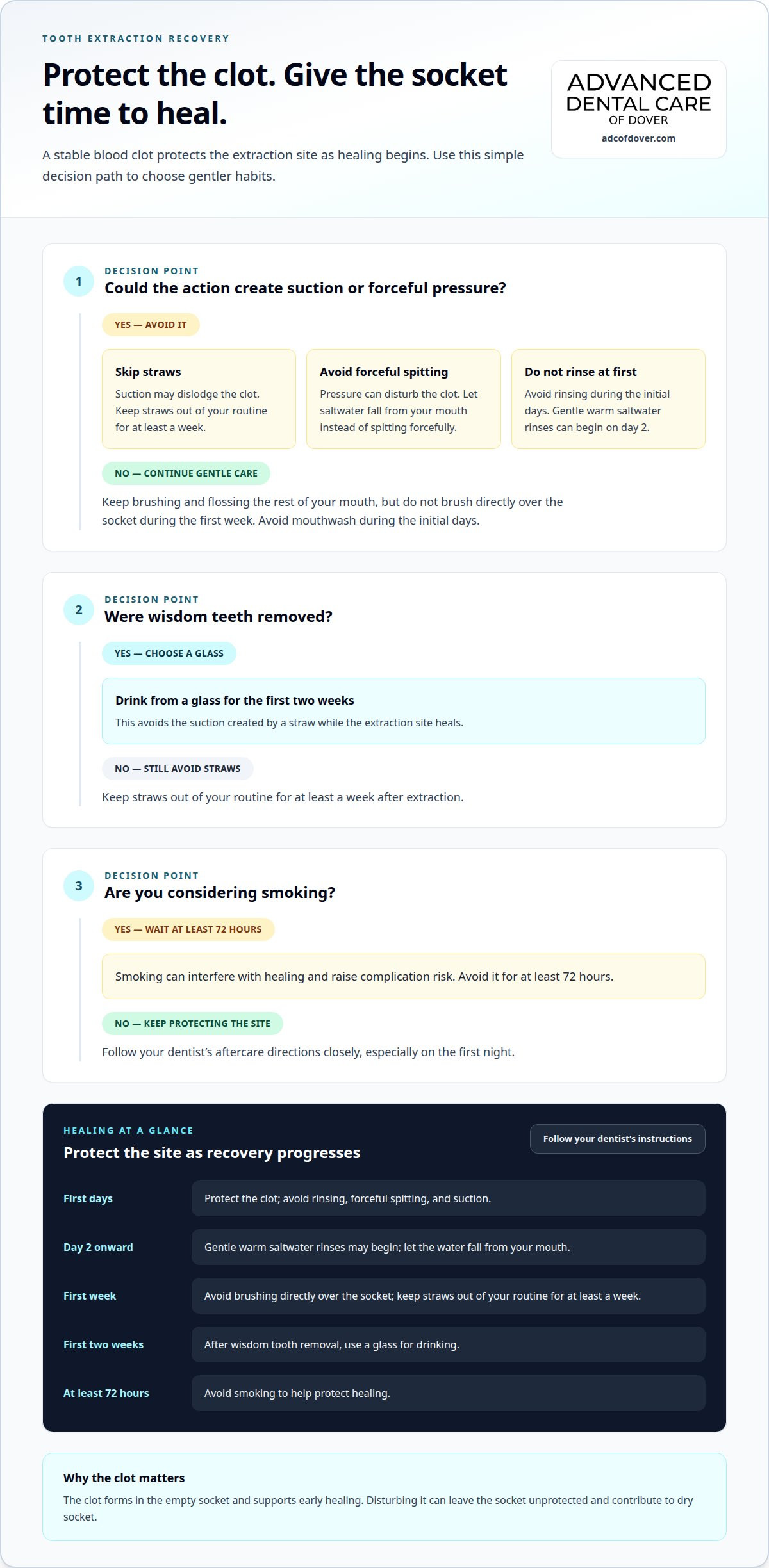
A stable blood clot protects the extraction socket as healing begins. During the first days, everyday actions such as sipping through a straw or forceful spitting can disturb it.
Protecting the Extraction-Site Clot
Avoid rinsing, forceful spitting, and straws after an extraction because suction and pressure can dislodge the clot. Choose a glass instead, especially after wisdom tooth removal, when drinking from a glass is advised during the first two weeks. Avoid smoking for at least 72 hours, since smoking can interfere with healing and raise complication risk.
Keep brushing and flossing the rest of your mouth, but avoid brushing directly over the socket during the first week. Avoid mouthwash and vigorous spitting during the initial days. Gentle warm saltwater rinses can begin on day 2; let the water fall from your mouth instead of spitting forcefully. These small changes help protect the site while keeping your mouth clean.
Clot Formation and Socket Healing
After an extraction, blood collects in the empty socket and forms a clot over the exposed area. The clot supports early healing, so disturbing it can leave the socket unprotected and contribute to dry socket. For example, using a straw creates suction that may dislodge the clot. Take particular care to protect the area during the first days.
Follow your dentist’s aftercare directions closely on the first night, then continue gentle care as healing progresses. Avoid smoking for at least 72 hours, and keep straws out of your routine for at least a week. If you had wisdom teeth removed, use a glass for the first two weeks. These timelines help you choose safer habits while the socket heals.
Planning an extraction? Explore extraction care guidance to feel prepared for protecting the site afterward.
Recovery timeline and return to activities
Most people return to routine activities within 48 to 72 hours after extraction. Feeling recovered often takes 1 to 2 weeks, while complete bone and gum healing can take 3 to 6 months.
Rest and Activity Restrictions
Rest for the remainder of extraction day, then ease back into activity gradually. Avoid vigorous activities for at least two days, and skip the gym for the first 48 to 72 hours. These pauses matter because exertion can interfere with comfortable recovery. Avoid strenuous activity and lifting anything over 10 pounds after extraction.
Work or school may be manageable within a day or two, while routine activities often resume within 48 to 72 hours. Use your comfort during everyday tasks to guide your pace. For example, if walking around the house feels tiring, choose rest instead of returning to a workout. Bone and gum healing continue after daily routines resume.
Sleeping Position During Recovery
Choose a comfortable sleeping position that lets you rest without pressing your jaw against the pillow. Follow your dentist’s aftercare instructions closely on the first night. Keeping pressure off the extraction area may make it easier to get comfortable. Keep your instructions nearby in case you wake during the night.
Plan for a restful evening on extraction day rather than scheduling strenuous tasks. If you wake with discomfort, follow the medication and care instructions provided for your procedure. Rest supports a gradual return to regular activities over the next 48 to 72 hours.
The First Day After Extraction
During the first 24 hours, rest and follow your dentist’s aftercare instructions. Avoid strenuous activity for the rest of extraction day, and don’t treat feeling alert as a reason to lift heavy items or exercise. Keep the day simple: postpone a gym visit, choose quiet activities, and allow time to rest.
Return to work or school within a day or two when daily tasks feel manageable. Wait 48 to 72 hours before resuming routine activities, and avoid lifting anything over 10 pounds. These limits help you pace your return instead of testing your recovery with demanding tasks too soon.
Soft foods and returning to a normal diet
For the first 24 hours after extraction, avoid solid foods. Soft choices like yogurt or applesauce offer options while chewing may feel uncomfortable.
Soft and Nutritious Food Choices
Choose soft foods that need little chewing, such as rice, pasta, eggs, yogurt, and applesauce. These options make it easier to pick a meal or snack without starting with firm textures. Yogurt or applesauce can be eaten with a spoon, while soft pasta or eggs can make a more filling choice.
During the first 24 hours, avoid solid foods and choose from these softer options instead. Take small bites and chew away from the extraction area when comfortable. Rice, pasta, eggs, yogurt, and applesauce provide variety, so you can rotate meals rather than relying on one food throughout the day.
Returning to a Normal Diet
Return to your usual diet gradually, using comfort while chewing as your guide. Start with soft foods such as eggs or pasta, then try firmer textures as the extraction area feels ready. If chewing causes discomfort, go back to softer choices instead of forcing a quick change.
There’s no single day when everyone can eat normally. Let the extraction site and your comfort while chewing guide you. Try a small portion of a familiar food and notice how the area feels. Keep yogurt, rice, or applesauce on hand as softer alternatives, and follow any aftercare instructions about eating.
Planning an extraction or need guidance about eating afterward? Schedule a tooth extraction visit and discuss your aftercare.
Advanced Dental Care of Dover: Emergency dentistry
Advanced Dental Care of Dover provides emergency dentistry for dental concerns that need prompt attention. After an extraction, contact a dentist if bleeding continues or you develop a fever of 100.4 degrees Fahrenheit or higher. Follow-up appointments can help monitor healing, identify possible infection, and provide further guidance.
Keep your aftercare instructions handy and describe what you’re experiencing, including when symptoms began. If you’re concerned about your recovery, getting professional guidance can help you understand the next steps. Advanced Dental Care of Dover also provides tooth extractions, connecting care before the procedure with support when questions arise afterward. Learn more about what a tooth removal dentist in Dover, NJ, considers when evaluating an extraction.
Contact Advanced Dental Care of Dover to discuss your dental concern.
Move forward with confidence in your recovery
Recovery is easier to manage one choice at a time. Keep these tooth extraction recovery tips close, follow the aftercare plan you were given, and make time for rest and gentle meals as you return to your routine. You don’t need to rush to feel fully back to normal.
Pay attention to how you feel, and seek professional guidance if a symptom worries you or recovery feels difficult to manage. A conversation can help you understand what to do next. Advanced Dental Care of Dover supports patients in Dover and Randolph with their dental care needs.
Contact Advanced Dental Care of Dover to discuss your concerns. Take recovery at a comfortable pace, and give yourself the care and patience you deserve.
Frequently Asked Questions
How long does recovery take?
Most people feel recovered within 1 to 2 weeks, but the extraction site continues healing beyond that. Complete bone and gum healing can take 3 to 6 months. The tooth extraction recovery tips in this guide can help you pace daily activities while healing continues. You may feel ready for everyday tasks before the socket and surrounding tissue have finished repairing.
When should I call my healthcare provider?
Call your dentist if you develop a fever of 100.4 degrees Fahrenheit or higher after extraction, or if bleeding continues and concerns you. Also reach out if symptoms feel difficult to manage or you’re unsure how to follow your aftercare instructions. A follow-up appointment lets the dentist monitor healing, look for possible infection, and offer guidance suited to your recovery.
How long does it take to recover from a tooth extraction?
Many people can return to work or school within a day or two, while most resume routine activities within 48 to 72 hours. Full recovery is different: bone and gum healing may continue for 3 to 6 months. For example, being back at school doesn’t mean the extraction site has completely healed. Keep following your care instructions as daily life resumes.
What foods and drinks are safe after tooth extraction, and when can I eat normally?
Choose soft foods such as eggs, yogurt, applesauce, rice, or pasta, and avoid solid foods during the first 24 hours. As chewing becomes comfortable, gradually try foods with firmer textures. Drink from a glass rather than using a straw. Avoid soda, coffee, and alcoholic beverages for at least four days after extraction, and follow any specific eating instructions provided for your procedure.
How do I prevent dry socket, and what are its symptoms?
Protect the blood clot by avoiding straws, forceful spitting, and rinsing during the initial days, as directed in your aftercare instructions. Dry socket can occur when the clot is disturbed, leaving the extraction site without its protective covering. These tooth extraction recovery tips also include keeping your toothbrush away from the socket during the first week. Contact your dentist if pain or another change during healing concerns you.
When can I brush, floss, rinse, and use a straw after tooth extraction?
Continue brushing and flossing the rest of your mouth, but keep the toothbrush away from the socket during the first week. Gentle warm saltwater rinses can begin on day 2; avoid vigorous spitting and mouthwash during the initial days. Avoid straws for at least a week. After wisdom tooth removal, drink from a glass during the first two weeks to help protect the clot.