
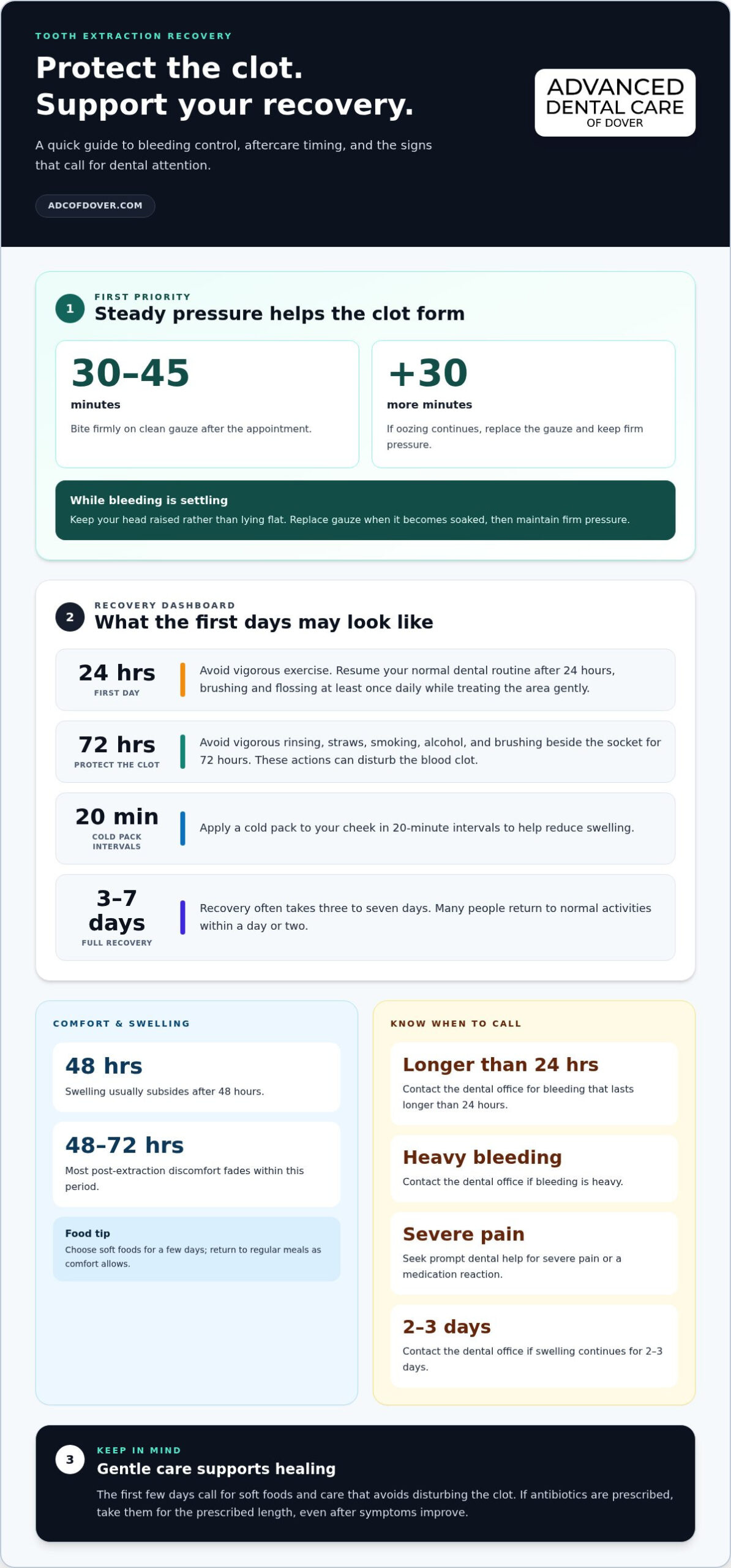
The first priority after a tooth extraction is protecting the blood clot while the site begins to heal. After a tooth extraction in Dover, NJ, bite on gauze for 30-45 minutes; if bleeding or oozing continues, use another gauze pad and bite firmly for 30 more minutes. The first few days also call for gentle care, including soft foods and avoiding actions that can disturb the clot.
It’s understandable to feel unsure about what’s normal after a tooth extraction, especially when it’s urgent. Knowing what to expect can make recovery feel more manageable and help you recognize when a symptom needs prompt attention.
This guide explains how to manage bleeding, what recovery may involve, and how to plan for costs and payment. You’ll also learn which warning signs call for urgent dental care, so you can focus on healing and know what to do next.
Key Takeaways
- Learn how to use gauze to manage bleeding and protect the clot as the extraction site begins to heal.
- Understand what pressure, soreness, and swelling can feel like during recovery, and which gentle care measures may help.
- See what can affect extraction costs and how to approach payment discussions without relying on a one-size-fits-all estimate.
- Recognize symptoms that need prompt dental attention, including heavy bleeding, severe pain, or a medication reaction.
Bleeding control and aftercare
Recovery often takes three to seven days, with soreness and swelling changing during that time. The first steps matter: steady gauze pressure helps control bleeding, while careful aftercare protects the clot. For more guidance on tooth extraction aftercare, including what to expect as you heal, review the recovery instructions.
Managing Bleeding After Extraction
Bleeding control means holding clean gauze firmly over the socket to support clotting. Bite on the gauze for 30-45 minutes after the appointment. If oozing continues, replace it and bite firmly for another 30 minutes. This steady pressure gives the clot time to form. Keep your head raised rather than lying flat, which can prolong bleeding.
- Replace gauze when it becomes soaked, then maintain firm pressure.
- Avoid vigorous exercise for 24 hours, since it can increase bleeding.
- Contact the dental office for heavy bleeding or bleeding lasting longer than 24 hours.
Recovery Time and Aftercare Instructions
Aftercare means protecting the extraction site while returning gradually to daily routines. For 72 hours, avoid vigorous rinsing, straws, smoking, alcohol, and brushing beside the socket. These actions can disturb the blood clot. Resume your normal dental routine after 24 hours, brushing and flossing at least once daily while treating the area gently.
Soft foods for a few days can make eating more comfortable. Apply a cold pack to your cheek in 20-minute intervals to help reduce swelling. Swelling usually subsides after 48 hours, and most post-extraction discomfort fades within 48 to 72 hours. Many people return to normal activities within a day or two, though full recovery may take three to seven days.
If swelling continues for 2-3 days, contact the dental office. Seek prompt help for severe pain or a medication reaction. If antibiotics are prescribed, take them for the prescribed length, even after symptoms improve. Later dental planning may discuss implants or bridges; a root canal may be considered before removal when saving the tooth remains possible.
Comfort and recovery during extractions
Comfort starts with numbing the area before the tooth is removed. The dentist uses local anesthetic around the tooth, jawbone, and nearby gums. You may still notice pressure as the tooth moves, even when pain signals are numbed. Knowing that difference can make the sensation less surprising.
For a straightforward extraction, the dentist gently loosens the tooth from its socket. A firmly anchored tooth or curved root may need a different approach. The tooth can be divided into smaller parts for removal, which avoids forcing it through an opening that cannot expand enough.
A broken tooth, infection, or dental disease may make extraction urgent. The reason for removal also shapes aftercare. For example, gum tissue around a partially emerged wisdom tooth can trap food and make cleaning difficult. Inflammation may cause swelling and pain, so prompt dental care can help address the problem.
Some extraction sites are closed with dissolvable sutures, which gradually disappear without removal. If your procedure involves anesthesia for oral surgery, arrange for a friend or family member to drive you home. On the day of extraction, drink fluids and choose nutritious soft food. Return to regular meals as comfort allows, rather than rushing a sore area.
- Ask the dentist to explain whether you may feel pressure during removal.
- Follow the specific instructions for any sutures placed at the site.
- Plan a ride if you receive anesthesia for oral surgery.
If an extraction is being considered, understanding the comfort steps and recovery plan can help you prepare. You can also discuss how tooth replacement options, such as dental implants, fit into longer-term care. For guidance about extraction concerns, discuss your dental care needs.
Recovery for most patients takes three to seven days. An ice pack or bag of frozen peas or corn on the extraction area can help limit swelling.
Financing and payment options
A simple extraction removes a visible tooth; a surgical extraction may involve gum tissue or a tooth that is impacted or difficult to reach. The cost depends on the case, including the tooth’s position and the work needed. The price is given after a quote request.
For tooth extraction in Dover, NJ, ask for an estimate that separates the planned extraction from related care. Factors can include whether the tooth is broken, how firmly it sits in the socket, and whether removal requires sectioning. A discussion of payment should also clarify which services the estimate covers, such as an examination or imaging.
Insurance benefits vary by plan and treatment. Review your dental benefits to understand coverage, deductibles, and your share of costs. For urgent treatment, contact your insurer to ask how your plan handles it and what documents are needed. Keep the treatment estimate and insurer response together to compare expected coverage with your budget.
- Bring your dental insurance details to the appointment.
- Ask for an itemized estimate and note what each line includes.
- Compare the estimate with your plan’s benefits before scheduling non-urgent care.
- Keep receipts and treatment documents with your insurance records.
If you’re planning more than one dental visit, consider how an extraction fits with cleanings, restorative work, or follow-up care. An extraction and a later tooth replacement are separate treatment decisions, so plan for each stage. Patients in Dover and Randolph can also consider transportation and time away from work when arranging a visit.
Payment options depend on the office’s arrangements and the patient’s circumstances. Avoid assuming that a particular financing plan or payment schedule applies. Instead, use the written estimate to understand the expected amount, then review it alongside your insurance benefits and household budget. Clear details can help you make a timely decision without confusing extraction costs with unrelated dental care.
Emergency tooth extraction in Dover, NJ
A dentist can assess an urgent tooth problem and determine whether removal is appropriate. Tooth position, root shape, and impaction affect complexity; cases requiring surgical access may call for an oral surgeon’s expertise. For tooth extraction care in Dover, NJ, the first step is understanding what is causing the pain or damage.
Seek prompt dental care for heavy bleeding, severe pain, continued swelling, or a medication reaction after an extraction. These symptoms need timely attention rather than waiting for a routine visit. A broken tooth or painful, partially emerged wisdom tooth also needs assessment because its condition can affect the next step.
To prepare for an extraction, tell the dentist which tooth hurts, when symptoms began, and whether swelling or bleeding has changed. Bring a current medication list and describe any reactions you’ve experienced. If the tooth is difficult to reach or firmly anchored, the dentist can explain whether removal may involve sectioning it into smaller parts.
If you’re considering tooth extraction in Dover, NJ, the key is a clear assessment of the problem and its urgency. Share specific details, such as pain when chewing or a wisdom tooth partly covered by gum tissue. That tissue can trap food and make cleaning difficult, while inflammation around the tooth may cause pain and swelling.
- Describe the location and nature of your symptoms clearly.
- Mention heavy bleeding, severe pain, swelling, or medication reactions.
- Ask how the tooth’s position and root shape affect removal.
- Follow the dentist’s instructions about the next step and aftercare.
Advanced dental care begins with identifying what is causing the problem, then weighing whether removal is needed. A tooth may sometimes be sectioned when its root shape or firm anchoring makes removal difficult. For an impacted wisdom tooth, its angle and gum coverage can shape the treatment plan.
If urgent symptoms are affecting you, contact the dental office about urgent symptoms and describe what’s happening.
Advanced Dental Care of Dover: Emergency dentistry
Advanced Dental Care of Dover provides emergency treatment during clinic hours for urgent dental concerns, including problems that may require tooth removal. If pain, swelling, or a damaged tooth is disrupting daily life, an evaluation can help determine the appropriate next step and explain the care involved.
Advanced Dental Care of Dover provides tooth extractions and can discuss recovery guidance and possible next steps. If you’re considering replacing a missing tooth later, dental implants may also be part of a broader conversation about restoring your smile. The right choice depends on your needs and oral health.
For help with an urgent dental concern, contact Advanced Dental Care of Dover.
Take the next step toward a healthier smile
Deciding what to do about a painful or damaged tooth can feel like a lot to carry. A thoughtful conversation can connect the immediate concern with your longer-term goals, whether you’re discussing tooth extraction in Dover, NJ, or planning for the space left behind. Your comfort, oral health, and priorities all matter.
Advanced Dental Care of Dover offers emergency treatment for urgent dental concerns. After an extraction, you can discuss dental implants as a possible replacement option. If you’re thinking about alignment as part of your future smile goals, the practice offers Invisalign clear aligners. Each service addresses a different need, so focus first on the concern that matters most to you.
Bring your questions and share what has been troubling you. Contact Advanced Dental Care of Dover to start a conversation about your dental care. A calm, informed next step can make the path ahead feel more manageable.
Frequently Asked Questions
What Happens After Your Tooth Is Removed?
A blood clot forms in the socket as healing begins. You may notice tenderness when eating or speaking, so choose foods that require little chewing while the area feels sensitive. Follow the care instructions you received and keep the extraction site clean without disturbing it. Contact a dental office for heavy bleeding, severe pain, or a medication reaction.
What is dry socket and how can I avoid it?
Dry socket can occur when the blood clot protecting the extraction site is disturbed or lost, leaving the area vulnerable during healing. To lower the risk, avoid straws, smoking, and vigorous rinsing for at least 24 hours after extraction. If pain becomes severe or you’re concerned the site isn’t healing normally, contact a dental professional for guidance.
When Is Tooth Extraction Dover Necessary?
A dentist may recommend extraction when a tooth is severely decayed, fractured, or too compromised to repair. For example, a broken tooth that cannot be restored may need removal. A partially emerged wisdom tooth can also trap food beneath the gum and become painful or swollen. The decision depends on the tooth’s condition and whether other dental treatment can preserve it.
Tooth extraction dentist vs oral surgeon near Dover NJ
A dentist can assess the tooth and determine whether removal is appropriate. Cases requiring surgical access may call for an oral surgeon’s expertise.