
The first few days after an extraction are when careful aftercare matters most. Bite firmly on gauze for 30 to 45 minutes, protect the blood clot, and take it easy as you heal. Dry socket most often develops 1 to 5 days after extraction, so worsening pain, especially pain that spreads toward your ear or face, deserves a call to your dentist. Good tooth extraction aftercare also means knowing when you can return to routine activities, often within 48 to 72 hours.
It’s understandable to feel unsure about what’s normal after a tooth extraction or when a change needs attention. This guide explains how to manage bleeding, recognize possible dry socket, ease back into everyday activities, and follow up with your dentist if recovery isn’t going smoothly. You’ll also learn which symptoms call for prompt attention, so you can care for the healing area with greater confidence.
Key Takeaways
- Bite firmly on gauze for 30 to 45 minutes to help control bleeding, and seek dental advice if it continues despite pressure.
- Dry socket most often develops 1 to 5 days after an extraction; worsening pain or a bad taste can be a reason to contact your dentist.
- Ease back into routine activities gradually, and choose soft foods while the extraction site heals.
- Keep your dentist informed about symptoms such as worsening swelling, fever, or pain that isn’t improving.
1. How do I stop bleeding after a tooth extraction?
For wisdom tooth removal or a simple extraction, protect the clot with gauze. Avoid vigorous rinsing or spitting for 24 hours. The removal method and extraction site can affect specific instructions, so follow the dentist’s directions. A small amount of oozing after extraction is normal.
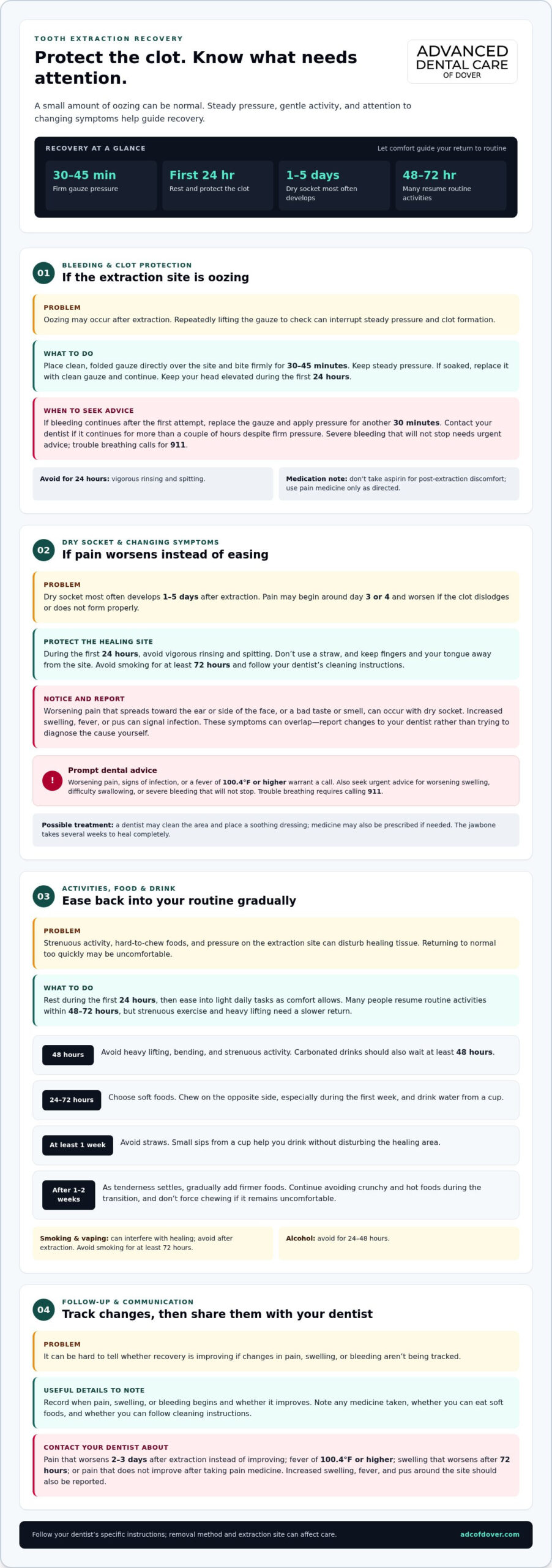
To control bleeding, place clean, folded gauze directly over the extraction site and bite firmly for 30 to 45 minutes. Keep steady pressure rather than lifting the gauze to check repeatedly. If the pad becomes soaked, replace it with clean gauze and continue gentle, firm pressure. Keep your head elevated during the first 24 hours. These steps help the blood clot form, supporting healing and lowering the chance of dry socket.
If bleeding continues after the first attempt, replace the gauze and apply pressure for another 30 minutes. Contact your dentist if bleeding continues for more than a couple of hours despite firm pressure. Severe bleeding that won’t stop needs urgent advice. Trouble breathing calls for 911. Don’t take aspirin for post-extraction discomfort, since it can increase bleeding. Use pain medicine only as directed by your dentist or on the package.
Numbness from local anesthesia typically wears off within 2 to 4 hours. Until sensation returns, avoid hot food and drinks, which can burn your mouth or lead you to bite your cheek or tongue. Swelling, bruising, and soreness can peak on days 2 and 3. Worsening swelling, fever, or pus may signal infection and needs dental advice. Dry socket involves a clot that dislodges or doesn’t form properly; increasing pain a few days after removal is a reason to call your dentist.
The basic clot-protection steps apply to both. Any differences depend on the removal method and site, so follow your dentist’s specific instructions.
2. How long does a dry socket take to develop after a tooth extraction?
Dry socket most often develops 1 to 5 days after an extraction. Pain may begin around day 3 or 4, sometimes worsening instead of easing. It happens when the blood clot dislodges or doesn’t form properly, leaving the socket without its usual protection. Contact your dentist about severe pain that develops days after removal.
Protect the clot during the first 24 hours. Avoid vigorous rinsing and spitting, and don’t use a straw, which can disturb the healing socket. Keep fingers and your tongue away from the extraction site. Avoid smoking for at least 72 hours, since smoking can interfere with healing. Follow your dentist’s cleaning instructions to support oral health as the area recovers.
Dry socket can cause worsening pain that spreads toward the ear or side of the face. A bad taste or smell from the socket can also occur. Infection may cause increased swelling, fever, or pus near the extraction site. Because these symptoms can overlap, report changes to your dentist rather than trying to diagnose the cause yourself.
Call your dentist promptly for worsening pain, signs of infection, or a fever of 100.4 degrees Fahrenheit or higher. Worsening swelling, difficulty swallowing, or severe bleeding that won’t stop also needs urgent advice. Trouble breathing requires calling 911. These symptoms need attention because they can signal a problem beyond routine socket healing.
A dentist may treat dry socket by cleaning the area and placing a soothing dressing. Medicine may also be prescribed if needed. The jawbone takes several weeks to heal completely after extraction, so follow-up and gentle care remain important during recovery. If you need help with an extraction concern, tooth extraction care can be a useful next step.
3. When can I return to normal activities after a tooth extraction?
Most people can resume routine activities within 48 to 72 hours, but strenuous exercise and heavy lifting need a slower return. Rest during the first 24 hours, then ease into light daily tasks as comfort allows. Avoid heavy lifting, bending, and strenuous activity for 48 hours, and follow any specific instructions from your dentist. If work or school involves physical effort, take that into account before returning.
Choose soft foods during the first 24 to 72 hours, and chew on the opposite side from the extraction site, especially during the first week. This limits pressure on healing tissue. As tenderness settles, gradually add firmer foods after 1-2 weeks. Continue avoiding crunchy and hot foods during that transition, and don’t force a return to your usual diet if chewing remains uncomfortable.
For example, make meals soft and easy to manage rather than crunchy or hard. Drink water from a cup to stay hydrated, and avoid straws for at least a week. Carbonated drinks should also wait for at least 48 hours after the procedure. Taking small sips helps you drink without disturbing the healing area.
Smoking and vaping can interfere with healing, so avoid them after extraction. Avoid smoking for at least 72 hours, and avoid alcohol for 24 to 48 hours. If you’re unsure whether an activity or food fits your dentist’s instructions, contact your dentist for guidance. Returning to normal is gradual: let comfort while eating, drinking, and moving guide each step rather than rushing the process.
4. Follow-up care and communication with a dentist
Tracking changes from day to day can make recovery easier to assess. Note when pain, swelling, or bleeding begins and whether it improves, along with any medicine you’ve taken. Tell your dentist whether you can eat soft foods and follow cleaning instructions. These observations help the dental team understand what has changed.
Contact your dentist if pain worsens 2 to 3 days after extraction instead of improving. A fever of 100.4 degrees Fahrenheit or higher also warrants a call. Get dental advice if swelling worsens after 72 hours, or pain doesn’t improve after taking pain medicine. Increased swelling, fever, and pus around the site can signal infection and should be reported.
Severe bleeding that won’t stop needs urgent advice. Difficulty swallowing or breathing also requires urgent attention; call 911 for trouble breathing. Don’t wait for a routine appointment if these symptoms arise. Describe the symptom, when it started, and whether it is getting worse so the person responding can understand the urgency.
Follow the dentist’s directions for rinsing, prescribed medicine, and any follow-up appointment. If stitches were used, the dentist may remove them around day 7. Keep the appointment if one is scheduled, and mention any concern that has appeared since the extraction. Your dentist can assess the healing site and advise whether your care needs to change.
For a useful update, keep a brief daily note of symptoms and medication, then have it ready when you call. If worsening pain, swelling, or another concern needs attention, contact a dentist about follow-up care.
Advanced Dental Care of Dover: Emergency dentistry
Advanced Dental Care of Dover provides emergency dentistry for dental concerns that need prompt attention during clinic hours. If pain, swelling, or bleeding after an extraction is worsening, contact the practice for guidance on next steps. The team also provides tooth extractions and can discuss follow-up care after removal. For a planned replacement, dental implants may be considered once the extraction site has healed. Clear, timely communication helps your dental team understand what you’re experiencing and determine appropriate care. If you’re concerned about healing or need help with an extraction, contact Advanced Dental Care of Dover.
Make your next dental step feel manageable
Healing can be a useful time to think about your ongoing oral health, not just the extraction site. Note any questions or changes you’d like to discuss at your next dental visit, and keep your dentist informed as your needs evolve. A steady, practical approach to tooth extraction aftercare can help you feel more confident as you return to everyday routines and consider future dental care.
Advanced Dental Care of Dover offers emergency dentistry for dental concerns that need attention, along with Invisalign clear aligners and dental implants. If you’d like to discuss a concern or your next step, you’re welcome to contact Advanced Dental Care of Dover. You can move forward one conversation at a time, with support for your dental health along the way.
Frequently Asked Questions
What are the risks or complications of tooth extractions?
Possible complications include dry socket, infection, persistent bleeding, and soreness or swelling around the extraction site. A change that gets worse rather than gradually settling deserves attention. Contact a dentist about fever, pus, swelling that worsens after 72 hours, or severe bleeding that persists despite pressure. If you have trouble breathing, call 911. Share when symptoms began and how they’ve changed.
How can you care for yourself at home?
Follow your dentist’s directions for medicine and cleaning, and avoid disturbing the extraction area during the first day. After 24 hours, gently rinse with warm salt water, mixing half a teaspoon of salt into a glass of warm water. Avoid vigorous swishing. Choose soft meals, sip water from a cup, and contact your dentist if a new concern develops during healing.
How do I know if I have a dry socket?
Dry socket is a concern when pain increases a few days after extraction instead of easing. It can spread toward your ear or the side of your face, and the area may have a bad taste or smell. A dentist can assess the socket and provide treatment, such as cleaning it and placing a soothing dressing. Don’t try to treat the socket yourself.
How do I stop bleeding after a tooth extraction?
Place clean, folded gauze over the extraction site and bite down firmly for 30 to 45 minutes without repeatedly lifting it to look. If bleeding continues, replace the gauze and keep pressure for another 30 minutes. A little oozing can happen after removal. Contact your dentist if bleeding persists for more than a couple of hours despite firm pressure.
How long does a dry socket take to develop after a tooth extraction?
Dry socket most often develops 1 to 5 days after extraction, and pain may start around day 3 or 4. It occurs when the protective blood clot dislodges or doesn’t form properly. If pain becomes more severe during those days, or spreads toward your ear or face, contact your dentist for an assessment rather than waiting for a routine checkup.
How long does recovery take?
Many people return to routine activities within 48 to 72 hours, while general recovery often takes 1 to 2 weeks. Healing inside the jaw continues longer, with the bone taking several weeks to heal completely. A larger socket can take longer to fill in than a smaller one. Follow your dentist’s instructions as you gradually resume usual eating and activities.