
For people replacing missing teeth in Dover, NJ, implants, bridges, and dentures offer different ways to restore a smile. Implants are titanium posts placed in the jawbone, bridges attach to neighboring teeth, and dentures are removable appliances. After tooth loss, people generally lose 25% of supporting jawbone structure within the first year.
A missing tooth can affect more than your appearance. It may make eating or speaking less comfortable, and changes to your bite or jawbone can raise concerns over time. It’s understandable to want a clear, comfortable option without feeling rushed into a decision.
This guide compares implants, bridges, and complete dentures, explains what may affect implant eligibility, and looks at how tooth loss can influence daily function and jawbone health. You’ll get a practical overview of each option and the factors that shape the choice, so you can feel prepared to discuss restoring your smile.
Key Takeaways
- Compare implants, bridges, and dentures by how they replace teeth and what each option involves.
- Learn which health and jawbone factors are considered when assessing implant eligibility.
- Understand when complete dentures may be considered for replacing all teeth in one or both jaws.
- Recognize how missing teeth can affect chewing, speech, bite, and jawbone health.
What is a dental implant, and why is it different from a bridge or denture?
In Dover, NJ, options for replacing missing teeth include implants, bridges, and removable dentures. To compare them, consider the condition of neighboring teeth, jawbone support, and whether you need to replace one tooth or several. For a closer comparison of how to replace a missing tooth, explore how each option balances stability, convenience, and care.
Implants Compared With Bridges and Dentures
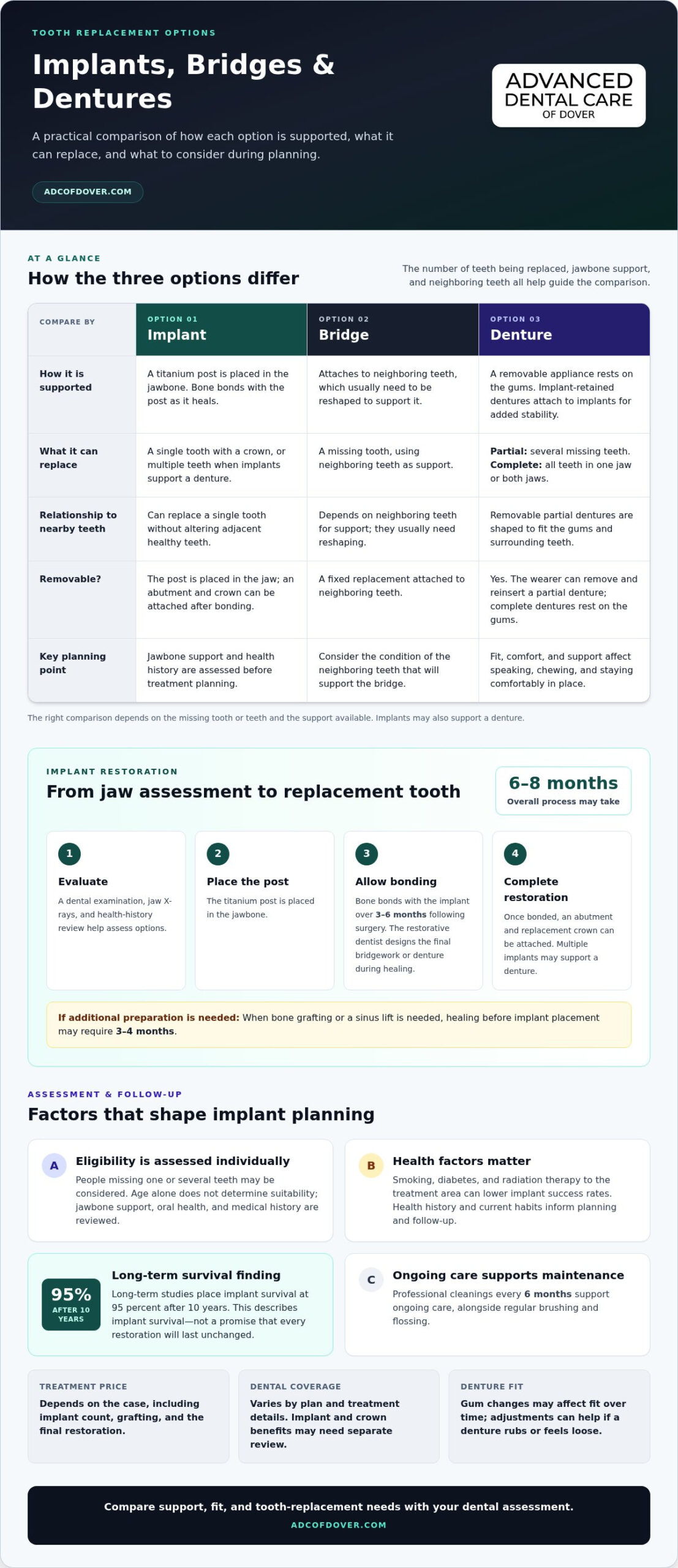
A dental implant uses a titanium post placed in the jawbone. A fixed bridge attaches to neighboring teeth, which usually need to be reshaped to support it. An implant can replace a single tooth without altering adjacent healthy teeth. A partial denture, by contrast, is removable and can replace several missing teeth. Implants can also support dentures, offering another option when multiple teeth need replacing.
How Implants Replace Missing Teeth
First, a dentist evaluates the jaw with X-rays to see whether it can accommodate implants. The titanium post is placed in the jawbone, where bone bonds with it for three to six months following surgery. During that healing period, the restorative dentist designs the final bridgework or denture to support function and appearance.
Once the implant has bonded with the bone, an abutment and replacement crown can be attached. The crown completes a single-tooth restoration; multiple implants may also support a denture. This approach anchors the replacement in the jaw rather than relying only on neighboring teeth or a removable appliance.
If you’re replacing missing teeth in Dover, NJ, implants may be worth discussing if you’re missing one or more teeth or are dissatisfied with dentures. Age alone does not determine whether implants are suitable. Smoking, diabetes, and radiation therapy to the treatment area can affect implant success. An assessment includes a dental examination, imaging, and a review of your health history. Ask how those findings affect your options and treatment plan.
Eligibility and factors that may affect implant success
An implant assessment combines a dental examination, jaw imaging, and a review of your health history. These help identify suitable treatment and factors that may affect healing.
Implant Eligibility
A patient missing one tooth or several may be considered for implants. Age alone doesn’t rule someone in or out. The dentist reviews jawbone support, oral health, and medical history before planning treatment. For several missing teeth, implants may support individual replacements or a denture. If bone grafting or a sinus lift is needed, healing before placement may require 3 to 4 months.
Factors Affecting Implant Success
Smoking, diabetes, and radiation therapy to the treatment area can lower implant success rates. Share your health history and current habits during the assessment, since they inform planning and follow-up. Long-term studies place implant survival at 95 percent after 10 years. That figure describes implant survival, not a promise that every restoration will last unchanged.
When comparing implants with bridges or removable dentures, consider how each option is supported, cared for, and suited to the missing tooth or teeth. A bridge relies on neighboring teeth, while a denture can be removed. Implants may support a crown or a denture. The number of teeth being replaced and the condition of surrounding teeth help guide the comparison.
Coverage varies by dental plan and treatment details, so review the benefits for the implant and its crown separately. The treatment price depends on the case and is given after a quote request; factors include the number of implants, any grafting, and the final restoration. The overall implant process may take six to eight months. After placement, professional cleanings every 6 months support ongoing care, alongside regular brushing and flossing.
If you’re considering implants, a dental implant evaluation can help connect your health history, jaw assessment, and replacement goals with a treatment plan.
Complete dentures
Complete dentures replace all teeth in one jaw or both jaws. A consultation can consider fit, comfort, appearance, and how the appliance supports everyday tooth replacement.
Full-Arch Denture Replacement
A complete denture rests on the gums and replaces a full arch of teeth. Its fit and support matter for speaking, chewing, and staying comfortably in place. If you find complete dentures uncomfortable or difficult to tolerate, discuss how they can be adjusted and cared for. Implant-retained dentures offer another approach: they attach to implants for added stability.
Benefits and Maintenance of Modern Dentures
A well-fitted denture restores the appearance of a full set of teeth and can support eating and speech. Regular care helps keep it clean and comfortable. Follow its care instructions and arrange an adjustment if it rubs or feels loose. A consultation can also cover how changes in the gums may affect fit over time and whether another tooth replacement better suits your needs.
Not every removable appliance replaces a full arch. A partial denture can replace several missing teeth and be removed and reinserted by the wearer. It is shaped to fit the gums and surrounding teeth. A flipper is another removable option, but it is a fragile, temporary plastic tooth with a plastic retainer. Its temporary nature makes it different from a longer-term restorative plan.
Digital dentures use digital records to design an appliance, while in-office fabrication describes where it is made. These terms refer to different steps and do not guarantee fit or comfort. Ask how design, fitting, and adjustments are handled during your consultation. For example, replacing a full upper arch calls for a complete denture, while someone missing several teeth in a row may consider a partial denture. Start by comparing how many teeth need replacing and what support is available.
Effects of missing teeth on bite, speech, eating, and jawbone
A missing tooth can affect chewing, speech, and how your upper and lower teeth meet. The impact varies depending on whether the missing tooth is at the front or back, so consider its location and how many natural teeth remain.
Effects on Speech
Front teeth help shape sounds as your tongue and lips move during speech. Losing a front tooth can change how certain words sound or feel to pronounce. Replacing the tooth can restore the surface involved in those movements. For example, a gap near the front may affect speech more noticeably than a missing back tooth. Mention any changes during a dental assessment.
Effects on the Jawbone
The jawbone beneath a missing tooth no longer receives the same chewing pressure. People generally lose 25% of their supporting jawbone structure within the first year after tooth loss. Bone changes can affect the foundation available for later tooth replacement. They can also influence facial support around the mouth. Replacing a tooth helps address the gap, while an implant is placed in the jawbone and bonds with it.
A gap can change how nearby teeth meet when you chew. Losing a back tooth, for example, can make chewing on that side less comfortable and shift more work to other teeth. A changed bite can also distribute pressure unevenly across the remaining teeth. A partial denture, bridge, or implant may replace a missing tooth, but each works differently. The number and position of missing teeth help shape the choice.
Notice practical changes, such as difficulty chewing certain foods, speech concerns, or a bite that feels different. Share when each change began and which side or area is affected. These details help connect daily function with the missing tooth’s location. Preserving healthy teeth and supporting comfortable eating are useful goals to include in a tooth-replacement discussion.
Discuss how missing teeth affect your bite and the replacement options that address your needs.
Advanced Dental Care of Dover: Emergency dentistry
Advanced Dental Care of Dover offers emergency dentistry during clinic hours, as well as dental implants and tooth extractions. If a damaged or painful tooth needs prompt attention, emergency dentistry can address the immediate concern; after an assessment, you can discuss tooth replacement options. For a planned restoration, an implant is one option, and the right approach depends on your oral health, jawbone, and treatment goals. The dental team can talk through the steps and your needs before you decide. To discuss a missing tooth or urgent dental concern, make an appointment with Advanced Dental Care of Dover.
Take the Next Step Toward a Comfortable Smile
Choosing a tooth replacement is an opportunity to focus on what you want daily life to feel like, from sharing meals comfortably to speaking with confidence. Before your dental visit, consider which concerns matter most and what questions would help you feel prepared. This gives you a clear starting point for a thoughtful conversation without needing to choose a treatment in advance.
If you’re considering replacing missing teeth in Dover, NJ, Advanced Dental Care of Dover can discuss dental implants as part of your care. The practice also offers Invisalign clear aligners and emergency dentistry, so you can talk through your dental needs in a welcoming setting. Your next step can simply be sharing what’s bothering you and what you hope to improve.
Contact Advanced Dental Care of Dover to begin a conversation about your smile. You deserve care that takes your concerns seriously and helps you move forward with confidence.
Frequently Asked Questions
Why Select Dental Implants Over More Traditional Types Of Restorations?
Dental implants can replace a tooth without relying on neighboring healthy teeth for support. This may be useful when the teeth beside the gap are intact. Implants can also support crowns or dentures, depending on how many teeth are missing. Before choosing, compare how each restoration is held in place, whether it is removable, and what the treatment involves.
Can I get multiple implants at once?
Yes, multiple implants can be planned to replace several missing teeth or support a denture. The plan considers the number and position of the gaps, jawbone condition, and the restoration being supported. Jaw X-rays help assess the available bone. For a full arch, one approach uses four implants to support fixed teeth, while other plans use different arrangements.
Does dental insurance cover implants?
Dental insurance may contribute to implant treatment, but benefits depend on your plan and the treatment components. Most PPO plans cover 40 to 60 percent of the crown portion. Ask your insurer for a written breakdown that separates the implant, crown, and any related procedures. This helps you understand which parts your benefits apply to before treatment begins.
How long does the full dental implant process take?
The full dental implant process usually takes six to eight months. This includes implant placement and healing as the implant bonds with the jawbone before the final restoration is attached. If bone grafting is needed, it can add two to four months. The treatment sequence also depends on whether an extraction or another preparatory step is needed. For guidance on what to expect after a procedure, see this tooth extraction in Dover, NJ aftercare and recovery guide.
How much does a single dental implant cost in Dover, NJ?
The price depends on the case and is provided after a quote request. Cost factors include the implant and crown, imaging and planning, and whether an extraction or bone grafting is needed. Replacing one tooth may involve different steps from replacing several. A written treatment plan can show which procedures are included and how they relate to the final crown.
What happens if I do not replace a missing tooth?
Leaving a gap can affect more than appearance. Nearby teeth may shift and change how your bite fits together, while the jawbone beneath the gap can lose support after tooth loss. For example, a missing back tooth may make chewing on that side less comfortable. A dental assessment can help you understand the effect of the gap and consider replacement options before planning next steps.