
Your dental exam schedule may be closer together than you think. According to the American Dental Association, exam intervals are determined by a dentist and may range from every 6 months to every 3 months, so a routine dental checkup in Dover should follow your individual needs.
It’s reasonable to wonder whether you need a checkup when your teeth feel fine. Cavities and tooth decay can be difficult to spot on your own, though. Regular exams give a dental professional the chance to look for early signs and explain any findings.
This article explains how often to schedule a dental exam, what can affect the timing, and how checkups help identify cavities and tooth decay. You’ll also learn what a dentist may assess, so you can feel more prepared for your visit.
Key Takeaways
- Dental exams can uncover signs of tooth decay and gum problems that may not be obvious at home.
- A professional cleaning removes plaque and tartar, with scaling and polishing helping leave teeth clean and smooth.
- Exam timing is individualized; the American Dental Association says intervals may range from every 6 months to every 3 months.
- Your dental history and cavity risk help shape what the dentist checks, including whether bitewing X-rays may help reveal decay between teeth.
Why Get Dental Exams and Check-Ups?
Regular dental exams let a dentist assess your teeth, gums, and surrounding structures. A professional cleaning removes plaque and tartar, which can contribute to gum disease and tooth decay.
Preventive Exams and Cleanings
A preventive exam checks for concerns such as cavities and signs of gum disease, including issues you may not yet notice. During a visit, the hygienist examines your teeth and gums, and the dentist may recommend X-rays based on your history, symptoms, age, exam findings, and risk factors. X-rays aren’t needed at every checkup. The exam helps identify areas that may need attention and gives you a chance to discuss changes in your oral health.
A routine dental checkup in Dover can help you build a consistent approach to caring for your oral health. Mention symptoms such as tooth sensitivity or gums that bleed when you floss, so the dental team can assess them.
Cleaning, Scaling, Polishing, and Flossing
A professional cleaning removes plaque and tartar, including hardened deposits that are harder to remove than plaque. Scaling clears these deposits from tooth surfaces; polishing follows to smooth the teeth. The hygienist also checks for gingivitis and signs of periodontal disease as part of the cleaning visit. Daily flossing helps clean between teeth, where a toothbrush may not reach easily.
A routine checkup includes an assessment, and a cleaning may involve scaling, rinsing, and polishing. If you’re unsure how to clean between particular teeth, ask the hygienist to demonstrate a flossing technique.
What does a routine dental checkup include? It includes an assessment of your teeth and gums. The dentist may recommend X-rays based on your needs, and a professional cleaning can remove plaque and tartar through scaling and polishing.
How do I book a dental checkup in Dover, and what should I bring? Request an exam and cleaning with a dental office. Bring your medical history and insurance information, and be ready to describe your current dental care routine.
What should I expect during a first dental checkup? The dental team will review your oral health, examine your teeth and gums, and discuss any concerns. Whether you need X-rays depends on your history, symptoms, age, exam findings, and risk factors.
Are there affordable or sliding-scale dental clinics in Dover? Insurance coverage varies by plan, and sliding-scale arrangements depend on the clinic. Some plans cover two exams and two cleanings each year, but coverage differs.
How can I prepare for a dental checkup and cleaning? Clean your teeth before your visit, and bring details about your medical history, insurance, and dental care routine. Mention concerns such as sensitivity or bleeding when you floss.
What symptoms mean I should see a dentist sooner than my routine checkup? Tooth pain, swelling, bleeding gums, or a broken tooth are reasons to seek dental attention before your next scheduled exam.
How Often Should You Get a Dental Exam?
The right interval depends on your oral health, not just the calendar. According to the American Dental Association, a dentist determines exam intervals, which may range from every 6 months to every 3 months. Smoking, how often cavities develop, and genetic susceptibility to tooth or root decay and gum disease can influence that timing. Your dental history helps shape a schedule suited to your needs.
Regular visits give dental professionals a chance to look for early signs of cavities and gum disease. A hygienist checks your teeth and gums for gingivitis and signs of periodontal disease, including concerns you may not see or feel. These findings can prompt a discussion about next steps before an issue becomes more noticeable. Tell the dental team about changes you’ve noticed, such as bleeding when brushing or flossing.
Assessing your teeth and gums includes screening for gum disease. Plaque and tartar buildup can contribute to gum disease, so a professional cleaning removes deposits that are difficult to clear at home. Your oral hygiene routine also matters. Share how you brush and floss to help the dental team identify areas that may need extra attention.
If an exam identifies a concern, the dentist can explain the findings and discuss appropriate care. The next steps depend on the condition: a cavity and signs of gum disease, for example, call for different discussions. Ask what the exam showed and whether changes to brushing, flossing, or follow-up visits could support your oral health.
Regular exams can also include an oral cancer screening. The dental professional examines the lips, cheeks, tongue, and floor and roof of the mouth for abnormalities. If you’re due for an exam, schedule a dental visit and share any changes in your teeth or gums.
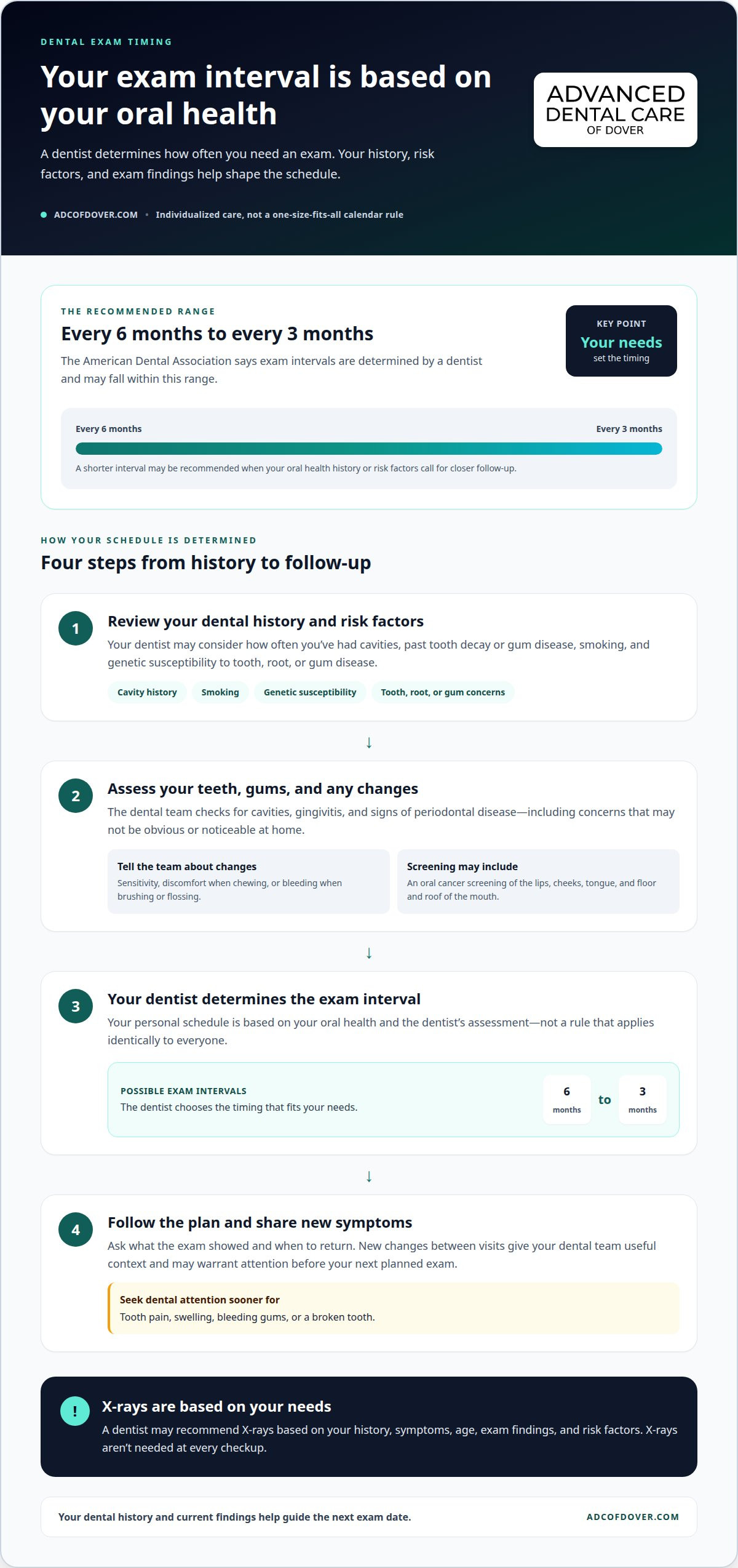
Recommended dental exam frequency
There isn’t one schedule that fits every patient. The American Dental Association says dentists determine exam intervals, which may range from every 6 months to every 3 months. Your dental exam frequency reflects your oral health and the factors that may affect it, rather than a calendar rule applied to everyone.
Your dentist can consider your history of cavities, tooth decay, and gum disease when discussing how often to schedule visits. Smoking and genetic susceptibility to tooth, root, or gum disease may also affect the timing. If you’ve had repeated cavities, mention that history when discussing a plan for your dental care.
Keep your recommended exam interval in mind, and share any changes between visits. New sensitivity, discomfort when chewing, or bleeding when brushing can give the dentist useful context. These signs don’t establish a diagnosis on their own, but they can help guide an assessment of your teeth and gums. Mention them rather than waiting for your next planned exam.
The recommended interval applies to exams, though a visit may also include a cleaning. Your dentist considers your findings and risk factors when discussing the next appointment. Ask what the exam showed and when to return, so the timing suits your needs. If your dentist recommends a shorter interval, ask what concern it addresses and what to watch for at home.
An oral cancer screening may also be part of an exam. The dental professional looks at the lips, cheeks, tongue, and floor and roof of the mouth for abnormalities. Oral cancer can affect people of any age, regardless of lifestyle or risk factors. If a suspicious area is found, further testing or specialist evaluation may be recommended. That screening is one reason an exam assesses more than cavities.
Cavity and tooth decay checks
A cavity check is one part of a dental exam. The hygienist looks for cavities and other signs of tooth decay, while the dentist evaluates your teeth and considers what you report, such as sensitivity or discomfort. A thorough assessment combines what the dental team sees with relevant findings rather than relying on one symptom. This preventive step can identify concerns that may need follow-up.
Plaque and tartar buildup can contribute to tooth decay. During an appointment, a professional cleaning removes deposits, while the exam checks tooth surfaces for signs of cavities. Tell the dental team if a particular tooth feels different or bothers you while eating. That detail can help direct the assessment to the area.
Bitewing X-rays can provide another view. They show the crowns of upper and lower teeth and the spaces between them, where a visual check may not reveal the full picture. They can also show the crowns of back teeth and the height of the alveolar bone. Your dentist considers your history, symptoms, age, exam findings, and risk factors when deciding whether X-rays are appropriate. They aren’t needed at every routine checkup.
For example, if there’s a concern between back teeth, the dentist may consider whether a bitewing image would help assess the area. The image supports the exam, and the dentist explains what it shows and whether further care is appropriate. The practice described in the research typically takes bitewing X-rays once every year. Your exam findings and risk factors help determine whether imaging is useful for your visit.
Regular exams and cleanings support optimal oral health by pairing assessment with plaque and tartar removal. A cancer screening may also be included, but it looks for abnormalities in the lips, cheeks, tongue, and mouth, rather than checking for cavities. If you have a tooth concern or are due for an appointment, schedule a dental appointment to discuss an exam.
Advanced Dental Care of Dover
Advanced Dental Care of Dover can help you understand your exam schedule and address concerns identified during a dental visit. Family Dentistry provides a setting to discuss routine care, changes in your teeth or gums, and questions about follow-up. For a sudden dental problem, the practice also offers Emergency Treatment during clinic hours.
Mention your symptoms and ask what the dental exam found, including whether your history affects how often you should return. Clear answers can help you feel prepared to maintain your oral health between visits.
For guidance about your dental care, contact Advanced Dental Care of Dover.
Make Your Next Dental Visit a Step Toward Better Care
Your next appointment is a chance to talk openly about what you want from your dental care, not just what an exam finds. If anything feels uncomfortable or unclear, bring it up. Sharing your concerns helps the dental team understand what matters to you and discuss suitable next steps.
A routine dental checkup in Dover can also open a conversation about other dental needs. Advanced Dental Care of Dover offers Emergency Treatment, Invisalign® clear aligners, and Dental Implants. These services address different concerns, so your visit can focus on why you’re seeking care and the questions you want answered.
You don’t need to have every concern figured out before reaching out. A simple conversation can help you take the next step at a pace that feels comfortable. Contact Advanced Dental Care of Dover to discuss your dental care, and feel welcome to get in touch.
Frequently Asked Questions
What happens if the dentist finds a problem?
The dentist explains the findings and discusses an appropriate next step with you. For example, a concern affecting a tooth may call for further evaluation and a conversation about care. Ask what the finding means, which options suit your situation, and whether you should adjust your usual care while deciding. Advanced Dental Care of Dover provides Family Dentistry and Cavities Treatment.
How often should adults get dental checkups and cleanings?
Adults’ exam schedules depend on their oral health and risk factors. The American Dental Association says a dentist determines exam intervals, which may range from every 6 months to every 3 months. Cleanings are also tailored to dental needs; some insurance plans cover two cleanings each year, though coverage varies. Ask how your exam findings and history shape the timing of your next visit.