
The quickest route to a brighter smile may be professional whitening, while Lumineux teeth whitening strips offer an at-home option used over a product-directed schedule. In-office whitening can lighten teeth faster than over-the-counter products because it uses higher concentrations of peroxide, according to the National Library of Medicine.
It makes sense to compare more than the price on a strip package. The number of treatments included, how often you use them, how long the course takes, and the results you hope for all affect which option may suit you.
This comparison explains how treatment counts and application schedules differ, what can affect whitening results, and which cost factors matter. With a clearer picture, you can weigh the convenience of at-home strips against professional guidance and potentially faster whitening.
Key Takeaways
- Compare the number of treatments in a strip pack with the full application schedule to understand the at-home commitment.
- Follow each product’s directions for application timing, since schedules vary and a complete strip course can take several days.
- Professional whitening can lighten teeth faster than over-the-counter products, but results and treatment duration depend on the approach.
- Weigh convenience against speed and professional guidance to decide which whitening option best fits your priorities.
Price and number of treatments per pack
With Lumineux strips, compare the package contents, not just the shelf price. Check how many complete treatments it includes and whether the listed price reflects a sale. A lower package price may provide less whitening per purchase if it contains fewer treatments. Compare packages with the same treatment count before deciding which costs less for your planned course.
Strip prices and sale offers can vary by seller, package size, and promotion. The formula matters too: peroxide-based and peroxide-free products may use different ingredients, so price alone can’t show which approach fits your needs. A money-back guarantee is a separate policy, not a treatment included in the box. Read the seller’s written terms, including eligibility, deadlines, and conditions, before factoring a guarantee into the value.
Dentist whitening is priced around the professional appointment and the treatment plan, rather than a retail pack. The total can depend on the method used and the care involved. No dollar figure can be fairly compared here with Lumineux’s shelf price. Ask for a written estimate that identifies what the planned treatment includes, then compare that scope with the number of strip treatments you would purchase.
Children and pregnant people should speak with a dentist before using strips or choosing dentist whitening. Age, pregnancy, and individual oral health can affect whether whitening is appropriate. A dentist may recommend a product based on a patient’s needs, but that recommendation alone doesn’t establish every product claim. Evidence should come from clinical studies of the specific formula and intended use, not ingredient claims alone.
| Option | Price basis | Treatment amount | What to compare |
|---|---|---|---|
| Lumineux strips | Retail package price; sale pricing may vary | Number of treatments stated on the pack | Formula, pack size, and written guarantee terms |
| Dentist whitening | Professional treatment plan | Scope described in the estimate | Method and included care |
Compare the full treatment scope and package count, not just a sale label.
Strip application and treatment schedule
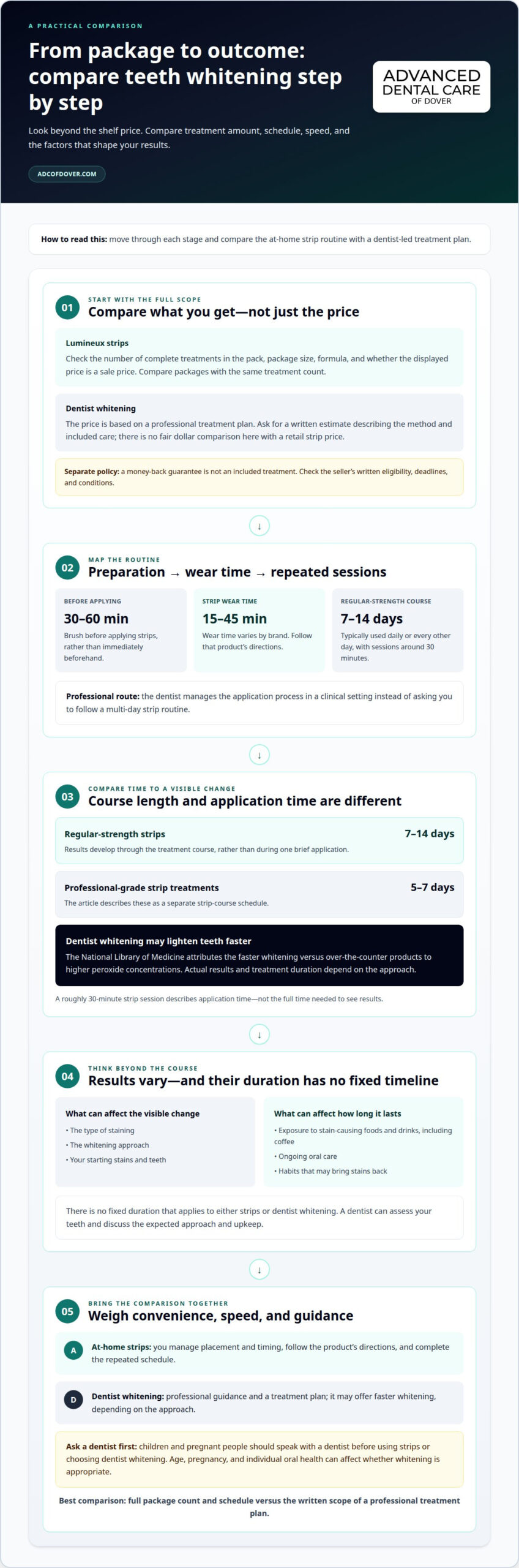
Strip routines involve preparation, wear time, and repeated sessions. Follow the product directions, since application timing can differ by brand.
Strip Application Time
Begin with clean, dry teeth, and plan the application around the package directions. Brushing should happen 30 minutes to an hour before applying strips, rather than immediately beforehand. That gap is part of preparation, not the strip’s wear time. Brands may set different application instructions, so one schedule shouldn’t be assumed to fit every product.
Preparation also distinguishes strip use from dentist whitening. At home, you manage placement and timing; professional whitening follows the dentist’s treatment process. Consider the timing of drinks such as coffee and brushing before a session. If your teeth feel sensitive, don’t wear strips longer than the directions specify.
Wear Time and Treatment Schedule
Whitening strips are generally worn for 15 to 45 minutes, depending on the brand. Regular-strength strips are used daily or every other day, with sessions lasting about 30 minutes. A full regular-strength treatment course ranges from 7 to 14 days. That repeated schedule differs from a professional appointment, where whitening is delivered in a clinical setting.
Follow the package directions rather than combining schedules or adding sessions. If a product causes discomfort, remove it and follow its guidance; sensitive teeth can make the routine harder to tolerate. Coconut oil may come up in oral-care discussions, but it doesn’t determine strip wear time. Follow the product directions.
For professional whitening, the dentist manages the application process instead of asking you to follow a multi-day strip routine. The approach can suit people who prefer support with treatment timing or have questions about sensitivity. Professional whitening guidance can help clarify how an in-office schedule differs from at-home use.
Whitening results and treatment duration
Time to see a change and how long that change lasts are different measures. Use Lumineux strips as directed. Dentist whitening can lighten teeth faster than over-the-counter products, according to the National Library of Medicine.
Time to Show Whitening Results
At-home results develop through the strip treatment course, rather than during one brief application. Regular-strength strip courses generally run 7 to 14 days, while professional-grade strip treatments may span 5 to 7 days. Dentist whitening can work faster than over-the-counter products because it uses higher peroxide concentrations. A 30-minute session describes application time, not the full time needed to see results.
Stains also affect the visible result. The change you see depends partly on the type of staining and the whitening approach. A dentist can assess your teeth and explain how a selected treatment is expected to work; a strip package provides directions for its formula.
Duration of Whitening Results
There’s no fixed period that applies to results from Lumineux strips or dentist whitening. The lasting shade depends on factors such as exposure to stain-causing foods and drinks, including coffee, and ongoing oral care. Toothpaste’s cleaning role differs from whitening treatment, and an ingredient name such as dead sea salt alone can’t establish how long a result will last.
For either option, consider your starting stains and habits that may bring them back. A dentist can discuss how the treatment approach relates to your teeth and what may affect upkeep. That’s more useful than assuming strips or in-office treatment will maintain the same shade for a set duration.
In short, strips require a course of use, while dentist whitening may show results faster. How long the resulting shade lasts varies with staining and ongoing exposure. Neither a treatment schedule nor an ingredient label alone predicts how long the change will remain.
At-home versus professional whitening
The Lumineux teeth whitening strips vs dentist whitening comparison comes down to who manages treatment, where it happens, and how quickly teeth may lighten. Your preference for an at-home routine or professional care can help guide your choice.
With strips, you follow the package directions at home across a treatment course. Regular-strength strip courses generally take 7 to 14 days, while professional-grade strip treatments may span 5 to 7 days. That schedule requires repeated applications. The product’s directions shape each session, and results depend on using the strips as instructed.
In-office whitening follows a professional process rather than a multi-day strip routine. According to the National Library of Medicine, it can lighten teeth faster than over-the-counter products because it uses higher concentrations of peroxide. Faster treatment may suit someone prioritizing speed, while strips offer an at-home option with a longer schedule.
| Criterion | At-home strips | Professional whitening |
|---|---|---|
| Application | Applied at home according to package directions | Delivered in a dental setting |
| Schedule | Repeated sessions across the product’s course | Professional treatment process |
| Speed | Results develop during the course | Can lighten teeth faster than over-the-counter products |
| Support | Product directions guide use | A dental professional provides care |
Both approaches aim for a brighter appearance, but differ in control and support. With strips, you manage application timing; professional whitening takes place in a dental setting. If comfort is a priority, discuss your concerns and desired outcome before choosing. A dental professional can consider your teeth and goals when discussing treatment.
Choose strips if you prefer an at-home routine and can follow its full schedule. Consider professional whitening if faster treatment and dental support matter more. A Lumineux teeth whitening strips vs dentist whitening comparison can be part of a discussion about your goals. If you’re weighing these options, discuss professional whitening with a dental team.
Advanced Dental Care of Dover: Teeth Whitening & Veneers
Advanced Dental Care of Dover offers teeth whitening and veneers for people considering a professionally guided change to their smile. If you’re weighing strips against professional care, a conversation about your goals and concerns can help clarify which approach may suit your teeth and preferences.
Whitening changes tooth shade, while veneers are another cosmetic option. The right discussion depends on the result you hope to achieve and the condition of your teeth. If sensitivity or treatment timing affects your decision, mention it so it can be considered as part of your care.
For a personal discussion about teeth whitening or veneers, contact Advanced Dental Care of Dover.
Choose the Whitening Path That Feels Right for You
Let your priorities guide the next step. A comparison of Lumineux teeth whitening strips vs dentist whitening can start with whether you’d rather manage a home routine or discuss your goals with a dental professional. Your comfort, the change you hope to see, and the support you prefer can all shape your decision.
You don’t need to settle every detail before starting a conversation. Sharing what matters most, such as wanting a brighter smile or feeling unsure about whitening, gives the dental team a helpful place to begin. As you weigh Lumineux teeth whitening strips vs dentist whitening, consider which approach feels more manageable for you.
Advanced Dental Care of Dover offers teeth whitening and veneers as cosmetic care options. If you’re ready to talk about your smile, contact Advanced Dental Care of Dover. A thoughtful next step can make your decision feel more comfortable and personal.
Frequently Asked Questions
How does at-home whitening compare to professional whitening?
At-home strips put application and schedule management in your hands, while professional whitening takes place in a dental setting. In-office treatment can lighten teeth faster than over-the-counter products because it uses higher peroxide concentrations, according to the National Library of Medicine. Consider whether managing applications yourself or receiving professional care better matches your comfort, goals, and preferred level of support.
How fast will I see results?
Timing varies by product and whitening approach. Dentist whitening can work faster than over-the-counter products, while strips require following the product’s course. A package schedule explains how long to use that product, not when you’re guaranteed to see a change. If an upcoming event affects your timing, mention it when discussing suitable options with a dentist.
What’s in Lumineux strips?
Check the ingredient panel on your Lumineux package to see the formula for those specific strips. Ingredient lists differ between whitening products, so don’t assume one formula’s components apply to another. If you have an ingredient sensitivity or want help understanding the label, bring the package to your dental appointment and review it with the dental team.
What routine do dentists recommend for patients using at-home whitening strips?
A sensible routine starts with following the specific strip package directions and avoiding extra applications or combining whitening products. Track when you use the strips and any discomfort, so you can describe the pattern clearly if you discuss it with a dentist. Sharing the package also helps the dental team consider its directions alongside your oral health and existing dental work.
Will whitening strips whiten crowns, veneers, or fillings?
Don’t assume whitening strips will change crowns, veneers, or fillings in the same way as natural teeth. If a visible restoration sits beside teeth you want to brighten, the difference in shade may affect your smile’s appearance. A dentist can review the restoration’s location and your whitening goals before you choose an approach.
What are the differences between Lumineux strips, dentist whitening trays, and in-office bleaching?
Lumineux strips are an at-home product used according to their package directions. Dentist whitening trays use a tray-based approach, while in-office bleaching is performed in a dental setting. The main differences are where treatment happens, how the whitening agent is applied, and who guides the process. A dentist can explain which approach fits your teeth and preferences.