
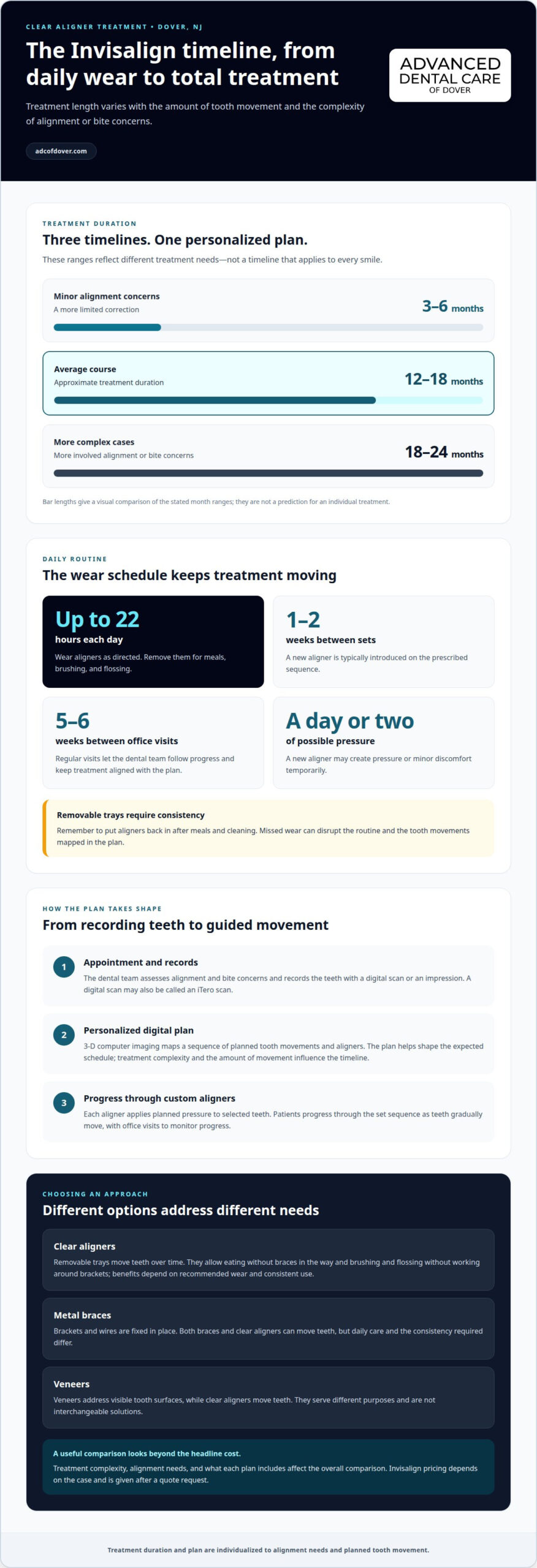
Clear aligner treatment takes months, not days. For Invisalign treatment in Dover, NJ, the average course is approximately 12-18 months. Minor alignment concerns may take 3-6 months, while more complex cases can take 18-24 months; the amount and type of tooth movement shape the timeline.
It’s natural to want a clear idea of the commitment before deciding, especially when weighing a discreet option against braces or veneers. Treatment length varies because every smile starts from a different place, but understanding how aligners work can make the process easier to picture.
Here, you’ll learn how a series of custom aligners gradually moves teeth, what can influence the overall schedule, and how clear aligners compare with braces and veneers. You’ll also get a practical overview of what happens during treatment, so you can consider your options with greater confidence and know what to expect from the journey.
Key Takeaways
- Learn how custom clear aligners guide tooth movement and what daily habits help keep treatment on track.
- See how digital planning maps out aligner treatment and helps shape an individualized timeline.
- Understand the factors that affect Invisalign costs in Dover and how clear aligners differ from braces and veneers.
- Discover what to consider when choosing Invisalign care and how local treatment can help you explore your options.
How does Invisalign® work?
Treatment begins with an appointment and a personalized plan, followed by a custom set of aligners. Patients wear each set as directed and progress through the sequence as their teeth gradually move.
Clear Aligners Compared With Braces
Invisalign clear aligners offer an alternative to metal braces, using removable trays instead of brackets and wires. Both approaches can move teeth, but they differ in daily care and the consistency required. When comparing Invisalign, braces, and other aligners, consider the treatment’s scope, what the plan includes, and how well each option suits the tooth movements needed. A lower headline cost alone does not show the full picture.
Daily Wear and Aligner Changes
Invisalign patients wear their aligners for up to 22 hours daily, removing them for meals, brushing, and flossing. A new set is typically introduced every 1-2 weeks, following the prescribed sequence. Because trays come out, patients need to remember to put them back in; that added discipline is an important difference from fixed braces. A new aligner may create pressure or minor discomfort for a day or two.
Each custom aligner applies planned pressure to selected teeth, moving them gradually rather than all at once. Invisalign uses 3-D computer imaging to plan a sequence that addresses alignment and bite concerns. The removable trays also let patients eat without braces in the way and brush and floss without working around brackets. Those practical benefits depend on keeping the aligners in place for the recommended daily wear time.
For cost comparisons, look beyond Invisalign, metal braces, or other clear aligners as categories. Treatment complexity and what each plan includes affect the overall comparison, so a headline estimate may not represent equivalent care. The price depends on the case and is given after a quote request; the factors include the alignment needs and the scope of treatment.
How long does Invisalign® treatment take?
Adults with bite or alignment concerns may be candidates for clear aligner treatment. Invisalign is designed to address alignment and bite problems, while the treatment plan outlines the tooth movements and aligner sequence.
For many patients, treatment takes approximately 12-18 months. Minor alignment concerns may take 3-6 months, while more complex cases may need 18-24 months. These ranges reflect different treatment needs, not a timeline that applies to every smile.
Planning begins with an office appointment, where the dental team takes a digital scan or an impression. That information supports a personalized plan showing how teeth are expected to move through a series of aligners. The Invisalign system’s team of specialists helps develop the digital treatment plan, giving the dentist a sequence to guide care.
A digital scan records the teeth without a traditional impression. Patients may also hear the term iTero scan when discussing digital scanning. The key step is recording the teeth so the treatment sequence can be prepared. The dentist uses the resulting plan to guide which aligners patients wear and when to move to the next set.
Digital planning also helps connect the expected tooth movements with the overall schedule. The amount of movement required and the complexity of bite or alignment concerns influence how long treatment takes. Adults should consider the full sequence, rather than judging the timeline by the first set of trays alone. Regular office visits every five to six weeks let the dental team follow progress and keep treatment moving according to the plan.
Because aligners are removable, patients need to follow their dentist’s wear instructions throughout treatment. Consistent wear supports the movements mapped in the plan, while missed wear can disrupt the routine. Before treatment begins, the dentist can explain how the scan, plan, and aligner stages fit together.
Invisalign treatment in Dover, New Jersey
For Invisalign treatment in Dover, NJ, choose a local dental practice that provides clear aligners and explains how treatment is planned and monitored. Reviews that describe clear explanations, progress updates, and attentive follow-up offer more useful detail than a rating alone.
In Dover, the right treatment plan depends on the dental changes needed, not simply on the aligner brand. A consultation assesses tooth alignment and bite concerns before outlining planned movements. This helps distinguish a limited correction from treatment involving several areas of the smile. The aim is to address the concerns identified while keeping appearance and everyday needs in view.
Cost also depends on the case and is given after a quote request. Key factors include the complexity of tooth movement and the scope of the treatment plan. Comparing options means looking at what each plan addresses, rather than treating every set of clear aligners as equivalent. For example, a plan for one small spacing concern differs from one addressing multiple alignment or bite issues. That difference affects the work involved, not just the number of trays.
When considering cosmetic changes, distinguish alignment from changes to tooth shape or color. Clear aligners move teeth over time; veneers address visible tooth surfaces, so they serve a different purpose. A dental evaluation can clarify whether alignment is the main priority or whether appearance goals call for another discussion. This distinction helps you decide which result suits your smile.
When reading Dover-area reviews, focus on comments about the process rather than broad praise alone. Look for examples of how treatment steps were explained, how questions were handled, and whether follow-up was clear. These details can help set expectations for communication throughout aligner treatment. Compare the care experience and proposed plan, then consider how each fits your dental needs and cosmetic goals.
Which orthodontists offer Invisalign in Dover, NJ?
Advanced Dental Care of Dover provides Invisalign treatment. Care involves more than supplying trays: it includes assessing alignment needs, planning tooth movement, and guiding patients through the aligner series.
A useful first step is an evaluation of your teeth and bite. The dental professional considers the concerns you want to address, such as crowding, spacing, or bite alignment, and determines whether clear aligners suit those needs. The treatment plan should explain the intended movements and how progress will be followed.
Ongoing guidance matters after the plan is set. Invisalign patients typically have office visits every five to six weeks. These appointments let the dental team review progress and keep treatment connected to the planned sequence. Ask what each visit covers and how the office supports patients between appointments. Clear answers make the process easier to understand.
The day-to-day routine is another practical part of local care. Since aligners are removable, patients need to follow the prescribed wear schedule and keep track of each new set. A dental team can explain how to manage changes, what to do if an aligner feels uncomfortable, and when progress needs attention. Understanding these steps helps patients take an active role in treatment.
For Dover patients, a good next step is a conversation focused on your smile goals and dental needs. Bring up the changes you hope to make, any concerns about wearing removable aligners, and what you would like explained about follow-up. The discussion can help clarify whether Invisalign suits your treatment needs and what the process involves. To discuss Invisalign treatment options, start with a visit focused on your questions and goals.
Advanced Dental Care of Dover
Advanced Dental Care of Dover provides Invisalign clear aligners for patients considering a discreet way to address tooth alignment. If you’re weighing aligners against braces or wondering whether your smile concerns suit this approach, an appointment can help clarify the process and the factors that shape an individualized plan.
Bring questions about daily wear, aligner changes, and the expected treatment timeline. Sharing the changes you hope to make can guide a discussion about whether clear aligners may suit your needs. You don’t need to have every detail decided before asking about your options.
Contact Advanced Dental Care of Dover to discuss Invisalign and your questions about clear aligner treatment.
Take the next step toward a smile that feels like yours
Choosing Invisalign is a personal decision shaped by your dental needs, daily routine, and the changes you hope to see. For Invisalign treatment in Dover, NJ, a helpful next step is to discuss your goals and questions. You can learn what clear aligner care involves and whether it fits your needs without having every detail settled in advance.
Advanced Dental Care of Dover offers Invisalign clear aligners, as well as emergency dentistry and dental implants. Whether you’re ready to discuss aligners or want to understand your options, the team can help you take the next step at your own pace.
Contact Advanced Dental Care of Dover to start a conversation about your smile. You’re welcome to reach out with your questions and move forward when you feel ready.
Frequently Asked Questions
Are Invisalign® results permanent?
Teeth can shift over time, so retainers are important after active treatment. The recommended routine helps maintain new tooth positions once aligners are finished. Retainer use depends on the instructions for your treatment, and wearing a retainer at night indefinitely is advised after orthodontic treatment. Make it part of your ongoing dental care rather than assuming teeth will stay in place without support.
Are there any restrictions to what I can eat while in treatment?
You can remove clear aligners to eat, so meals don’t need to be eaten with trays in place. Take them out before eating, then brush and floss before putting them back in. For example, remove your aligners for lunch, eat normally, and clean your teeth before reinserting them. This helps prevent food from becoming trapped between your teeth and trays.
Can I chew gum?
Remove your aligners before chewing gum. Gum can stick to a tray, making it uncomfortable or difficult to keep clean. Put the trays in their case while you chew rather than wrapping them in a napkin, where they could be misplaced. Brush or rinse your mouth before reinserting them, and follow your dentist’s care instructions for your aligner plan.
Can I smoke with the aligners in?
It’s best to remove your aligners before smoking. Because the trays are removable, keeping them out avoids exposing them directly during smoking. Store them safely in their case, then clean your mouth before putting them back in. If smoking is part of your routine, ask your dentist how to manage aligner wear and care.
How do I keep my aligners clean?
Clean your teeth before putting the trays back in, especially after meals, and brush and floss as part of your routine. Keep aligners in their case when they’re out of your mouth rather than placing them on a table or wrapping them in a napkin. Follow your dentist’s instructions for cleaning the trays, since they are specific to your treatment.
How often must I wear my aligners?
Wear your aligners for up to 22 hours daily, following the schedule prescribed for your treatment. Take them out for meals and for brushing and flossing, then put them back in promptly. For example, leaving trays out for a long meal and afterward can reduce wear time. Keeping a case nearby can make it easier to protect and replace them after eating.