
Braces aren’t automatically the less expensive choice when you’re comparing treatment costs. How much Invisalign costs depends on the tooth movements needed and the number of aligners in your plan. Advanced Dental Care of Dover provides Invisalign treatment estimates based on your individual case.
It’s understandable to want a clear idea of the financial commitment before deciding. Dental insurance may help with orthodontic expenses, and HSA or FSA funds may offer another way to pay, depending on your plan and account rules.
This guide explains what affects Invisalign costs, how insurance and tax-advantaged funds may help, and how clear aligners compare with braces. It also outlines practical payment considerations, so you’re better prepared to discuss options for your smile and budget.
Key Takeaways
- Your treatment estimate depends on the complexity of the tooth movements and how many aligners your plan requires.
- Treatment time varies with the case, from shorter plans for minor adjustments to longer courses for more complex alignment.
- Dental insurance may help cover orthodontic treatment, but benefits can depend on plan limits, age rules, and whether coverage is a lifetime maximum.
- HSA or FSA funds may help pay for eligible treatment expenses using tax-advantaged dollars.
- Compare Invisalign with braces by considering more than the treatment fee, including comfort, follow-up needs, and the type of care that suits your smile.
How much does Invisalign® treatment cost?
The cost depends chiefly on case complexity, the number of aligners, and treatment length. Mild alignment needs generally involve less extensive care than comprehensive orthodontic treatment.
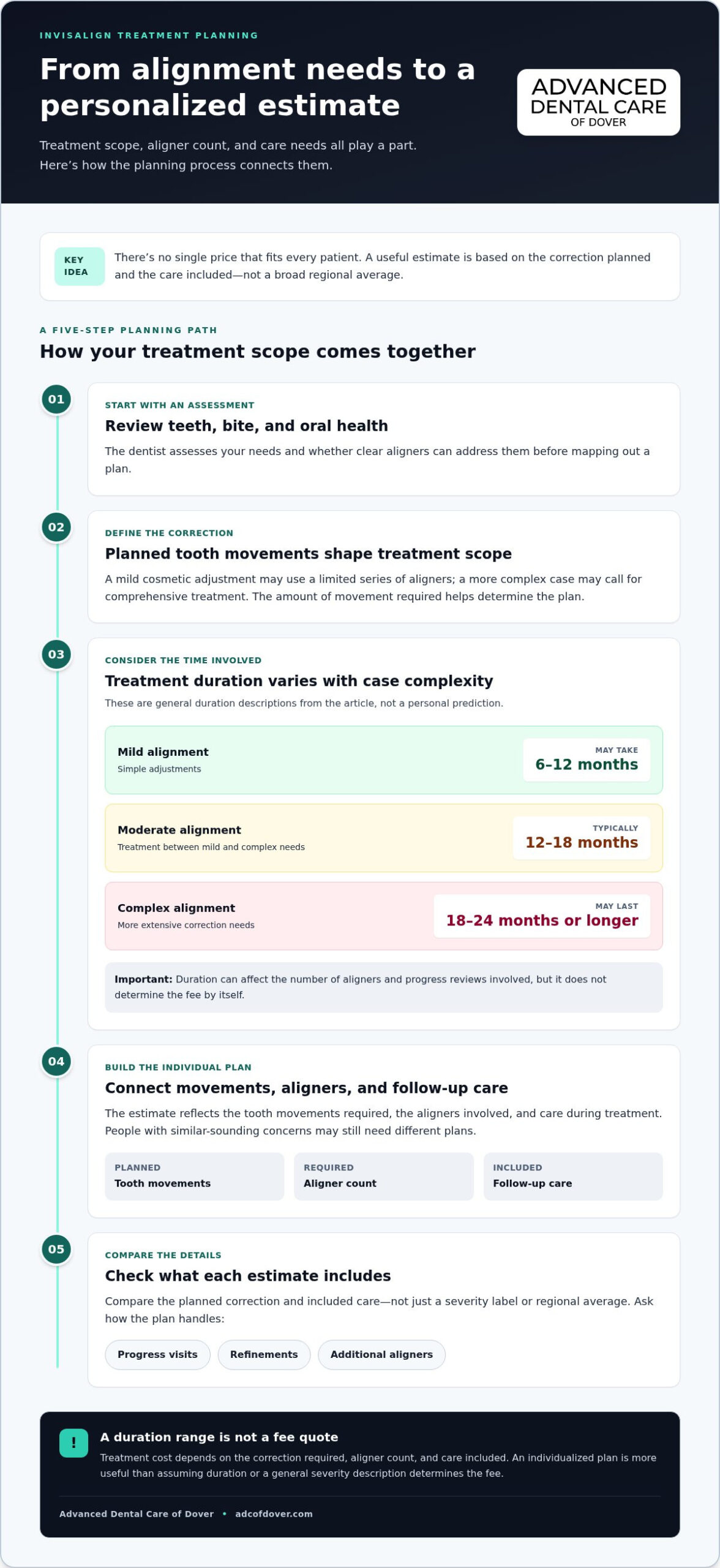
There’s no single price that fits every patient. A treatment plan reflects the tooth movements required, aligners involved, and care included. For people in Dover and Randolph, an estimate based on an individual plan is more useful than a broad regional average.
Cost Factors and Case Complexity
Case complexity describes how much tooth movement an orthodontic plan requires. More involved alignment generally calls for more aligners and a longer course of treatment, which can affect cost.
A mild cosmetic adjustment may involve a limited series of aligners, while a complex case may need comprehensive treatment. Aligner count is one cost factor. The dentist also considers the planned movements and follow-up care needed during treatment.
When comparing estimates in Dover or Randolph, focus on the treatment scope rather than a citywide average. Ask what the plan includes, such as progress visits, refinements, and additional aligners. This makes it easier to compare similar care without treating a regional figure as your personal quote.
Costs Across Alignment Severity
Alignment severity describes the amount of correction needed, from mild to complex. That difference helps explain why Invisalign treatment fees vary.
Mild cosmetic cases generally involve less extensive treatment than comprehensive cases. Moderate alignment needs fall between the two, while severe or complex problems typically require the most extensive care. These comparisons describe relative treatment scope, not an individual patient’s fee.
For mild, moderate, and severe alignment problems, cost depends on the correction required. A dentist considers tooth position, planned movements, and aligner count rather than relying on a severity label alone. Two people who describe their teeth as mildly crowded may still need different plans.
Treatment duration often follows the complexity of the case. Simple Invisalign cases may take 6-12 months, moderate cases typically take 12-18 months, and complex treatment may last 18-24 months or longer. Duration can affect how many aligners and progress reviews are involved, but it doesn’t determine the fee by itself.
Planning begins with an assessment of your teeth, bite, and oral health. The dentist considers whether clear aligners can address your orthodontic needs, then maps the intended movements and prepares a treatment plan. Ask which services are included and how additional aligners or refinements are handled.
When comparing treatment estimates around Dover and Randolph, focus on the planned correction and included care. A useful estimate connects those details to your treatment plan instead of relying on a regional average or a general description of case severity.
Does Insurance Cover Invisalign® Aligners?
Dental insurance may help pay for Invisalign, but coverage depends on your specific plan. Some plans handle clear aligners like braces, paying either a percentage of treatment costs or a set dollar amount. These possible benefits don’t guarantee payment for every patient.
Start by reviewing the orthodontic section of your dental insurance documents. Look for the benefit amount, percentage covered, lifetime maximum, age limits, and any waiting period. Many plans use a lifetime orthodontic benefit rather than renewing it each year, so a previous orthodontic claim could affect the amount available for current treatment.
Coverage can also depend on age. Some dental insurance plans cover Invisalign only for patients under 18. Other plans may apply orthodontic benefits to eligible adults, subject to the plan’s limits. For example, a plan covering 50% of treatment up to a lifetime maximum would not necessarily pay half of every patient’s total bill. The maximum and other terms still matter.
At a consultation, bring your insurance information and ask how the treatment plan relates to your benefits. Useful questions include:
- Does my plan cover clear aligners under its orthodontic benefit?
- Is my coverage a percentage, a fixed amount, or both?
- What lifetime maximum applies, and have I used any of it?
- Does the plan have age restrictions or other eligibility rules?
- Which treatment costs are included when the claim is submitted?
A clear estimate separates the treatment fee from the expected insurance contribution. For instance, a hypothetical plan with a $1,000 orthodontic maximum cannot contribute more than that maximum, even if its percentage benefit would otherwise be higher. The amount left for you depends on the treatment plan and your remaining benefit.
Ask when the insurer is expected to process the claim and whether payments are estimates before approval. Coverage decisions follow your plan’s terms, so average treatment costs don’t show what your policy will pay. A written breakdown helps you compare the estimated benefit with your remaining balance before treatment begins.
If you’re considering clear aligners, an Invisalign treatment consultation can help connect your orthodontic needs with a treatment plan and insurance questions.
HSA and FSA payment options
HSA and FSA funds may help pay Invisalign treatment costs with tax-free dollars. These accounts offer another way to manage expenses alongside dental insurance or personal payments. The amount available depends on your account balance and eligible expenses. Ask how the treatment estimate can be paid from your account as you plan payments.
A Health Savings Account (HSA) or Flexible Spending Account (FSA) can help you budget for treatment using funds set aside for healthcare expenses. If insurance covers part of treatment, consider whether eligible account funds can go toward the remaining balance. Keep the insurer’s estimate and treatment plan handy so you’re comparing the same costs.
Payment plans can spread a balance across monthly installments rather than requiring one payment upfront. Some practices offer monthly plans for Invisalign treatment. Schedules, down payments, and terms vary, so review the total amount due and any financing conditions before agreeing. A monthly figure alone doesn’t show the full cost.
These examples show how different terms can change the monthly amount. They aren’t a quote or a promise of available terms. Compare the payment period and total obligation, not just the amount due each month.
It may help to consider the payment options together:
- Apply any expected dental insurance benefit to understand the estimated remaining balance.
- Use eligible HSA or FSA funds toward treatment costs, according to your account rules.
- Compare a payment plan’s monthly amount, duration, and terms with your budget.
- Keep a written record of the estimate and payment arrangement for your own planning.
Removable aligners and metal braces are different treatment approaches, but the same budgeting questions apply. Ask what the quoted cost includes, how payments are scheduled, and whether the plan may change if treatment needs adjustment. An average cost can offer broad context, but it can’t show how much an individual will owe after benefits and payment choices.
Before choosing a payment method, bring your insurance estimate and HSA or FSA account details to the treatment discussion. Ask how the proposed schedule fits the treatment plan. Clear terms help you understand the monthly commitment and expected balance without confusing financing examples with your personal estimate.
Is Invisalign more comfortable than traditional braces?
Comfort depends on personal preferences and the correction your teeth need. Invisalign aligners are removable, while traditional braces remain attached during treatment. This difference can affect eating, cleaning, and daily routines, but neither option is comfortable for everyone.
Cost comparisons need more than a monthly payment or headline estimate. Invisalign treatment can cost about as much as braces, with case complexity and aligner needs affecting the fee. Those general comparisons aren’t estimates for your individual care.
Clear aligners may suit people who value removability for meals and brushing. They require consistent wear, usually 20 to 22 hours per day. Traditional braces don’t depend on a person remembering to put them back in, but cleaning around brackets requires attention. Your dentist can explain which approach supports the correction your teeth need.
Visits also form part of the treatment experience. Invisalign patients may need evaluation visits every 6 to 8 weeks, while metal-braces appointments are listed every 6 to 10 weeks. Your schedule depends on the treatment plan and progress. Compare expected visits alongside the treatment fee and included follow-up care.
Lost or damaged aligners can affect treatment timing and may involve an additional replacement expense. Replacement charges vary with the treatment arrangement, so discuss this possibility when reviewing total costs. Retainers are separate follow-up care that may help maintain results after Invisalign treatment. Ask whether they’re included in the estimate or handled separately.
Teen and adult treatment plans can differ because alignment needs vary, not simply because of age. Some insurance coverage has age limits, while other plans apply orthodontic benefits differently. A teenager and an adult with similar concerns may therefore have different out-of-pocket costs. Compare each plan’s scope, insurance estimate, and follow-up provisions.
To find an Invisalign provider near Dover or Randolph, arrange a dental consultation and discuss your alignment needs. Compare written estimates by treatment scope, expected visits, replacement-aligner terms, and retainers, rather than comparing totals alone.
Invisalign cost compared with braces
The clearest comparison starts with the complete treatment plan, not its monthly payment. Invisalign and braces can have similar overall costs, while the exact total reflects the planned correction and treatment details. A general range offers context for one braces option, not a personalized quote.
If you’re asking how much Invisalign costs compared with braces, there isn’t one universal price difference. Invisalign pricing depends on the case, and Advanced Dental Care of Dover provides an estimate based on your treatment needs. Review what the estimate includes, such as aligners and follow-up appointments, so you can compare the same services across options.
Look beyond the appliance itself. A lower starting estimate may not cover the same treatment scope as a more complete plan. Compare what each written estimate says about monitoring, adjustments, replacement aligners, and retainers. Retainers may be needed after Invisalign treatment to help maintain results. Including them in your comparison can clarify longer-term spending.
Dental insurance plans may apply orthodontic benefits to Invisalign and braces similarly, but plan limits still shape your out-of-pocket cost. Check whether each estimate shows the expected insurance contribution separately from the treatment fee. If a payment plan is offered, compare the full schedule and terms, not just the monthly amount. This makes the total commitment easier to understand.
A useful side-by-side comparison can include these points:
- Treatment scope: Confirm the planned correction and included follow-up care.
- Insurance: Compare the estimated benefit and remaining balance for each option.
- Additional care: Note whether replacement aligners or retainers are included.
- Payment terms: Review the schedule and total payments before choosing installments.
Daily routines matter alongside cost. Invisalign aligners are removable, while braces stay attached during treatment. That difference can affect meals and cleaning habits, but suitability depends on the correction needed. A dentist can explain how each approach addresses your teeth and what care the plan includes.
Ask for estimates describing comparable treatment, then review the details line by line. If one plan includes retainers and another lists them separately, the totals don’t represent the same scope. A clear comparison helps you weigh cost, treatment needs, and practical preferences instead of choosing based on a headline figure.
Advanced Dental Care of Dover: Emergency dentistry
Advanced Dental Care of Dover offers Invisalign clear aligners and emergency dentistry for urgent dental concerns during clinic hours. If you’re comparing treatment plans, the practice can help you discuss whether clear aligners suit your smile and understand the care involved. For a sudden dental problem, emergency dentistry addresses the immediate concern rather than replacing planned alignment care.
These needs call for different conversations: Invisalign gradually moves teeth, while emergency dentistry responds to an urgent issue. Sharing your main concern helps make the discussion relevant, whether you’re considering aligners or seeking care for a pressing dental problem.
Contact Advanced Dental Care of Dover or visit adcofdover.com to take the next step.
Take the Next Step Toward a Clearer Plan
If you’re still asking, “How much does Invisalign cost?” start by discussing what you want treatment to accomplish. A useful conversation can connect your smile goals with the care involved, helping you decide whether clear aligners are right for you. You don’t need to have every detail figured out beforehand. Bringing your questions and priorities is a good place to begin.
Advanced Dental Care of Dover offers Invisalign clear aligners, so you can discuss your orthodontic goals with the dental team. A personal conversation can help turn general information into a plan that reflects your needs and preferences. Make an appointment to discuss your options and take the next step when you feel ready.
Contact Advanced Dental Care of Dover to begin the conversation. Your smile goals deserve thoughtful care, and you can take the process one comfortable step at a time.
Frequently Asked Questions
What Are Clear Aligners?
Clear aligners are removable trays designed to move teeth gradually as part of orthodontic treatment. Each set is shaped for a planned stage of tooth movement. For example, you may switch to a new set according to your dentist’s instructions rather than having brackets adjusted. Aligners need regular wear to follow the treatment plan, and you can remove them for meals and oral hygiene.
What happens if I lose or break an aligner?
If an aligner goes missing or breaks, contact your treating dental office promptly for instructions. Don’t assume the next tray is the right replacement, since each set is made for a particular stage of tooth movement. Keep the damaged aligner if it’s safe to do so, and explain which set you were wearing. That information helps the dental team guide your next step and limit disruption to your plan.
Can I use my Health Savings Account (HSA) or Flexible Spending Account (FSA) for Invisalign?
HSA and FSA funds may be used tax-free toward Invisalign treatment costs. For example, you might use available account funds for part of the balance, then pay the rest another way. Your account rules determine how to access and document expenses, so keep treatment paperwork and payment records together. This makes it easier to track which expenses you paid through the account.
How can you save money on Invisalign or other aligners?
Compare complete treatment estimates rather than choosing based only on the first quoted amount. Check what each plan includes, such as follow-up care, replacement aligners, and retainers. Then review your dental insurance benefits and consider eligible HSA or FSA funds. If installments are offered, compare the full payment schedule and terms. A written comparison helps you spot differences in scope before committing to treatment.
How does Invisalign work?
Invisalign treatment uses a planned series of removable aligners to guide teeth through gradual movement. Patients generally wear aligners for 20 to 22 hours per day and change sets every one to two weeks, following their dentist’s instructions. For example, taking trays out for a meal is part of daily use, but wearing them consistently helps keep treatment aligned with the planned sequence.
What is the average cost of Invisalign in the United States?
There isn’t one average that predicts every patient’s Invisalign fee, because the treatment plan depends on the correction needed and number of aligners. CareCredit research reported an average U.S. cost of about US $5,108 for clear-aligner treatment before insurance, based on data collected in 2023. Use that as broad market context, not as a personalized estimate or a guarantee of what a treatment plan will cost.
Does dental insurance cover Invisalign, and what is the average coverage limit?
Dental insurance may cover Invisalign under its orthodontic benefit, often as a percentage or a set dollar amount. For example, a lifetime maximum can cap benefits even when a plan’s percentage would otherwise contribute more. Check your remaining benefits and any age limits in your policy.
Can an HSA or FSA be used to pay for Invisalign?
Yes. HSA or FSA funds may be used tax-free for Invisalign treatment costs. Review the treatment estimate, identify the balance after insurance, and decide whether account funds will cover some or all of it. Save receipts and treatment records with your account paperwork. This is separate from insurance, so consider both when planning how to manage expenses.