
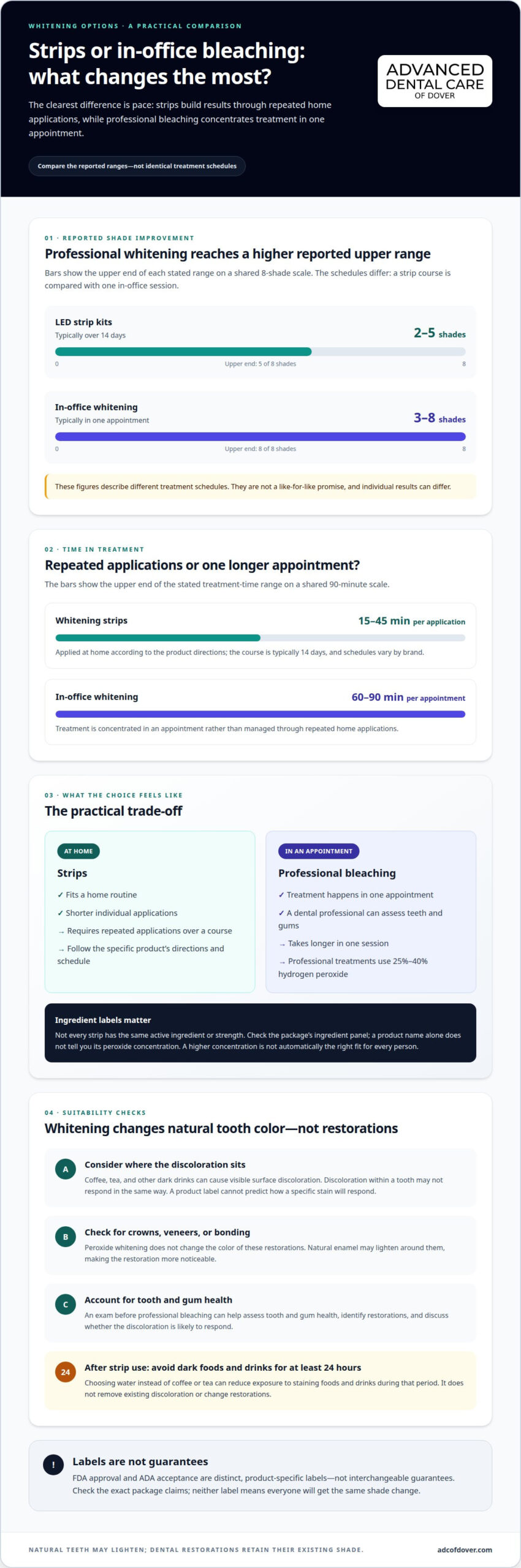
Whitening strips can work, but professional bleaching can produce a faster change. When weighing Crest 3D Whitestrips against professional dental bleaching, the main difference is often how quickly you want to see results: users of LED strip kits typically report two to five shades of improvement over 14 days, while a single in-office appointment can produce three to eight shades in one session. Strip treatments take about 15 to 45 minutes, depending on the brand, compared with 60 to 90 minutes for a typical in-office appointment.
It’s understandable to want a brighter smile without guessing which option will suit your teeth or cause sensitivity. This guide compares how each approach works, what kinds of stains respond, how peroxide fits in, and what dental conditions may affect your choice. You’ll also learn what temporary sensitivity can feel like and why strips or professional bleaching may be a better fit depending on your goals and oral health.
Key Takeaways
- Match your whitening approach to the kind of discoloration you have, since different stains may respond differently.
- Remember that peroxide whitening won’t change the color of crowns, veneers, or bonding.
- Compare peroxide strength and treatment approach to understand why professional bleaching may act more quickly.
- If you’re concerned about temporary sensitivity, learn how professional monitoring can help address irritation during treatment.
Do teeth whitening strips work?
Whitening strips let you treat your teeth at home over a course of applications, while professional bleaching can make a more noticeable change in one visit. Compare the expected shade change, application time, and the directions for the specific strip product.
Expected Shade Improvement
LED strip kits typically produce two to five shades of improvement over 14 days. A single in-office whitening appointment can produce three to eight shades in one session. These figures describe different treatment schedules, so compare the gradual strip course with the single-visit result rather than expecting the same pace. Peroxide whitening changes natural tooth color, not the shade of dental restorations.
Treatment Duration and Schedule
Whitening strips take about 15 to 45 minutes per application, depending on the brand. LED strip kits typically show improvement over a 14-day course, while an in-office appointment usually lasts 60 to 90 minutes. Follow the product’s directions for its daily treatment time and course; strip schedules can vary by brand. Professional bleaching concentrates treatment in an appointment rather than repeated home applications.
Treatment Convenience
Strips let you apply whitening treatment at home, following the package directions and keeping each application within its stated time. This can fit a home routine, but it means repeating applications over the course. In-office bleaching takes place during an appointment, so you spend longer in one session but don’t have to manage daily strip applications. Both approaches use bleaching agents to lighten natural enamel.
Effectiveness and Whitening Labels
In the comparison of Crest 3D Whitestrips and professional dental bleaching, both can whiten natural teeth, but the expected change differs: strips typically show two to five shades over 14 days, while in-office bleaching can show three to eight shades in one session. FDA approval and ADA acceptance are distinct, product-specific labels, not interchangeable guarantees. Check the exact package for its claims; neither label means every person will get the same shade change.
| Option | Typical shade change | Treatment time | Schedule |
|---|---|---|---|
| LED strip kits | Two to five shades | 15 to 45 minutes per application | Typically 14 days |
| In-office whitening | Three to eight shades | 60 to 90 minutes | One appointment |
Choose based on whether you prefer repeated home applications or an in-office session.
Whitening suitability for different stains and dental conditions
Whitening treatment affects natural tooth color, but stains don’t all respond alike. Coffee, tea, and other dark drinks can cause visible surface discoloration. Other discoloration lies within the tooth, where whitening products may not create the same bright change. The stain’s location and each tooth’s condition matter more than broad stain-removal claims. A product label can’t predict how a specific stain will respond.
Crowns, veneers, and bonding don’t change color with peroxide whitening products. This applies to restorations on front teeth too: surrounding natural enamel may lighten while the restoration stays its original shade. The contrast can make dental work more noticeable after treatment. Consider the location of restorations before choosing strips or professional bleaching, especially if they show when you smile. Whitening lightens natural teeth; it doesn’t recolor dental materials.
An exam before professional bleaching is a useful step. A dental professional can assess your tooth and gum health, identify restorations, and discuss whether your discoloration is likely to respond. A cleaning may remove surface buildup, but it won’t change the color of crowns, veneers, or bonding. Knowing the difference helps you set a realistic treatment goal before bleaching.
After using whitening strips, avoid dark-colored foods and drinks for at least 24 hours to help prevent new stains. For example, choose water instead of coffee or tea during that period. This step can reduce exposure to staining foods and drinks, but it doesn’t remove existing discoloration or alter the effects on restorations. Check claims such as “removes stains” against the treatment’s purpose: peroxide whitening changes natural tooth color, while crowns, veneers, and bonding retain their existing shade. If the bottom teeth or a front restoration are your concern, mention that specific area during an exam before selecting a whitening treatment.
Hydrogen peroxide ingredients and concentrations
Hydrogen peroxide is a bleaching ingredient used in professional whitening. Professional treatments use concentrations of 25% to 40%. That range is higher than the bleaching levels generally used for at-home whitening, helping explain why professional treatment can work more quickly. A stronger concentration isn’t automatically the right fit for every person, since the treatment method and tooth condition also matter.
Whitening strips and in-office treatments can both involve peroxide, but not every strip has the same active ingredient or strength. Check the package’s ingredient panel for the active whitening agent and follow its directions. The product name alone doesn’t tell you its peroxide concentration. Comparing the listed ingredients with professional treatment can clarify what is being applied, without assuming the different formats are equivalent.
Concentration describes the amount of hydrogen peroxide in a whitening product, but it doesn’t describe the entire treatment. Application time, how the bleaching agent contacts your teeth, and whether a professional monitors the process also shape the experience. A dentist can explain how those factors relate to your teeth and the whitening approach being considered.
Some products use a peroxide ingredient; others may use a different bleaching ingredient. Read the active-ingredient label rather than relying only on the word “whitening.” A gentle-sounding product name doesn’t establish its concentration or predict how your teeth will respond. Likewise, the professional range of 25% to 40% describes the bleaching level, not a promise of a particular shade change.
For a practical comparison, note the strip’s active ingredient and follow its stated application directions. Then compare that information with the peroxide concentration used for professional bleaching. Don’t extend application time or use strips more often to imitate a stronger treatment. If the ingredient or instructions are unclear, bring the package to a dental appointment so the dentist can discuss it in light of your oral health and whitening goals.
Temporary sensitivity from professional bleaching
Professional bleaching can cause temporary tooth sensitivity in some people because it uses a higher bleaching level. A dental professional monitors treatment and can help if irritation occurs.
Tooth Sensitivity
Sensitivity may feel like a brief reaction in your teeth during or after whitening. It doesn’t affect everyone, but it’s worth considering when choosing a treatment. Professional monitoring means you can raise concerns if irritation develops. Tell the dental professional what you’re feeling so they can respond during treatment and guide the next step.
Gum Discomfort and Sensitivity
Gum irritation is another possible concern during professional teeth whitening. A higher bleaching level can contribute to temporary sensitivity, and a dental professional can help if irritation arises. Sensitivity and gum discomfort feel different, so describe where you feel discomfort and when it starts. Those details help the professional monitor your treatment.
An uneven appearance is different from sensitivity. Natural teeth may lighten while crowns, veneers, or bonding retain their original color, making the result look uneven. This reflects how peroxide whitening affects natural teeth, not necessarily irritation from treatment. Discuss visible restorations before bleaching, especially if they sit beside teeth you want to brighten.
For a more comfortable experience, share any sensitivity concerns before professional bleaching begins. Report irritation during treatment rather than waiting until the appointment ends. A dental professional can help if irritation occurs. Don’t assume a stronger bleaching level suits every smile; comfort and tooth condition matter alongside your whitening goal.
If you’re weighing sensitivity concerns against your whitening goals, discuss professional teeth whitening with a dental professional.
Advanced Dental Care of Dover
Advanced Dental Care of Dover can help you consider whitening in the context of your overall dental health. If sensitivity, gum irritation, or other dental concerns affect your decision, Family Dentistry offers a place to discuss them as part of ongoing oral care. The practice also offers Emergency Dentistry, Invisalign® clear aligners, Dental Implants, and Tooth Extractions.
Whitening strips and professional bleaching differ in pace, ingredients, and monitoring. Your choice should also account for natural tooth color, restorations, and comfort. If you have a dental concern beyond whitening, Advanced Dental Care of Dover offers care for other needs too. Contact the practice to discuss your dental care.
Choose a Whitening Path That Fits Your Smile
Your next step can be guided by more than the shade you hope to reach. Consider what matters most to you, such as a gradual routine, professional support, or discussing existing dental work and sensitivity before treatment. If you’re still weighing Crest 3D Whitestrips against professional dental bleaching, a conversation about your teeth and goals can help make the choice feel clearer.
Advanced Dental Care of Dover offers teeth whitening as part of its dental care. You can talk through your whitening goals and concerns with the team, then decide on a suitable next step without feeling rushed.
Contact Advanced Dental Care of Dover to discuss your options and take a comfortable next step toward the smile you want.
Frequently Asked Questions
How long do Crest 3D Whitestrips and professional dental bleaching results last?
Whitening-strip results generally last three to six months, while professional whitening results typically last one to three years with good oral hygiene and reasonable dietary habits. Your care routine and exposure to staining foods and drinks can affect how long the results remain noticeable. Consistent daily oral care helps maintain your smile between whitening treatments.
What is the typical U.S. cost of Crest 3D Whitestrips versus dentist whitening?
Whitening prices depend on the case and are provided after a quote request; the product, treatment approach, and dental needs affect the total. For strips, the selected product and package determine the purchase cost, while dentist-supervised whitening involves clinical treatment. Consider which approach fits your goals and dental needs rather than relying on a single national figure.
How many shades can Crest Whitestrips and professional bleaching whiten teeth?
LED strip kits typically show two to five shades of improvement over 14 days, while a single in-office session can produce three to eight shades. These figures describe different schedules, so they aren’t a direct like-for-like comparison. Your starting tooth color and the type of discoloration help shape the visible change from either approach.
What are the risks and side effects of Crest Whitestrips and professional bleaching?
Professional bleaching may cause temporary tooth sensitivity because it uses a higher bleaching level. Gum irritation can also occur, and a dental professional can help if irritation develops during monitored treatment. With whitening strips, follow the package directions and don’t extend application time or use them more often than instructed. Tell a dental professional about discomfort before continuing whitening.
Who should avoid teeth whitening, including people with crowns, veneers, cavities, or sensitive teeth?
If you have cavities, tooth pain, or ongoing sensitivity, discuss whitening with a dentist before starting so these concerns can be assessed. Crowns, veneers, and bonding won’t change color with peroxide whitening, so they may look different beside whitened natural teeth. A dental exam can identify visible restorations and help set an appropriate treatment goal.