
The better denture adhesive isn’t automatically the more familiar brand. For Fixodent vs Polygrip for denture retention, the right choice depends more on the product’s format, your denture type, and how well it fits than on the name alone. Creams generally provide a stronger hold than powders, so format can matter as much as brand.
It’s understandable to want a dependable hold for eating and speaking, especially if your dentures feel less secure than they used to. Adhesive can help support a well-fitting denture, but it shouldn’t have to compensate for a loose fit.
This guide explains how cleaning and application affect retention, what to consider for full and partial dentures, and why ongoing looseness deserves attention. You’ll learn how to compare the options and recognize when adhesive may offer only temporary help.
Key Takeaways
- Choose between Fixodent and Poligrip by considering adhesive format and whether you wear full or partial dentures, not just the brand name.
- Clean and rinse your dentures before applying adhesive to help it hold as intended.
- Use adhesive as support for a well-fitting denture, not as a fix for one that keeps slipping.
- If you find yourself needing more adhesive over time, a denture fit assessment can help identify the next step.
Hold strength for full and partial dentures
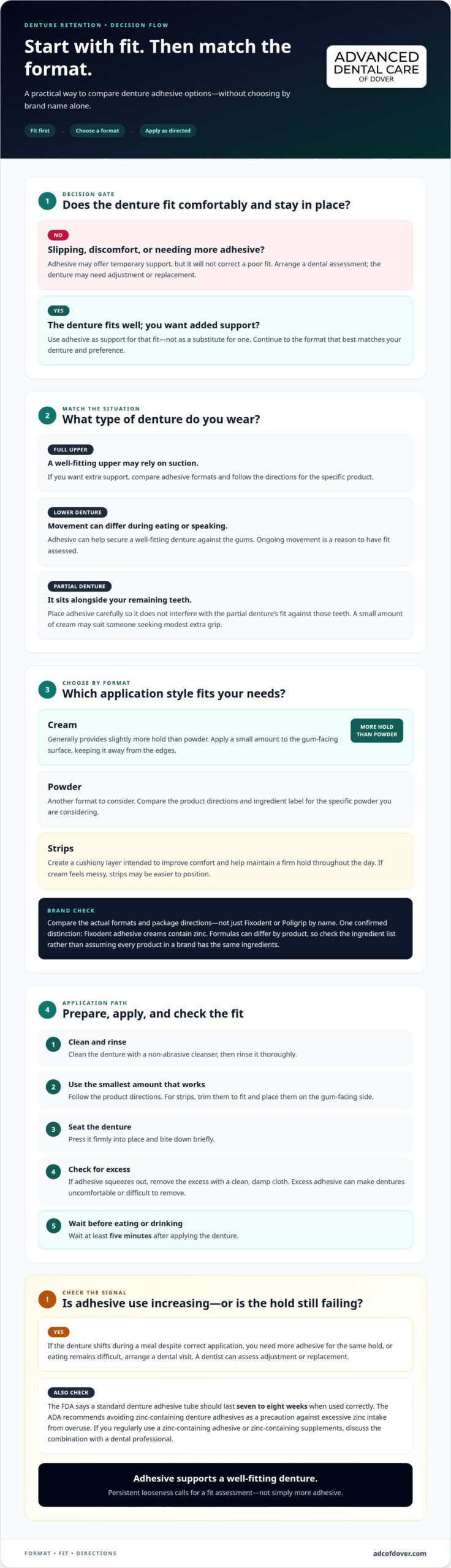
The choice in Fixodent vs Polygrip for denture retention starts with format and fit, not brand recognition alone. Creams tend to provide slightly more hold than powders. Strips create a cushiony layer intended to improve comfort and help maintain a firm hold throughout the day. Each format helps secure the denture against gum tissue, but none can replace a well-fitting denture.
A well-fitting full upper denture may rely on suction, while a lower denture can move differently during eating or speaking. Partial dentures also vary because they sit alongside remaining teeth. For example, someone with a stable partial denture who wants modest extra grip may prefer a small amount of cream. If cream feels messy, strips may be easier to position.
A practical Fixodent vs Polygrip for denture retention comparison starts with the product format and directions. Check the package to see whether you’re comparing creams, powders, or strips. Super Poligrip is a familiar product name, but the name alone doesn’t tell you whether its format suits your denture. Clean the denture with a non-abrasive cleanser, rinse it thoroughly, then apply adhesive as directed.
Use only enough adhesive to support the fit. Excess can ooze out, and overuse may make dentures uncomfortable or difficult to remove. According to the U.S. Food and Drug Administration, a standard denture adhesive tube should last seven to eight weeks when used correctly. If you need more adhesive over time, or eating remains difficult, a dentist can assess whether the denture needs adjustment or replacement.
Strips provide a cushiony layer intended to enhance comfort and help maintain a firm hold throughout the day. Denture adhesive can also help keep food particles from slipping underneath dentures and getting caught between the denture and gums.
These are distinct considerations: cushioning and hold affect how the denture feels and stays in place, while limiting trapped food addresses what can happen between the denture and gums. When comparing options, consider which concern matters to you and follow the product directions. Adhesive may support daily wear, but it doesn’t replace a well-fitting denture or a dentist’s assessment if problems persist.
Temporary help for loose dentures
See a dentist if your dentures keep slipping, cause discomfort, or require increasing amounts of adhesive. More adhesive may provide temporary support, but it won’t correct a poor fit. A dental assessment can determine whether your dentures need adjustment or replacement.
For short-term help, denture adhesive can improve stability during eating, speaking, or laughing. Creams, powders, and adhesive strips can all help secure dentures against the gums, though application differs. If you prefer less mess, strips may be easier to handle. Powders are another option, while cream can be applied directly to the gum-facing surface. Partial dentures may need careful placement so adhesive doesn’t interfere with their fit against remaining teeth.
Follow the product directions and use only a thin amount where the denture contacts the gums. For strips, trim them to fit and place them on the gum-facing side. After inserting the denture, press it firmly into place and bite down briefly. If adhesive squeezes out, remove the excess with a clean, damp cloth. Wait at least five minutes before eating or drinking.
Adhesives contain different ingredients and may feel different to use, so a product that suits one person may not suit another. The key is whether it adds comfortable support to a denture that otherwise fits. It shouldn’t become a way to keep a persistently loose denture in place.
If your denture shifts during a meal despite correct application, or you need more adhesive to get the same hold, arrange a dental visit. Changes in your mouth can affect the fit over time. A dentist can assess the denture and discuss adjustment or replacement instead of relying on adhesive for ongoing support.
What are the ingredient differences between Fixodent and Poligrip denture adhesives?
One confirmed distinction is zinc: Fixodent adhesive creams contain zinc. That matters when comparing ingredients, but it doesn’t mean every Fixodent product has the same formula or that every Poligrip product is zinc-free. Check the ingredient list on the specific package you’re considering instead of relying on the brand name alone.
Start by identifying the format, such as cream, powder, or strips. Then read the product label for zinc and any ingredients you need to avoid. For example, compare the ingredient panels on the two specific creams you’re considering. Don’t assume a powder or strip has the same ingredient profile as a cream from the same brand.
Zinc is also relevant to how much adhesive you use. The American Dental Association recommends avoiding zinc-containing denture adhesives as a precaution against excessive zinc intake from overuse. Use the smallest amount that supports your well-fitting denture, and follow the product directions. If you regularly use a zinc-containing adhesive or take zinc-containing supplements, discuss the combination with a dental professional.
Ingredients aren’t the only difference to weigh. Creams, powders, and strips can feel different to apply and remove, so format may affect what feels manageable in your routine. If cream is difficult to control, you may prefer a different format, but read its label and directions before use.
For a practical comparison, set the Fixodent and Poligrip packages side by side. Confirm each product’s format, read its ingredient list, and follow its specific application instructions. If you’re using more adhesive because your denture feels loose, switching formulas won’t address the fit itself. A dentist can assess whether the denture needs adjustment or replacement.
How much denture adhesive should you apply, and how often?
Use the smallest amount that gives your denture a secure, comfortable fit. For cream, apply a small amount to the surface that touches your gums, keeping it away from the edges. If adhesive oozes out after insertion, you’ve likely used too much. Excess can make dentures uncomfortable and harder to remove.
For a complete upper denture, three to four pea-sized amounts of cream are suggested as a starting guide. The right amount still depends on the denture’s fit, so follow the directions for your specific product. Fixodent Complete Original should be applied only once per day. Denture adhesive cream is generally intended for one application per day.
Powder needs a different approach. Sprinkle a light, even layer over the denture’s gum-facing surface, and use no more than 1/4 teaspoon. Don’t pile powder along the edges. For cream or powder, the goal is a thin, even application, not a thick layer intended to hold a loose denture in place.
The American Dental Association recommends avoiding zinc-containing adhesives as a precaution against excessive zinc intake from overuse. Check the product label for ingredients, use the directed amount, and don’t apply more just because the hold feels weaker. If you’re repeatedly increasing the amount, your denture’s fit may need attention.
Remove adhesive and clean the denture before applying a fresh layer. A steady routine helps you notice changes: if the same application no longer feels secure, or adhesive keeps squeezing out, arrange a dental assessment instead of adding more. Discuss your denture fit with a dentist when ongoing looseness makes comfortable daily use difficult.
If the amount keeps increasing, reassess the fit instead of adding more adhesive: overuse can cause discomfort and make dentures difficult to remove. With cream, apply a small amount to the gum-contacting surface and avoid the edges; with powder, use a light, even layer on the denture.
One tester had dentures that were 20 years old and applied more adhesive than recommended because they fit poorly. If increasing amounts are needed for the same effect, discuss the fit with a dentist. Needing more than a thin application for comfort may indicate that the denture needs relining or replacement.
Advanced Dental Care of Dover: Crowns, Bridges, Dentures
Advanced Dental Care of Dover offers dentures for people whose existing dentures feel loose or no longer work comfortably. Adhesive can provide temporary support, but ongoing slipping may call for a closer look at your denture needs. At a visit, you can discuss whether dentures or another option, such as a bridge or dental implant, may suit your situation.
If you’re unsure whether to keep using adhesive or explore a different solution, bring your concerns to a dental appointment. Talk through what feels difficult, including discomfort or trouble eating, and consider appropriate next steps without relying on more adhesive alone.
Contact Advanced Dental Care of Dover to discuss your denture concerns.
Choose a comfortable next step
Choosing between Fixodent and Polygrip for denture retention can be part of a broader plan to feel comfortable with your dentures. Give yourself time to notice what works in your everyday routine rather than changing products repeatedly after one difficult moment. If you’re still unsure, your experience can guide a conversation about what might make wearing your dentures more comfortable.
A denture that no longer feels right can affect your confidence and daily habits. You don’t have to sort through those concerns alone. Advanced Dental Care of Dover can discuss denture care and possible next steps with you, including whether another dental solution may be appropriate.
Contact Advanced Dental Care of Dover to talk through your concerns. A thoughtful next step can help you feel more at ease moving forward.