
A well-fitted denture can do more than fill a gap: it can help restore chewing, speech, and the appearance of your smile. A dentures dentist in Dover may recommend a partial denture when some natural teeth remain, or a conventional full denture when all teeth in an arch are missing. Before planning full dentures, the dentist evaluates the remaining teeth and soft tissue to help determine the right approach.
If you’re considering dentures, you may want to know which option could suit you and what treatment involves. This guide explains how partial and conventional full dentures differ, the benefits they can offer, and what a dentures dentist in Dover considers when assessing your teeth and soft tissue. You’ll also learn what to expect during the process, so you can discuss your options with a clearer understanding.
Key Takeaways
- Learn when a partial denture may suit a smile with remaining natural teeth and how it can fill the spaces left by missing teeth.
- Understand how conventional full dentures differ and what to expect as your mouth adjusts to them.
- See how impressions and a dental laboratory help shape dentures to your smile.
- Find out why a dentist evaluates remaining teeth and soft tissue before planning a secure, comfortable fit.
Partial dentures
Partial dentures replace missing teeth while fitting around natural teeth that remain. A dental evaluation considers the gaps and the condition of the supporting teeth.
When choosing a dentures dentist in Dover, look for an evaluation that considers your remaining teeth, soft tissue, and fit needs. At Advanced Dental Care of Dover, the dentist can discuss denture options and follow-up based on your oral health. Ask how the proposed design will work with your natural teeth and what care instructions to follow.
Benefits of full and partial dentures
Both full and partial dentures can restore parts of a smile’s appearance and function. They may support clearer speech, more comfortable chewing, and facial appearance. A partial denture also fills spaces between remaining teeth, helping prevent those teeth from shifting into vacant areas. Consider which teeth are missing and how the appliance will fit your daily needs.
Some partial dentures use a metal frame with clasps that connect to natural teeth and help hold the appliance in place. Others use a base shaped around the remaining teeth. Flexible partial dentures use lightweight material that bends with the contours of the gums, without metal clasps. The dentist considers the pattern of tooth loss and available support when assessing these designs.
Dental insurance and Medicaid coverage for dentures depend on the applicable plan, eligibility, and program rules. Acceptance also depends on the dental office’s participation, so coverage isn’t the same for every patient or practice.
Denture risks, care, and replacement
New dentures can cause temporary sensitivity or increased saliva as the muscles and gum tissue adjust. A poor fit may also need attention, so tell your dentist about discomfort or changes in how the appliance sits. Follow the care instructions provided for your denture and oral health.
For daily care, brush dentures with a soft-bristled brush, rinse them after meals, and keep them moist when they’re not being worn. Clean your gums and tongue, too. Your dentist can assess wear and fit during checkups and advise when replacement may be appropriate.
Conventional full dentures
Full dentures replace all natural teeth in one or both dental arches. Traditional dentures sit over the gums and stay in place with suction or adhesive. Their tooth- and gum-colored materials are designed to resemble a natural smile. For someone missing every tooth in an arch, this removable option replaces a complete row without relying on remaining natural teeth for support.
Conventional full dentures are placed after the gum tissue has healed. This allows the dentist to assess the healed contours when planning the fit. Immediate dentures follow a different timeline: they are made in advance and placed at the preparation appointment. They can provide teeth during healing, though changes in the gums may affect the fit later.
That difference matters when choosing an approach. With conventional dentures, placement follows healing. With immediate dentures, the appliance is ready for the preparation appointment, but follow-up after the gums heal is important. The dentist can assess the fit and make adjustments as needed. Immediate dentures may need frequent adjustments during the first couple of months as the mouth heals and the fit changes.
New full dentures can feel unfamiliar at first. You may notice increased saliva or sensitivity while your muscles and gum tissue adjust. These changes can affect speaking and chewing as you get used to the appliance. Follow-up gives the dentist a chance to assess the fit and respond to adjustment needs. With immediate dentures, an appointment after healing is especially important because the appliance may need changes.
Discuss the difference between immediate and conventional dentures during a denture consultation. The dentist can consider whether teeth need preparation and how gum healing shapes the timing of placement. For patients considering a removable option, denture treatment offers a way to explore full-denture care and fit needs with a dental professional.
Denture consultation and treatment process
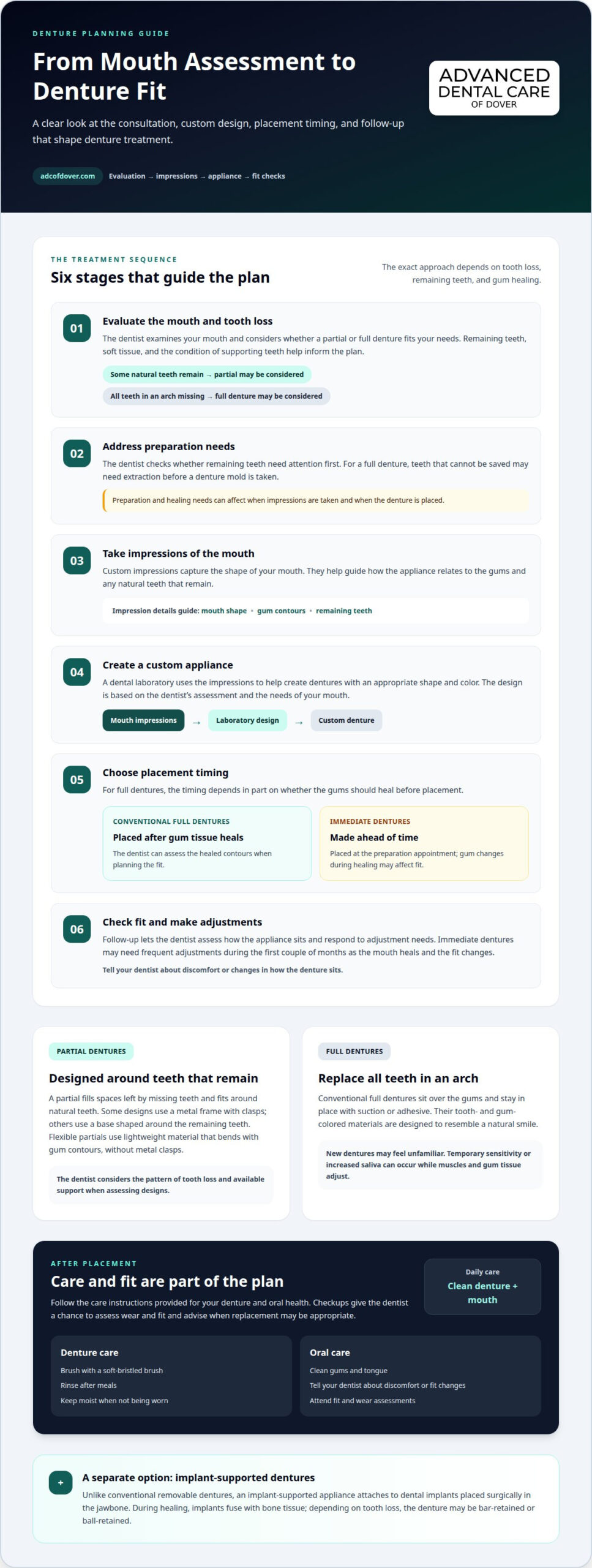
A denture consultation begins with an in-person evaluation of your mouth and tooth loss. The dentist considers whether a partial or full appliance fits your needs and whether remaining teeth need attention first. For full dentures, teeth that cannot be saved may need extraction before a denture mold is taken. This assessment helps guide the next steps for your oral health.
Custom dentures begin with impressions that capture the shape of your mouth. Those impressions guide the appliance’s design, including how it relates to your gums and any natural teeth that remain. A dental laboratory helps create dentures with an appropriate shape and color. The process turns the dentist’s assessment into an appliance designed for your mouth.
For a full denture plan, the dentist considers whether healing should happen before impressions are taken. Conventional dentures are placed after the gum tissue heals, while immediate dentures are made ahead of time for placement at the preparation appointment. These approaches affect when the appliance is made and when follow-up adjustments may be needed. Discussing timing helps clarify the treatment sequence.
You may also ask how implant-supported dentures differ from conventional removable dentures. An implant-supported appliance attaches to dental implants placed surgically in the jawbone. During healing, the implants fuse with bone tissue. Depending on the tooth loss, the denture may be bar-retained or ball-retained. This is a distinct approach, and the dentist can explain how your tooth loss and oral condition shape the options.
The consultation is also a chance to discuss appliance care and follow-up. Before treatment moves forward, make sure you understand the proposed denture type, any preparation such as extraction, and how impressions and laboratory work contribute to the final shape and color. A clear sequence makes each step easier to anticipate, from evaluation and appliance creation to later fit assessments.
Evaluating teeth and soft tissue before dentures
Before planning full dentures, the dentist evaluates the remaining teeth and soft tissue to help determine how to achieve a secure fit. The assessment helps establish whether a full denture or a partial appliance that works around natural teeth is appropriate. The location of missing teeth and the condition of the soft tissue both inform that decision.
For a full denture, the dentist considers whether remaining teeth can be preserved or need extraction before a denture mold is taken. Teeth that cannot be saved may need removal before impressions are made. With a partial denture, the evaluation focuses on how the appliance will fit alongside the natural teeth that remain. The plan is shaped around the pattern of tooth loss.
Soft tissue matters because a denture rests against the gums. The dentist assesses the tissue and considers whether healing should happen before placing a conventional full denture. Immediate dentures follow a different sequence: they are made in advance for placement at the preparation appointment. After the gums heal, a follow-up helps determine whether adjustments are needed.
Impressions capture the shape of your mouth for custom denture creation. They follow the initial evaluation: first, the dentist considers your teeth and soft tissue; then impressions help record your mouth’s shape for the dental laboratory. This sequence connects the assessment with an appliance designed for your smile. The dentist also considers whether teeth that cannot be saved must be extracted before taking a mold.
A useful consultation explains how tooth condition, gum healing, and denture type affect the treatment sequence. If you’re considering dentures, schedule a denture evaluation to discuss how your teeth and soft tissue shape the plan.
Advanced Dental Care of Dover: Crowns, Bridges, Dentures
Advanced Dental Care of Dover provides denture care for patients considering partial or full replacements for missing teeth. After learning how denture types differ and why a dentist evaluates teeth and soft tissue, you can bring your questions to an appointment. The discussion can focus on your tooth loss, oral health, and whether dentures fit your needs. If you’re also considering dental implants, you can discuss that option as part of your care.
Turn to the practice when you’re ready to explore dentures or want guidance about the next step after an evaluation. Contact Advanced Dental Care of Dover to discuss denture care.
Take the next step with confidence
Your next step can be a conversation about what you want from treatment and what feels manageable in daily life. Share concerns about comfort, appearance, or adjusting to an appliance. A dentures dentist in Dover can use those priorities to guide a discussion about your care.
Advanced Dental Care of Dover also offers emergency dentistry, Invisalign clear aligners, and dental implants for other dental needs. If you’re ready to talk about dentures, reach out with your questions and take the conversation at a pace that feels comfortable.
Contact Advanced Dental Care of Dover to discuss your next step. A thoughtful conversation can help you feel more prepared to make a decision that suits you.
Frequently Asked Questions
What are the Benefits of Dentures?
Dentures can help restore everyday functions affected by missing teeth, including speaking and chewing, while supporting your smile’s appearance. The benefit that matters most varies: someone who struggles with chewing may focus on comfort at meals, while someone concerned about a visible gap may prioritize appearance. Sharing these priorities at an appointment makes the treatment discussion more relevant to your daily life.
Are there different types of dentures?
Yes. Partial dentures replace some missing teeth, while full dentures replace all teeth in an arch. They also differ in how they stay in place: conventional dentures rest over the gums, while implant-supported dentures attach to implants. A dentist considers the pattern of tooth loss and remaining teeth when discussing which type may suit you.
How Much Do Dentures Cost Near Me?
Denture costs depend on the type of appliance, preparation needs, and material selection. An in-person evaluation helps identify which factors apply to your treatment, such as whether teeth need extraction before a full denture is made. The dentist can discuss costs after assessing your mouth and proposed treatment plan, rather than relying on a general estimate that may not fit your needs.
How do I know if dentures are the right choice for me?
Dentures may be worth discussing if missing teeth affect eating, speaking, or how comfortable you feel about your smile. The dentist considers how many teeth are missing, whether remaining teeth can support a partial appliance, and the condition of your mouth. For example, someone missing several teeth may discuss a partial denture, while someone missing all teeth in an arch may discuss full replacement.
What Denture Options Are Available?
Options include partial dentures with a metal frame or flexible material, conventional full dentures, immediate dentures, and implant-supported dentures. They differ in construction, timing, and how they stay in place. For example, an immediate denture is prepared before the placement appointment, while an implant-supported option attaches to implants. The dentist can explain which features are relevant to your tooth loss and treatment plan.
What types of dentures are available in Dover?
Advanced Dental Care of Dover provides full and partial dentures. A partial denture is designed for a smile with natural teeth remaining; a full denture replaces all teeth in an arch. An evaluation considers tooth loss and oral condition to help shape your care. Patients in Dover and Randolph can make an appointment to discuss denture options locally.