
A water flosser can flush beneath a dental bridge, while string floss needs a threader to pass under the connected teeth. Choosing between a Waterpik and string floss for cleaning dental bridges is less about finding one winner and more about what you can use comfortably to reach the areas that need cleaning.
It’s understandable if cleaning around a bridge feels awkward at first. String floss can scrape plaque from tooth surfaces, while a water flosser sends a pulsing stream around the bridge and beneath its replacement tooth. Both can be useful. The right fit depends on your bridge, your dexterity, and the routine you can maintain comfortably.
Here, you’ll learn how each method works, who may prefer a water flosser or string floss, and how floss threaders, interdental brushes, and other tools can help. You’ll also see when combining methods may make sense, so you can feel more confident caring for the spaces around your bridge.
Key Takeaways
- Trace a water flosser along the gumline and beneath the bridge to help flush away trapped food.
- For close tooth contact, shape string floss into a C against each tooth and move it gently up and down.
- Using string floss first and a water flosser afterward can pair plaque-scraping with a rinse around the bridge.
- If flossing feels difficult, floss holders, interdental brushes, and picks offer other ways to clean between teeth.
What About Floss Picks, Interdental Brushes, and Other Tools?
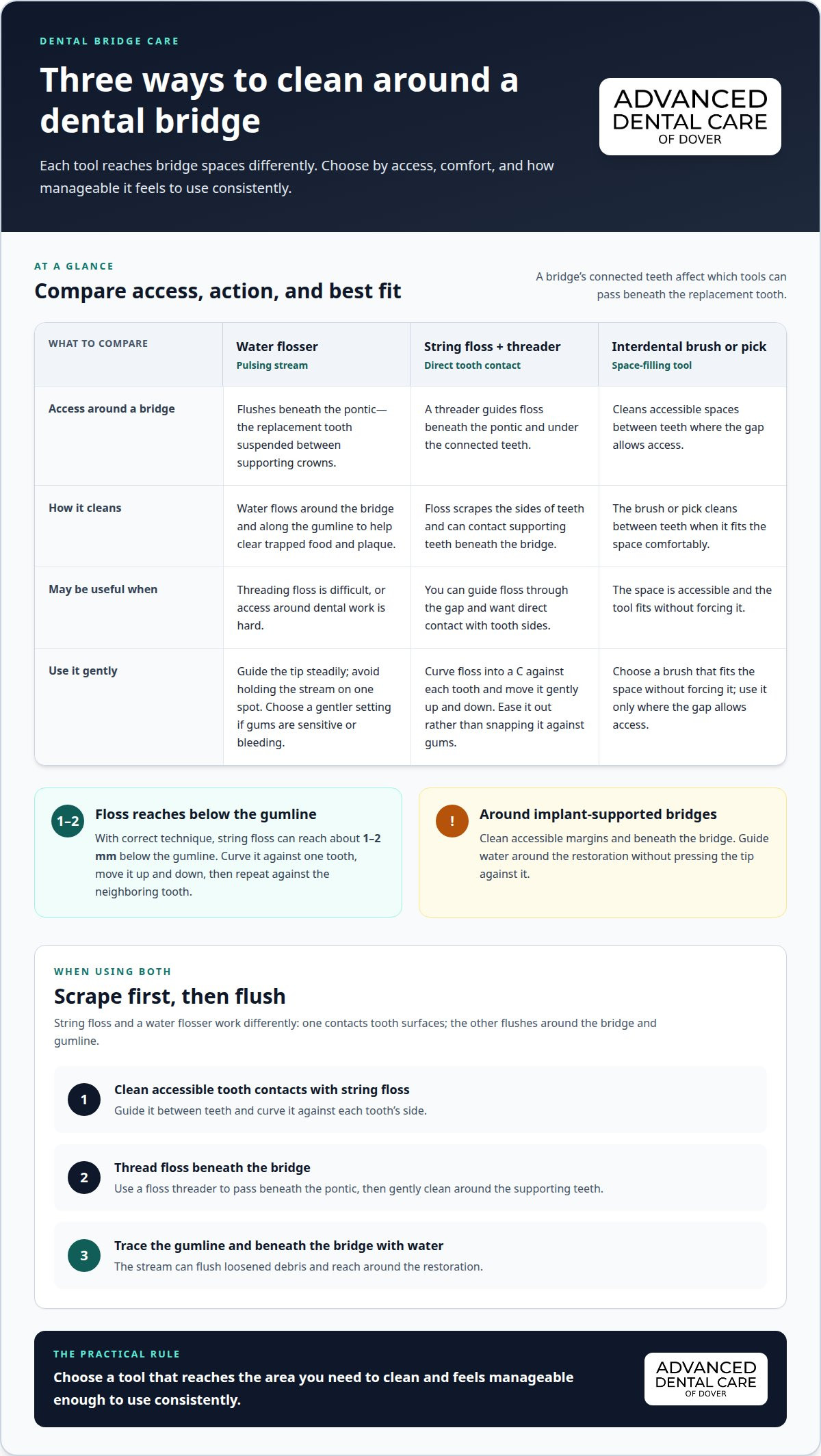
A dental bridge creates spaces that need different cleaning tools. A water flosser can flush beneath its pontic, while a threader helps string floss reach under the connected teeth. The best fit depends on access, comfort, and how easily you can use the tool every day.
Water Flossing Around Bridges and Pontics
A water flosser sends a pulsing stream around the bridge and beneath the pontic, the replacement tooth suspended between supporting crowns. Guide the tip along the gumline and under the bridge to help clear trapped food and plaque from areas a toothbrush may miss. Water flossers can also help clean around dental implants and braces, where restorations or wires make access harder.
Floss threader and super floss costs depend on the product and pack size.
String Floss and Threaders Around Bridges
String floss cleans between natural teeth by scraping their sides, but it cannot pass through a bridge’s connected teeth on its own. Thread the floss beneath the pontic, then move it gently against the supporting crown and the underside of the bridge. A floss threader guides regular floss through the gap; super floss has a stiff end for threading and a thicker section for cleaning.
Interdental brushes, picks, and sticks are other options for cleaning between teeth. Choose a brush that fits the space without forcing it, and use it where the gap allows access.
Water Flosser Risks for Bridges and Implants
A practical concern is using a stream that feels too forceful around tender gums. An adjustable-pressure water flosser lets you choose a gentler setting, which may suit sensitive or bleeding gums. Move the tip steadily rather than holding the stream on one spot. Around an implant-supported bridge, clean accessible margins and beneath the bridge without pressing the tip against the restoration.
Brush twice daily around the bridge and supporting crowns, including along the gumline. Brushing cleans exposed surfaces, while interdental tools reach between teeth and beneath the pontic.
| Tool | Access around a bridge | Useful when |
|---|---|---|
| Water flosser | Flushes beneath the pontic | Threading floss is difficult |
| Floss and threader | Scrapes tooth sides beneath the bridge | You can guide floss through the gap |
| Interdental brush or pick | Cleans accessible spaces between teeth | The gap fits the tool comfortably |
Choose a tool that reaches the area you need to clean and feels manageable enough to use consistently.
How string floss removes plaque through mechanical scraping
String floss removes plaque by rubbing against tooth surfaces, not simply rinsing them. Slide it gently between teeth, curve it into a C against one tooth, then move it up and down along the side. Repeat against the neighboring tooth. This close contact helps clean narrow spaces a toothbrush cannot reach.
Correct technique matters: string floss can reach about 1-2 mm below the gumline. In tight or overlapping spaces, its direct scraping action may work better than a water stream. Around a bridge, though, connected teeth block ordinary floss from passing underneath. A threader can guide floss through that space, so it can contact the bridge’s supporting teeth.
A water flosser works differently. Its pulsing stream flushes food particles and plaque from between teeth and along the gumline, including around restorations. It can be easier to guide around dental work, while floss gives direct contact with each tooth’s side. Neither method replaces careful brushing around the restoration and gumline.
Bleeding can occur when gums are inflamed, and removing plaque between teeth can help reduce gum irritation. Plaque left between teeth for a day or two can trigger inflammation. If floss catches in crowded spaces, ease it out rather than snapping it against the gums. Waxed floss may slide more smoothly when regular floss sticks.
A Plaque Seeker tip is a named water-flosser attachment for cleaning around dental restorations. It delivers water rather than scraping each tooth surface like string floss. For an implant-supported restoration, the choice may depend on which areas are accessible and whether floss can be guided comfortably.
If you have questions about cleaning around dental implants, discuss the spaces you find difficult during dental care.
Combining string floss with a water flosser
String floss and a water flosser clean in different ways, so using both adds a scraping step and a flushing step. This routine can help clean tight tooth contacts first, then rinse debris around a bridge, beneath its pontic, and along the gumline. Between dental appointments, brushing and cleaning between teeth support daily oral hygiene.
- Guide string floss between accessible teeth and curve it against each tooth to clean its side.
- Use a threader to pass floss beneath a bridge, then gently clean around its supporting teeth.
- Follow with a water flosser, tracing the gumline and directing water beneath the bridge.
The order matters because floss first scrapes plaque from tight contact areas. The water stream can then flush loosened debris and reach around restorations. For example, floss can clean between two natural teeth beside a bridge, while the water flosser reaches beneath the pontic.
People with a history of gum disease may be advised to combine both tools. Each step targets a different area: string floss contacts tooth surfaces, while water flows along the gumline and around dental work. Together, they offer a more complete interdental routine than relying on brushing alone.
Keep the routine comfortable and controlled. Use gentle floss movements rather than snapping floss into the gums, and guide the water stream steadily around the bridge. If an area is hard to reach, a floss threader can guide string floss beneath the restoration before rinsing.
Clean between teeth once a day and brush twice daily. Consistency and good technique matter more than adding steps you can’t maintain. A dental professional can help tailor the routine to your bridge and show you how to reach difficult spaces without irritating the gums.
Water flossing under dental bridges
A water flosser can direct water beneath a bridge’s pontic, where food may collect. Use it as part of a daily routine to clean between teeth and around the restoration.
Waterpik Versus Threaders and Super Floss
A Waterpik uses a pulsing stream to flush beneath the bridge, while a floss threader guides string floss through the space under the pontic. A water flosser may be a primary cleaning tool for some people with complex dental work, but it doesn’t scrape tooth surfaces like floss. The two methods reach areas differently.
To clean with a water flosser, trace its tip along the gumline at a 90-degree angle, directing the stream beneath the bridge. Allow about one to two minutes for cleaning. A threader or super floss remains useful for reaching the supporting teeth directly, so water flossing doesn’t automatically make those tools unnecessary.
Cleaning Frequency and Dentist Recommendations
Clean between teeth once a day, including beneath the bridge, and brush twice daily. Regular dental checkups help support oral health, and a dental professional can guide you in reaching areas that are difficult to clean.
For a steady routine, use the water flosser around the gumline and beneath the pontic, then check that food debris has cleared. Add a threader if you need direct floss contact under the bridge or around its supporting teeth. If you have a history of gum disease, combining tools may help clean between teeth more thoroughly.
For guidance about bridge care and cleaning beneath a restoration, schedule a visit with Advanced Dental Care of Dover.
Advanced Dental Care of Dover: Crowns, Bridges, Dentures
Advanced Dental Care of Dover provides crowns, bridges, and dentures for patients who need dental restorations. If a bridge feels uncomfortable or is difficult to clean, a dental visit can help assess the restoration and the teeth supporting it. You can also discuss which home-cleaning approach suits your bridge and how a threader or water flosser might fit into your routine.
Advanced Dental Care of Dover also provides dental implants. A dental professional can consider your restoration and the surrounding areas when discussing your oral health needs.
For help with bridge-related concerns, contact Advanced Dental Care of Dover.
Make Bridge Care Part of Your Next Step
Your bridge-care routine should fit the way your mouth feels and the spaces you need to reach. If you’re still weighing Waterpik vs string floss for cleaning dental bridges, focus on the method you can use comfortably and consistently, and bring any hard-to-clean area into your next dental conversation. A small adjustment to your routine can make daily care feel more straightforward.
Advanced Dental Care of Dover offers care for bridges and dental implants, as well as emergency dentistry and Invisalign clear aligners. If you have a concern about your restoration or want help planning your next step, the team can discuss your needs in a supportive setting.
Reach out to Advanced Dental Care of Dover to talk about your dental care. Taking that step can help you move forward with a routine that feels more comfortable and manageable.
Frequently Asked Questions
Who Should Use a Water Flosser?
A water flosser may suit people who find string floss difficult to handle or whose braces or dental work make flossing awkward. It can also help flush food from around a bridge. If your gums are sensitive, adjustable pressure can make the stream gentler. The best choice is one you can use consistently with good technique.
Can You Use Both?
Yes. Some people use both tools because floss and a water flosser reach the mouth differently. Combining them may be especially useful for people with a history of gum disease or several types of dental work. A dental professional can help you decide whether both fit your routine and show you how to clean the areas that are hardest to reach.
What Does the Clinical Research Actually Say?
Comparisons report different outcomes for different groups, rather than one result that applies to everyone with a bridge. Water flossers showed up to 29% better plaque reduction than string floss among patients with orthodontic appliances, and up to 51% better gingivitis reduction around implants. Those findings concern braces and implants, so they shouldn’t be treated as direct proof of superiority for every bridge.
How effective is a Waterpik compared with string floss for cleaning dental bridges?
Neither method is automatically best for every bridge. A water flosser can reach beneath the replacement tooth, while string floss can scrape plaque from tooth surfaces when used correctly. For a bridge, the practical difference is whether you need to clean beneath the pontic, between natural teeth, or both. Choose based on access and the method you can use reliably.
What is the best way to use a water flosser to clean under a dental bridge?
Keep the tip directed toward the gumline and beneath the pontic, following the bridge rather than aiming only at its visible surface. A useful routine takes about one to two minutes, with the tip held at a 90-degree angle. Use your own device rather than sharing it, and replace its tip typically every three to six months.
What clinical studies compare water flossers and floss for plaque and gum health around bridges?
Comparisons described for water flossers include orthodontic appliances and implants, not a bridge-specific head-to-head result. Reported plaque and gingivitis improvements apply to those groups and shouldn’t be transferred directly to bridges. For bridge care, the useful question is whether your chosen tool reaches beneath the pontic and cleans the supporting teeth comfortably and consistently.