
Gingivitis prevention in Dover, NJ starts with removing plaque before it irritates the gums. A dental cleaning helps clear away hardened tartar, and professional cleanings are recommended at least twice yearly, or more often when advised based on your gum health.
Gum inflammation can return even after it improves because plaque builds up again around the teeth and gumline. Ongoing prevention combines regular professional care with consistent brushing and flossing at home.
This guide explains what causes gingivitis, how cleanings help reduce buildup, and whether early gum inflammation can be reversed. You’ll also learn what signs to watch for and which habits can help protect your gum health over time, so you can feel more prepared to discuss your needs with a dental professional.
Key Takeaways
- Learn why plaque buildup can inflame gums and how professional cleanings remove hardened tartar that brushing can’t.
- Understand when gingivitis may be reversible and why ongoing symptoms deserve attention.
- Recognize common early signs of gum disease, even when they don’t cause discomfort.
- Find out how consistent home care and a cleaning schedule suited to your gum health can help prevent gingivitis from returning.
Gingivitis prevention through dental cleanings
Dental cleanings remove tartar that brushing and flossing cannot clear. Regular dental exams also help identify early gum inflammation before it progresses.
Professional Cleaning and Deep Cleaning
A professional cleaning removes plaque and tartar from tooth surfaces. Deep cleaning targets deposits below the gumline. Tartar forms when plaque is not removed regularly, and a dental professional must remove it. Buildup near the gums can contribute to inflammation and gum disease.
Early gingivitis care usually combines better daily oral hygiene with a professional cleaning. If gum disease has progressed to periodontitis, scaling and root planing may remove deposits below the gumline. This is a deeper treatment than a routine cleaning.
New Jersey dental plans commonly cover basic periodontal treatment, including scaling and root planing, but coverage varies. Preventive cleaning benefits and NJ Medicaid coverage depend on the specific plan, so review its terms before scheduling an appointment.
Dental Checkups and Cleaning Schedules
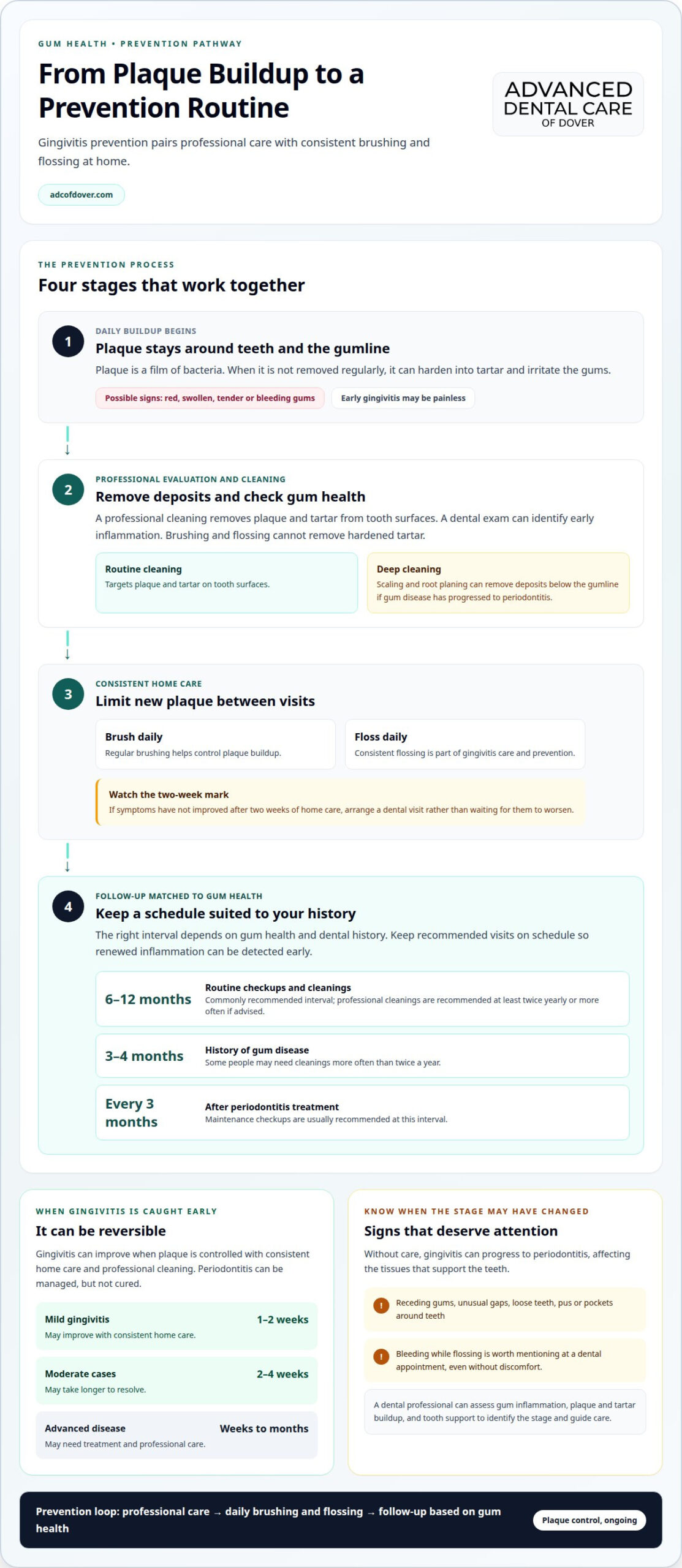
A dental checkup lets a professional assess gum health and look for early signs of disease alongside a cleaning schedule. Routine cleanings and checkups are commonly recommended every 6 to 12 months, with professional cleanings at least twice yearly or more often if recommended. The right interval depends on gum health and dental history.
For example, people with a history of gum disease may need cleanings every 3-4 months instead of twice a year. After periodontitis treatment, maintenance checkups are usually recommended every three months. Keeping those visits on schedule can help detect renewed inflammation early and guide the next stage of treatment.
Even when cleanings are spaced differently, the standard professional cleaning interval for comparison is six months. See a dentist at least once a year for checkups to reduce gingivitis risk.
Is Gingivitis Reversible?
Gingivitis can be reversed with consistent care before it advances to periodontitis. Recognizing symptoms early helps guide care and protect your gum health.
Gingivitis Progression and Reversibility
Gingivitis is the earliest stage of gum disease and can improve when plaque is controlled. If it goes untreated, it can develop into periodontitis, which can damage the tissues supporting teeth. That change matters because gingivitis is reversible, while periodontitis can be managed but not cured.
Recovery time depends on the severity of inflammation and the care provided. Mild gingivitis may improve within 1 to 2 weeks with consistent home care. Moderate cases may take two to four weeks, while advanced disease may need several weeks to months of treatment. Reduced bleeding or swelling can appear within the first few days.
Home and Professional Care for Reversal
Reversing gingivitis involves daily brushing and flossing, along with professional evaluation and cleaning. A dentist can assess symptoms such as bleeding gums and determine whether plaque buildup or more advanced disease needs attention. If symptoms have not improved after two weeks of home care, arrange a dental visit rather than waiting for them to worsen.
Early gingivitis care often focuses on consistent oral hygiene and professional cleaning. A dentist may recommend a therapeutic mouthwash as part of your care. If the condition has progressed to periodontitis, treatment may include scaling and root planing to remove deposits below the gumline. An examination helps identify the stage and guide the appropriate approach.
Good dental care may reverse gingivitis symptoms and restore gum health. Patients may notice reduced bleeding and gum swelling within the first few days of improved brushing and flossing. Minor gingivitis may resolve after consistent flossing within two to three weeks, while moderate gingivitis typically takes two to four weeks to resolve.
Gum disease treatments may include scaling and root planing, antibiotics, and specially formulated mouth rinses. See a dentist if gingivitis symptoms do not improve after two weeks of home care.
How common is gingivitis?
Gum disease is common: nearly half of U.S. adults over age 30 have some form of it. Gingivitis is its earliest stage, and recognizing the signs can help patients seek care before damage progresses.
Gum disease begins when plaque, a film of bacteria, builds up around the teeth and irritates the gums. Skipping daily brushing and flossing allows plaque to remain in place and harden into tartar, which home brushing cannot remove. Regular dental care helps address buildup before it contributes to inflammation.
Gingivitis may cause red, swollen, tender, or bleeding gums, but it can also be painless early on. Bleeding while flossing is worth mentioning at a dental appointment, even if you feel no discomfort. Hormonal changes during puberty can also make gums red, tender, or swollen.
Without care, gingivitis can progress to periodontitis, which affects the tissues supporting the teeth. Signs may include receding gums, unusual gaps, loose teeth, pus, or pockets around teeth. Advanced periodontitis can cause teeth to loosen, shift, or fall out, so prompt assessment matters.
Gum disease has also been associated with heart disease, diabetes, and pregnancy complications. These associations don’t mean gum inflammation causes every health concern, but they make it useful to share relevant health history during a dental visit. A professional evaluation considers the gums, plaque and tartar buildup, and tooth support to identify the stage and appropriate care.
Questions about comfort during treatment are separate from identifying gum disease. An appointment focuses first on signs such as bleeding, swelling, tartar, and changes in tooth support. Share any concerns about treatment comfort with the dental team.
Preventing gingivitis from returning
After gum inflammation improves, preventing its return means limiting new plaque buildup and keeping up with follow-up care. For gingivitis prevention in Dover, NJ, your gum history can help shape an appropriate care plan. A history of periodontitis may call for closer maintenance than a history of mild gingivitis. Keep recommended visits on your calendar to make follow-up part of your routine.
Daily habits matter between visits. Brush thoroughly twice a day and floss daily to clear plaque from tooth surfaces and between teeth. An interdental brush may help clean spaces a regular toothbrush misses. Replace your toothbrush every three to four months, or sooner if its bristles are frayed. These small routine details make plaque removal more consistent.
Pay attention to changes, too. If you notice bleeding while brushing or flossing, renewed tenderness, or swelling, share those symptoms with a dental professional. Bleeding alone does not confirm that gum disease has returned, but it is a good reason to discuss a change in your gum health. A professional can assess whether you need follow-up or a different cleaning schedule.
Other daily choices can support gum health. Avoid tobacco, choose a balanced diet that is low in sugar, and use an antimicrobial mouthwash only if a dental professional recommends it. Mouthwash can complement brushing and flossing, but it does not replace cleaning between teeth. Effective gingivitis prevention in Dover, NJ combines home habits with care suited to your gum history.
If symptoms return or you’re unsure what follow-up fits your situation, discuss your concerns with a dental professional. You can schedule a gum-health appointment to talk through your next steps.
Advanced Dental Care of Dover
Advanced Dental Care of Dover provides dental exams and cleanings to help assess gum concerns and discuss next steps. If bleeding, tenderness, or swelling returns, share when it began and what you have noticed. A dental professional can evaluate your symptoms and explain how ongoing care may support healthier gums.
Mention previous gum disease treatment and any changes in your daily oral care routine, too. This context can help inform follow-up and prevention recommendations, especially if symptoms persist or worsen. You do not need to wait until discomfort becomes severe to raise a concern.
For personal guidance about your gum health, make an appointment with Advanced Dental Care of Dover.
Make Your Next Gum-Health Step Count
Protecting your gums is an ongoing part of caring for your oral health. If bleeding or tenderness returns, note what has changed and bring it up at a dental appointment. Sharing your oral care routine and history of gum problems can make the conversation more useful and focused on your needs.
For gingivitis prevention in Dover, NJ, a professional visit can help you understand what follow-up suits your gum health. Advanced Dental Care of Dover also offers emergency dentistry, Invisalign clear aligners, and dental implants.
When you’re ready to discuss your concerns, contact Advanced Dental Care of Dover. Taking the next step can help you feel more informed and supported in caring for your smile.
Frequently Asked Questions
What Causes Gingivitis?
Gingivitis usually develops when plaque, a layer of bacteria, remains along the teeth and gumline. If it is not removed regularly, plaque can irritate the gums and lead to redness, tenderness, or bleeding. Daily brushing and flossing help limit buildup, while tobacco use and hormonal changes can also affect gum health. Mention any changes at a dental appointment.
What Is Gum Disease?
Gum disease affects the gums and other soft tissues that surround and support the teeth. It ranges from early gingivitis to periodontitis, which can damage the structures holding teeth in place. Signs may include bleeding, swelling, gum recession, or loose teeth. A dental exam helps identify the issue and guide appropriate care.
How Can a Dentist Treat Gingivitis?
A dentist assesses gum symptoms and plaque buildup, then recommends care suited to the findings. Gingivitis care commonly includes a professional cleaning and guidance on daily oral hygiene. If disease has progressed below the gumline, scaling and root planing may be used to remove harmful deposits. Tell the dentist about bleeding or tenderness, even if it seems minor.
Can gingivitis be cured?
Gingivitis can be reversed, and gum tissue may return to health with consistent care. Periodontitis is different: it can be managed but not cured. If your gums still bleed or feel swollen after two weeks of home care, arrange a dental evaluation. Early attention helps clarify whether you have reversible gingivitis or more advanced gum disease.
How Can a Dentist Help Reduce Your Risk for Gingivitis?
A dentist can check gum tissue for early changes, remove hardened deposits, and help set a cleaning schedule suited to your dental history. Someone previously treated for periodontitis, for example, may need closer maintenance than someone without that history. Regular evaluations also give you a chance to discuss changes in brushing, flossing, or gum symptoms early.
Is gingivitis a serious problem?
Gingivitis deserves attention because untreated gum disease can progress to periodontitis and damage the support around teeth. Early signs can be painless, so mention bleeding while brushing or flossing even if you have no discomfort. Recession, pus, or loose teeth also call for professional evaluation. Addressing changes promptly can help protect the tissues that keep teeth stable.