
Choosing between an at-home LED whitening kit and professional whitening often comes down to a trade-off: at-home kits generally cost less upfront, while professional treatment may brighten teeth more quickly with a dental professional’s supervision. Both use peroxide to break down stains, but the LED light itself does not whiten teeth. The bleaching gel does the work.
It makes sense to weigh cost alongside comfort and results. At-home products can cause sensitivity or gum irritation if used incorrectly, while a dental professional can help manage sensitivity during treatment. This guide explains how whitening methods work, how their costs and sensitivity risks compare, and what to consider when choosing an at-home LED kit or professional whitening. Treatment time, stain type, and the level of supervision can all shape which option suits you.
Key Takeaways
- See what affects how long professional whitening results last, and which everyday habits can help maintain them.
- Understand the factors that influence sensitivity and the ways whitening can be adjusted for comfort.
- Compare store-bought kits with dentist-provided custom trays to find the approach that fits your routine.
- Learn how to weigh upfront cost against treatment time, supervision, and the kind of results you’re looking for.
How Does Teeth Whitening Work?
Peroxide breaks down stains embedded in enamel. At-home kits, dentist take-home trays, and in-office treatment differ in gel delivery, supervision, and speed.
Professional Whitening Methods and Results
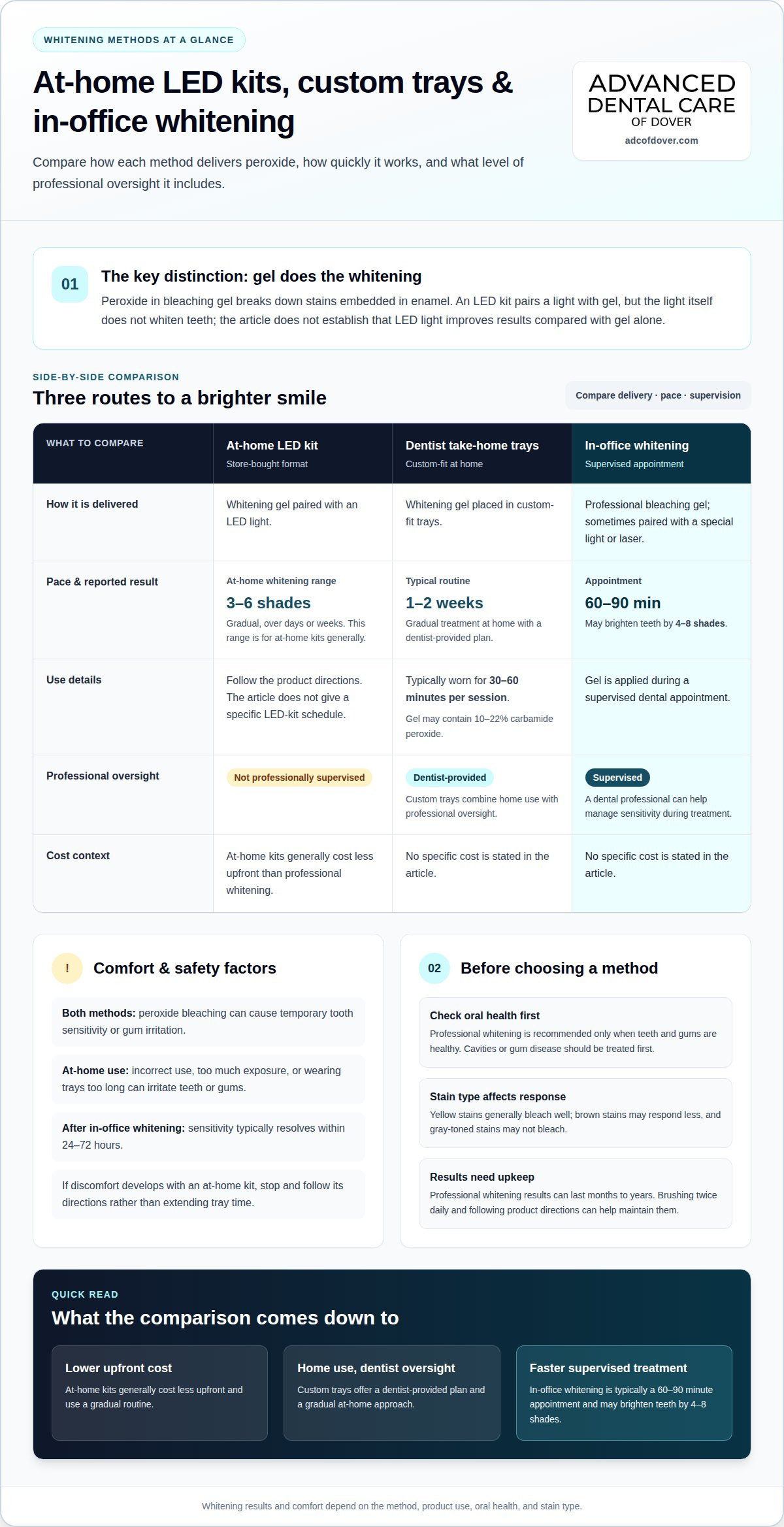
In-office whitening applies bleaching gel during a supervised dental appointment, typically lasting 60 to 90 minutes. Teeth may brighten by 4 to 8 shades, while at-home kits may lighten them by 3 to 6 shades over days or weeks. Dentist-provided take-home trays use custom-fit trays and gel at home, combining a gradual routine with professional oversight. These differences help explain why in-office treatment can produce faster, more dramatic results.
LED Light Versus Whitening Gel
LED kits pair a light with whitening gel, but the light itself does not whiten teeth. Peroxide in the gel breaks down stains and produces the whitening effect. The information here does not establish that LED light improves results compared with gel alone. Whitening strips also deliver bleaching ingredients without an LED light, while professional treatment may use a special light or laser to activate gel.
How long do professional whitening results last? They can last months to years, and care affects how long teeth stay brighter. Yellow stains generally bleach well, while brown stains may respond less and gray-toned stains may not bleach. Whitening toothpaste may take weeks to months to show visible results, so both the method and stain type affect the pace and outcome.
| Option | How whitening is delivered | Typical speed or result | Supervision |
|---|---|---|---|
| At-home LED kit | Gel paired with an LED light | Gradual; at-home whitening may lighten teeth by 3 to 6 shades | Not professionally supervised |
| Dentist take-home trays | Gel in custom-fit trays | Gradual, typically over one to two weeks | Dentist-provided |
| In-office whitening | Professional gel, sometimes with a special light or laser | Typically 60 to 90 minutes; may brighten teeth by 4 to 8 shades | Supervised |
To help maintain results, brush twice daily and follow the whitening product’s directions. Choose based on whether gradual treatment at home or a faster, supervised appointment better fits your needs.
How does sensitivity differ across methods?
Bleaching can cause temporary tooth sensitivity or gum irritation, with both at-home and professional methods. The American Dental Association recognizes dentist-supervised at-home and in-office whitening as effective. That recommendation does not establish an FDA rule for consumer LED kits.
Sensitivity and Desensitizing Measures
Sensitivity can follow peroxide exposure, and both the strength of the gel and how it is used matter. Professional whitening is monitored, so a dental professional can help manage sensitivity during treatment. If discomfort develops with an at-home kit, stop and follow its directions rather than wearing trays longer. Extending tray time can irritate teeth or gums, so stick to the intended schedule.
Gum Irritation and Tooth Sensitivity
At-home products can cause tooth sensitivity and gum irritation, especially when used improperly. Over-bleaching or gum injury is also a risk with incorrect kit use. In-office whitening has professional oversight, and sensitivity afterward typically resolves within 24 to 72 hours. These differences matter for people with sensitive teeth, since supervised care allows a dental professional to manage discomfort.
An oral health screening is important before either method. Professional whitening is recommended only when teeth and gums are healthy; cavities or gum disease should be treated first. A dental professional can assess these concerns before bleaching, rather than whitening over an existing problem. This matters especially if your gums are already sore or your teeth react sharply to everyday foods.
Enamel safety depends partly on using the product as directed. Peroxide gel can irritate teeth or gums if trays are worn too long, so more exposure isn’t a safer route to brighter teeth. People considering at-home or professional whitening should consult a dentist first. A conversation about sensitive teeth, gum health, and past reactions helps guide the choice of method and comfort measures. For guidance on supervised treatment, explore professional teeth-whitening care.
What Are At-Home Whitening Kits?
At-home options include whitening strips, LED kits, and trays filled with whitening gel. Dentist-provided trays differ from store-bought kits because they are custom-made for a closer fit.
Dentist-Prescribed Take-Home Trays
A dentist can provide custom trays and whitening gel for use at home. The gel may contain 10 to 22 percent carbamide peroxide, and trays are typically worn for 30 to 60 minutes per session over one to two weeks. This approach takes longer than in-office whitening, but allows treatment at home with a dentist-provided plan.
Custom Versus Generic Trays
Custom trays fit the upper and lower teeth more closely than store-bought, one-size-fits-all trays. This can help distribute gel evenly across the teeth. Generic trays included with over-the-counter kits may not match an individual smile as closely. The key difference is fit, not an LED light or a promise of dramatic results.
Whitening strips and LED kits offer different at-home formats. Strips sit against the teeth, while LED kits pair a light with whitening gel. Peroxide in the gel does the bleaching, not the light. Coffee stains may respond to bleaching, but results depend on the type of stain. Follow directions, since excessive gel exposure can cause irritation.
Custom take-home trays can also be used for occasional touch-ups after whitening. A dentist can provide trays and gel for this purpose. The trays may be reused, while gel should be applied according to the prescribed schedule. Touch-ups can help maintain brightness without repeating an in-office appointment. They offer a gradual at-home option, not a faster route to immediate results.
Choose a format that suits your routine: store-bought strips or LED kits, or custom trays for dentist-provided at-home whitening. If you have coffee-related or other persistent stains, a dental assessment can help determine whether bleaching is suitable.
At-home versus professional whitening costs
At-home whitening kits generally cost less upfront than professional teeth whitening, but the initial price is only part of the comparison. Over-the-counter kits may require repeat purchases, while professional whitening can typically be completed in one office visit. Compare the full routine, including the product or appointment, repeat use, and any touch-ups. A lower starting cost does not necessarily mean lower spending over time.
The type of kit also affects the comparison. Whitening strips and LED kits are over-the-counter options, while dentist-provided custom trays come with fitted trays and gel. Costs reflect different supplies and levels of professional oversight, so compare similar treatment formats rather than an LED device alone with supervised treatment. Hydrogen peroxide and carbamide peroxide are bleaching agents used in whitening. The agent, concentration, and treatment format all help explain why options differ.
For a practical estimate, consider the complete course of treatment, not just the first package. Follow the kit’s stated schedule and include repeat purchases only if you plan to use another course. For professional treatment, consider whether the recommended approach involves an office visit or dentist-provided take-home trays. These formats deliver whitening differently, which matters when comparing overall value.
The right comparison depends on your goal, stain type, preferred pace, and whether professional supervision matters to you. Start by identifying the methods you are comparing, then weigh the full treatment routine and how you will maintain results. Stronger peroxide alone does not necessarily make an option better value. Your treatment plan and dental needs also matter.
The price of professional whitening depends on the case and is given after a quote request; factors include the treatment approach and your whitening needs. For guidance on professional teeth-whitening options, take the next step with a dental team.
Advanced Dental Care of Dover: Teeth Whitening & Veneers
Advanced Dental Care of Dover offers Teeth Whitening & Veneers for people comparing home kits with professional treatment. If you are unsure which approach fits your goals, or have sensitive teeth, a dental conversation can help you consider your oral health and whitening options. Professional whitening is appropriate when teeth and gums are healthy; cavities or gum disease should be treated first.
Whitening may not change every type of stain equally, so the source and appearance of discoloration matter when choosing a cosmetic approach. A dentist can discuss whether whitening or veneers better address your concerns. If discomfort or a dental problem is affecting your decision, mention it before starting bleaching.
For a conversation about your smile goals, contact Advanced Dental Care of Dover in Dover, New Jersey.
Choose a Whitening Path That Feels Right for You
Choosing between an at-home LED whitening kit and professional whitening is personal. Consider what would help you feel comfortable moving forward, including how much guidance you want and how whitening fits your routine. Your smile, concerns, and preferences deserve a conversation that goes beyond the packaging or device label.
If you are unsure how to approach discoloration or have questions about what could suit your teeth, an individual assessment can help clarify the next step. Share what matters most to you, whether that is feeling at ease with the process or understanding which cosmetic options could address your concerns. You do not need to have every answer before starting the conversation.
Contact Advanced Dental Care of Dover to discuss your smile goals and possible next steps. A thoughtful conversation can help you move forward with greater confidence.
Frequently Asked Questions
How do you choose between methods?
Choose based on your oral health, preferred pace, and comfort with using products at home. If you have sensitive teeth, sore gums, or a dental concern, get guidance before whitening. Consider how a daily routine fits your schedule, too. For example, someone who prefers professional oversight may favor an office treatment, while someone comfortable following product directions may consider an at-home option.
How long do results last across methods?
Professional whitening results can last months to years, while at-home results depend on the product and how consistently it is used. Daily habits and occasional touch-ups can affect how long teeth stay bright. For instance, someone who drinks coffee regularly may notice discoloration returning sooner than someone with fewer staining habits. Follow the product’s instructions and discuss maintenance with a dental professional.
What Are Store-Bought Whitening Products?
Store-bought whitening products include strips, toothpaste, and kits that may pair whitening gel with an LED light. They differ in how gel reaches the teeth and how often you use them. Strips, for example, rest against tooth surfaces, while toothpaste is used during regular brushing. Check each product’s directions and avoid combining products unless a dental professional advises you to do so.
Which Is More Effective?
Professional whitening generally works faster and can produce brighter results than over-the-counter products. Results also depend on the type and color of the stain. Yellow discoloration often responds better than brown stains, while gray-toned teeth may not bleach. If a product seems ineffective, switching to a stronger kit is not the only option; the cause of the stain can influence the next step.
How do at-home LED teeth whitening kits work compared with professional whitening?
An at-home LED kit combines whitening gel with a light, while professional whitening applies gel under dental supervision. Peroxide in the gel breaks down stains; the LED light itself does not whiten teeth. Professional treatment may use a special light or laser, but the bleaching agent does the whitening. The key distinction is the treatment setting and supervision, not simply whether a light is used.
How much do at-home LED whitening kits and professional teeth whitening cost in the United States?
Professional whitening costs vary by case; pricing is provided after a quote request and depends on the treatment approach and whitening needs. For a fair comparison, consider the full routine, including repeat home-kit purchases or any recommended professional follow-up. An LED feature alone does not determine overall value.