
A missing tooth doesn’t automatically mean a bridge is the right choice. A crown covers and supports a tooth that remains, while a bridge replaces one or more missing teeth using nearby teeth or implants for support. For dental crowns and bridges in Dover, the right option depends on what needs restoring and the condition of the surrounding teeth.
It’s understandable to feel unsure when weighing treatments, especially if you’re concerned about comfort, appearance, or what the process involves. A clear explanation can make the decision easier to navigate.
Here, you’ll learn when a crown or bridge may suit your needs, what bridge materials and digital impressions involve, and how to care for your restoration. We’ll also walk through what to expect during preparation and placement, so you can approach the next steps with greater confidence.
Key Takeaways
- A crown covers and supports a tooth that remains, while a bridge replaces missing teeth. The condition of nearby teeth and the size of the gap help shape the choice.
- Bridge preparation may involve reshaping supporting teeth, with a temporary restoration protecting the area while the permanent bridge is made.
- Good daily cleaning and regular dental check-ups support the longevity of crowns and bridges; a bridge may last 10-15 years or longer with proper care.
- Bridge materials include porcelain, metals, alloys, and gold. Learn how impressions help create a restoration that fits the prepared area.
Tooth preparation and temporary bridges
Preparing a bridge starts with shaping the teeth or implant-supported areas beside the gap. These supporting points, called abutments, provide a base for the restoration. For a traditional bridge, the dentist reshapes the supporting teeth so the crowns can fit over them. A bridge includes supporting crowns and a replacement tooth, called a pontic. The dentist also takes an impression of the prepared area to help create the permanent restoration.
A temporary bridge can cover the abutments and exposed gum areas while the permanent bridge is being made. A temporary crown serves a similar short-term purpose after crown preparation. These restorations protect the prepared area, but they are not the finished crown or bridge. Follow the dentist’s instructions for eating and cleaning around a temporary restoration, and contact the dental office if it loosens or comes off. If a crown falls out, keep it in a cool, safe place in case it can be reinserted.
Temporary and permanent crowns serve different stages of care. The temporary crown covers the prepared tooth while the permanent one is made. A permanent porcelain crown can be color-matched to nearby teeth. The right restoration depends on what needs coverage and the shape and condition of the tooth. The same distinction applies to a bridge: the temporary version protects the area, while the permanent one fills the gap.
- For bleeding after a tooth breaks, apply gauze to the area for ten minutes.
- A knocked-out tooth may have a chance of tissue reattachment if placed back in its socket within one hour.
Urgent treatment addresses immediate problems, not the final restoration. Once the urgent concern is handled, a dentist can assess the damaged tooth or gap and determine whether a crown or bridge is appropriate. Preparation, impressions, and a temporary restoration help the permanent piece fit the intended area.
Crown and bridge longevity and care
Material choice and daily cleaning both affect how long a restoration serves you. Emergency dental care during clinic hours can address urgent damage. Same-day permanent placement depends on completing and fitting the restoration during that visit.
Crown and Bridge Materials and Longevity
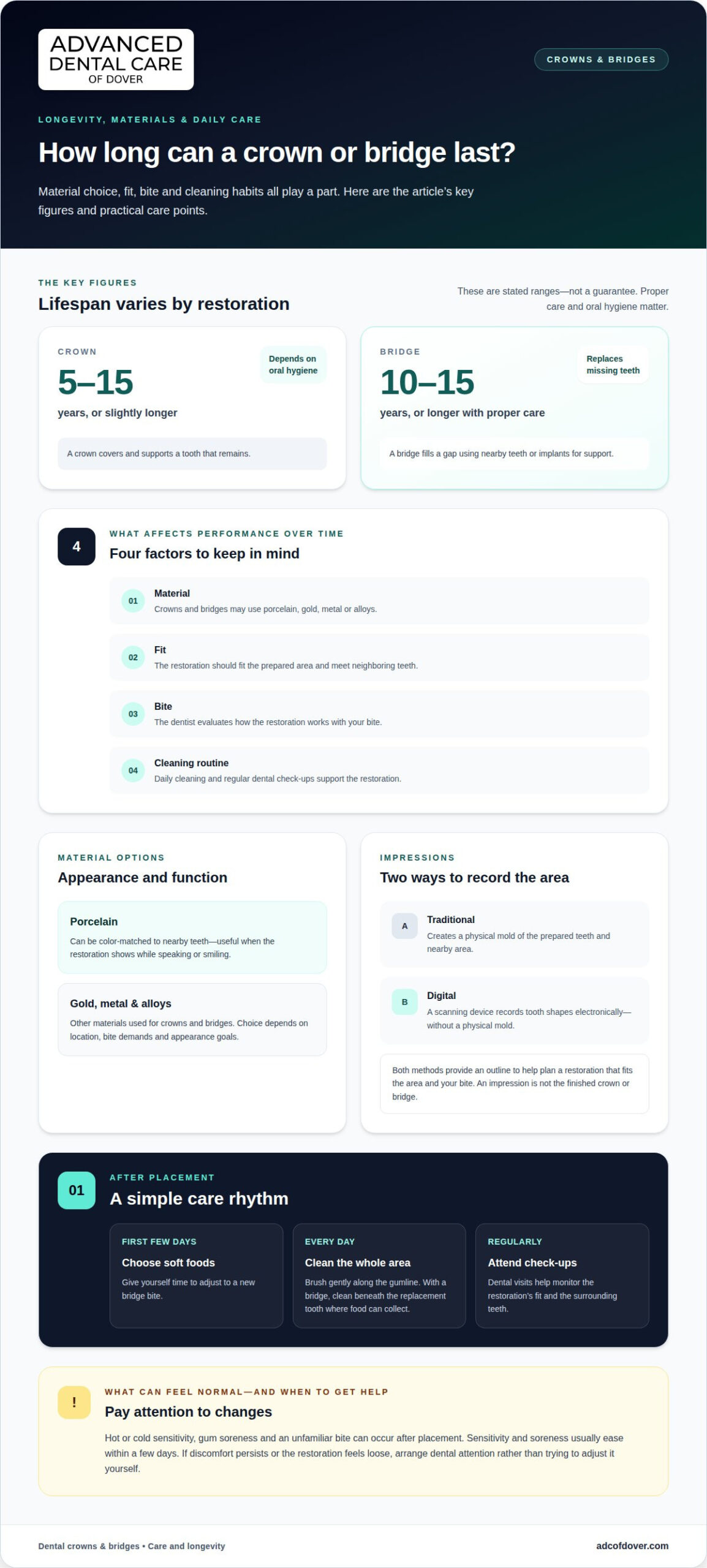
Crowns and bridges can be made from gold, metal, alloys, or porcelain. Porcelain can be color-matched to nearby teeth, which may matter when a restoration shows while speaking or smiling. A crown can last 5 to 15 years or slightly longer, depending on oral hygiene. A bridge may last 10-15 years or longer with proper care. The material, fit, bite, and cleaning routine all affect how it performs over time.
Crown Care and Sensitivity
After placement, sensitivity to hot and cold is normal, and gum soreness usually eases within a few days. For the first few days after a bridge is placed, choose soft foods while adjusting to the new bite. Brush gently along the gumline and clean around the restoration every day. With a bridge, pay particular attention to the area beneath the replacement tooth, where food can collect. Regular dental check-ups help monitor the fit and surrounding teeth. For practical guidance about crown and bridge care, focus on cleaning the whole area, not only the visible surface.
Risks, Side Effects, and Aftercare
Hot or cold sensitivity and gum soreness can occur after placement; these effects usually settle within a few days. Your bite may also feel unfamiliar at first. Follow the dentist’s cleaning and eating instructions, especially during the first few days with a new bridge. If discomfort persists or the restoration feels loose, arrange dental attention rather than trying to adjust it yourself. Emergency dental care can address urgent concerns, while a permanent repair requires the restoration to be made and fitted. A temporary crown or bridge can protect the area while the permanent restoration is made.
Digital impressions and bridge materials
An impression records the prepared area so a restoration can be shaped to fit. A traditional impression creates a physical mold; a digital impression records tooth shapes electronically. Both capture the prepared teeth and nearby area. The dentist uses this information to plan a crown or bridge that meets neighboring teeth and fits your bite.
For a digital impression, a scanning device captures the shape of the teeth and surrounding area. The resulting record can guide restoration design without a physical mold. The purpose is the same: to provide an accurate outline for the restoration. An impression is one step in planning, not the finished crown or bridge.
Bridge materials include porcelain, gold, metal, and alloys. Porcelain can be color-matched to nearby teeth, which may matter when the restoration is visible as you smile. Metal-based materials offer another option. The choice depends on the restoration’s position, the demands of your bite, and your appearance goals. These considerations help the dentist plan a restoration for the specific gap.
- Appearance: Porcelain can be matched to the natural shade of nearby teeth.
- Material: Gold, metal, and alloys are also used for bridges.
- Fit: The impression records the prepared area for the restoration’s shape.
After preparation, the dentist takes an impression and uses it to plan a fitted bridge. With a digital impression, the captured shape serves the same purpose as a physical mold. The restoration must fit the prepared teeth and work with your bite, so the dentist evaluates these details during placement. For example, a bridge replacing a visible tooth may need a natural-looking shade as well as a comfortable fit.
Ask how the material relates to the tooth’s location and your priorities. Knowing whether the impression will be physical or digital can also help you understand what happens during the appointment. Both details connect the planning stage to the finished restoration, rather than making appearance the only consideration.
Dental crowns in Dover, New Hampshire
A crown may cover a natural tooth, while a bridge may replace missing teeth. Start by identifying whether the concern is a damaged tooth or a gap. That distinction focuses the discussion on the restoration’s purpose instead of treating crowns and bridges as interchangeable.
When comparing crown and bridge treatment options, look for a clear explanation of the proposed restoration, material, fit, and follow-up. A useful treatment discussion connects the recommendation to the tooth’s condition, nearby teeth, bite, and appearance goals. For example, the dentist should explain why a crown may suit a damaged tooth, rather than a bridge designed to replace missing teeth.
A dentist who provides crowns and bridges can assess which restoration suits your needs. The choice depends on whether a tooth remains and which teeth or implants could support the restoration. If a tooth is missing, the discussion may also cover how the gap and supporting structures affect the plan.
A crown is cemented over a natural tooth or dental implant. Because crowns and bridges are fixed, the dentist checks how the restoration meets neighboring teeth and your bite before securing it. Porcelain may be color-matched to nearby teeth, which can matter for a visible front tooth. Ask how the material relates to the tooth’s position and the demands placed on it.
Crown treatment involves preparing the tooth, taking an impression, and fitting the permanent restoration. A crown may be placed in one or two visits, depending on its type. During fitting, the dentist checks its position and how it feels in your bite. A bridge follows a similar planning process, but replaces missing teeth and relies on supporting teeth or implants.
- Purpose: Does the plan cover a tooth or replace a gap?
- Material: Does the choice suit the tooth’s position and appearance?
- Fit: How will the dentist assess the restoration against the bite?
- Visits: What steps are involved in preparation and fitting?
These questions can make a treatment discussion in Dover or Randolph more focused and help you understand how the recommendation fits your dental needs.
Advanced Dental Care of Dover: Crowns, Bridges, Dentures
Advanced Dental Care of Dover provides crowns and bridges for patients considering how to restore a damaged tooth or replace missing teeth. During an assessment, the dentist can consider the tooth, the surrounding teeth, and your bite when discussing which option may suit your needs.
If a gap is involved, the discussion may also include dental implants or dentures, depending on the restoration being considered. If you have a damaged or uncomfortable restoration, emergency dentistry can address an urgent concern during clinic hours. You don’t need to arrive with a decision already made. Bring your questions, and the care team can explain the relevant options and next steps.
Contact Advanced Dental Care of Dover to discuss your crown or bridge needs.
Choose a next step that feels right for you
The right restoration is a personal decision shaped by your dental needs and priorities. Before moving forward, consider what you want clarified: the recommended treatment, how it fits your goals, or what the next visit involves. An open conversation can help you feel prepared without requiring you to make every decision at once.
If your needs extend beyond a crown or bridge, Advanced Dental Care of Dover also offers emergency dentistry, Invisalign clear aligners, and dental implants. These services may be relevant as you discuss your broader dental needs. For dental crowns and bridges in Dover, bring your questions and share what matters most to you.
Contact Advanced Dental Care of Dover to talk about your needs and possible next steps. You can take the conversation one step at a time.
Frequently Asked Questions
What Are Dental Bridges and How Do They Work?
A dental bridge fills a gap left by one or more missing teeth, using nearby teeth or implants for support. The replacement tooth, called a pontic, sits in the space. For example, a bridge may be considered when a missing tooth leaves a gap between potential supporting teeth. The condition and position of those supports help determine whether a bridge is suitable.
What Is a Dental Crown & When Is a Dental Crown Needed?
A dental crown is a fixed covering placed over a natural tooth or implant. It may be considered when a tooth needs coverage and support, such as after substantial damage. A crown can also form part of a restoration supported by an implant. The key distinction is that a crown restores or covers a tooth, while a bridge replaces teeth missing from a gap.
What types of dental crowns are available in Dover?
Crowns can be made from porcelain, gold, metal, or alloys. Porcelain can be matched to nearby teeth, which may matter for a crown visible when you smile. Material choice is part of planning, alongside the tooth’s position and your appearance preferences. A dentist can explain how the options relate to the tooth being restored and your treatment goals.
How do crowns and bridges compare for replacing or restoring teeth?
A crown covers a tooth that remains, while a bridge replaces missing teeth across a gap. If a damaged tooth is still present, the discussion may focus on restoring it. If a tooth is missing, the plan needs to address the space and support for its replacement. The condition of nearby teeth or implants helps guide the decision.
What are the steps and typical timeline for getting a crown or bridge?
Treatment generally includes examining the area, preparing the tooth or supporting teeth, taking an impression, and fitting the restoration. A temporary crown or bridge may protect the prepared area while the permanent restoration is made. Crown treatment may take one or two visits, depending on the crown type. Bridge treatment also involves fitting the restoration to its prepared supports.