
Feeling better after a dental crown often starts within a few days. Mild sensitivity or tenderness can linger while your mouth adjusts, and noticing the crown during the first week can be normal. Gentle dental crown care after treatment helps protect your new crown as you recover.
It’s understandable to wonder whether soreness or sensitivity is part of healing or a sign you need help. This guide explains what recovery can feel like, how to ease sensitivity, and which symptoms warrant a call to your dentist. You’ll also learn why everyday care matters, from gentle brushing and flossing to protecting your crown while you eat.
Key Takeaways
- Many people start feeling better within a few days, though mild sensitivity or awareness of the crown can take longer to settle.
- Ease tenderness with softer foods and gentle brushing, and avoid chewing until numbness has worn off.
- Contact your dentist about a loose or damaged crown, a bite that feels uneven, or pain and swelling that persist or worsen.
- Consistent brushing and flossing help protect the crown and the tooth and gums around it.
1. How long does it take to feel better after a dental crown procedure?
Most people begin feeling better within a few days of crown placement. Mild sensitivity can settle over a few days, while slight awareness of the restoration during the first week can be normal. Numbness from local anesthesia may last a few hours. Wait until it wears off before chewing on that side, and avoid chewing with the new crown during the first 24 hours. Those first 24 hours are an important time to protect it.
Good brushing and flossing protect the crown and the natural tooth beneath it. Brush at least twice a day with fluoride toothpaste and a soft-bristled toothbrush. Use gentle strokes around the gumline and crown rather than scrubbing, which can irritate tender gums. Non-abrasive toothpaste helps preserve the crown’s smooth surface. Antibacterial mouthwash can also help limit plaque and bacteria that may contribute to gum disease or decay around the crown.
Porcelain, zirconia, and metal crowns all need gentle brushing and daily flossing. The materials differ, but none makes a crown indestructible. Proper care and avoiding damaging habits matter, and material alone can’t predict how long an individual restoration will last.
Floss once every day, guiding it carefully between your teeth. For the first few days after placement, slide the floss in and out instead of snapping it down or pulling it upward over the crown. This helps reduce the chance of loosening it. If you have a temporary crown, follow your dentist’s specific cleaning instructions, since care can differ from that for a permanent crown.
Keep up these routines beyond the initial recovery. The first 30 days after placement are an important period for healing, adjusting to daily routines, and protecting the crown. At a later appointment, mention any lingering sensitivity or a bite that feels uneven.
2. Managing sensitivity and discomfort
A newly crowned tooth can react to hot or cold while it settles. Sensitivity often eases over a few days to a week, though it can last a couple of weeks. Tender gums around the crown usually feel better within a few days. Notice whether discomfort is gradually easing rather than judging recovery by one brief twinge.
For the first few days, choose softer foods and chew on the more comfortable side. Yogurt, pasta, or pancakes may be easier to manage than crunchy snacks. Let hot drinks cool, and avoid very cold foods if they trigger sensitivity. Once the anesthetic has worn off, eat according to your comfort to avoid unnecessary pressure on the treated tooth.
A cold compress against your jaw can soothe the area after the procedure. Warm salt water rinses a few times a day can help reduce gum swelling. Keep brushing and flossing gently around the crown, since skipping oral care can leave plaque near the gumline. If flossing increases soreness, use a light touch and avoid snapping the floss against tender gums.
Over-the-counter pain relievers, including ibuprofen or acetaminophen, are commonly used for mild discomfort after a procedure. Follow the product directions and any treatment-specific instructions you received. Ibuprofen can help with soreness and inflammation. If a medication may not be suitable for you, don’t take it without advice from a healthcare professional.
Pay attention to how the tooth feels when you bite. A crown that seems to take pressure first, or sensitivity that doesn’t ease, deserves attention rather than repeated testing. If discomfort persists or worsens, talk through ongoing crown discomfort with a dentist so the cause can be assessed.
3. When should I call a dentist?
Contact your dentist promptly if your crown feels loose, cracks, chips, or falls off. If it comes off, keep it safe and call the dental office for guidance rather than trying to manage the repair yourself.
A crown that feels high or hits first when you bite needs a dentist’s assessment. An uneven bite can make chewing uncomfortable, and an adjustment may help the crown function properly. Don’t keep testing it by biting down repeatedly. Instead, describe when the contact feels uneven and which tooth seems to touch first.
Call your dentist about pain that persists for more than a week after crown treatment, worsens, or returns after easing. Sensitivity lasting past 30 days after crown placement also deserves attention. Swelling, fever, or drainage can signal infection, so contact the dental office promptly if these symptoms appear. Inflamed gums around the crown or ongoing pain also warrant a call.
Follow the treatment-specific instructions provided for your crown. They may explain how to take medication, when to brush and floss, and how to care for a temporary crown. Use a soft-bristled toothbrush and clean gently around the restoration, while following any different instructions your dentist gave you. If a temporary crown breaks or falls out, contact the dentist as soon as possible.
Keep track of changes in comfort and oral health instead of focusing on one brief twinge. Note when pain occurs, such as while biting or after hot or cold foods, and whether you notice swelling or gum irritation. These details help the dentist assess the crown and decide whether it needs adjustment or other care. Don’t wait for a routine appointment if the crown is loose, visibly cracked, or your bite feels wrong.
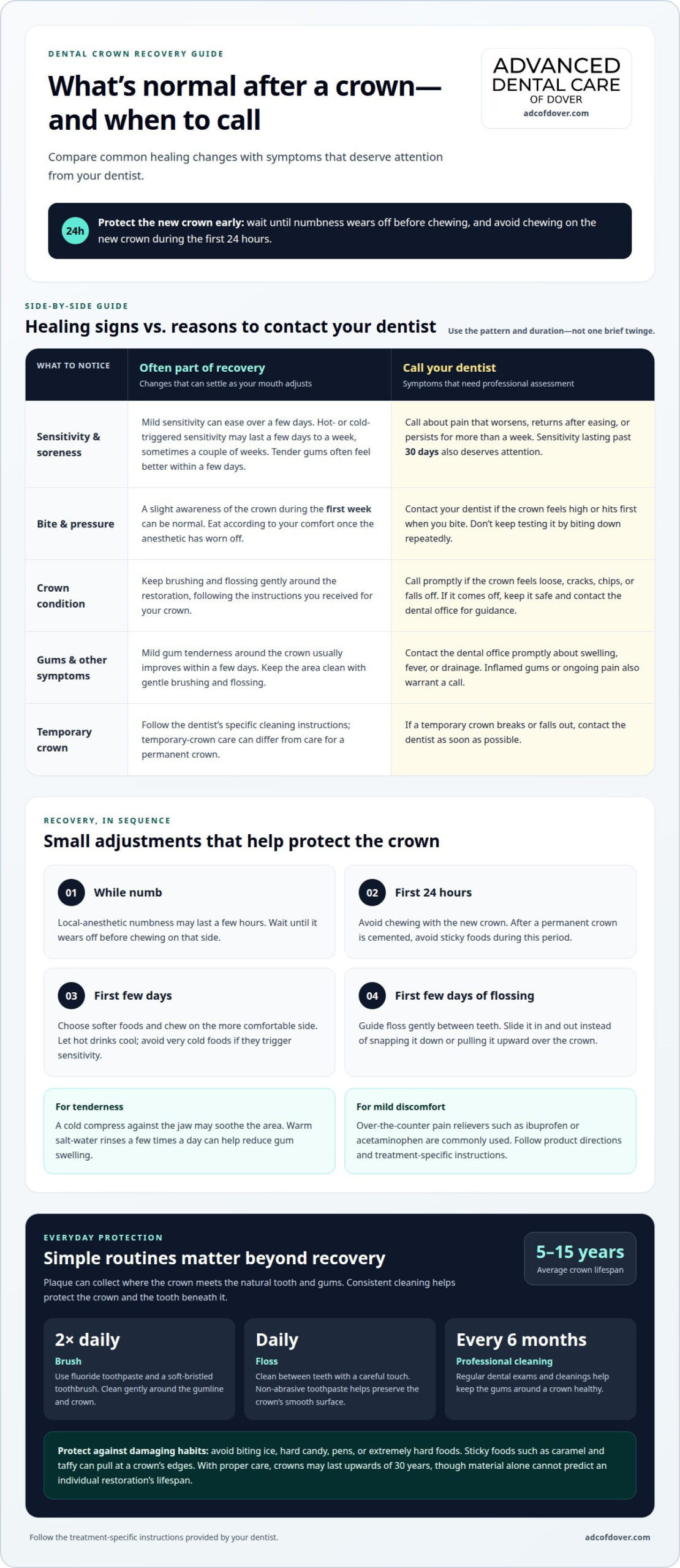
4. Why dental crown care matters
A crown covers the visible part of a damaged tooth, reinforcing it against further harm. But porcelain and metal crowns aren’t indestructible. Dental crowns have an average lifespan of five to 15 years, and proper care can help them last upwards of 30 years. Daily habits matter because the crown’s edges meet your natural tooth and gums.
Plaque and bacteria can collect around the edges of a crown. If buildup remains, it can contribute to gum disease or decay where the crown meets the tooth. Brush twice a day with fluoride toothpaste, floss daily, and keep up with regular dental exams and cleanings. Professional cleanings every six months can help keep the gums around a crown healthy.
Protect the restoration from pressure and pulling forces. Avoid biting ice, hard candy, pens, or extremely hard foods, which can damage or loosen a crown. Sticky foods such as caramel and taffy can pull at its edges. After a permanent crown is cemented, avoid sticky foods during the first 24 hours while the cement sets.
A temporary crown needs particular care while it’s in place. Hard, chewy, or sticky foods can dislodge it, so chew on the opposite side. Avoid chewing gum and caramels, and follow your dentist’s instructions for cleaning around the temporary restoration. These steps help prevent an avoidable interruption during recovery.
Habits beyond meals count, too. Don’t use a crowned tooth to open packaging or bite fingernails. If you grind or clench your teeth, ask your dentist about a custom mouth guard. At your next cleaning, mention changes such as gum irritation or a crown that feels different. Attentive crown and bridge care can help protect the tooth and surrounding gums over time.
Advanced Dental Care of Dover: Emergency dentistry
Advanced Dental Care of Dover provides emergency dentistry during clinic hours for dental concerns that need prompt attention, including a loose, cracked, or painful crown. If you’re unsure whether a change in your crown needs care, contact the practice and describe what you’re experiencing, such as pain when biting, swelling, or a crown that has come off. The team can help you understand an appropriate next step.
For routine recovery questions, follow the instructions you received after treatment and get in touch if symptoms persist or worsen. A crown that feels uneven or interferes with chewing also deserves professional attention. The dental team can help you understand whether the crown needs assessment or adjustment, rather than trying to fix it yourself.
For support with a dental concern, contact Advanced Dental Care of Dover.
Keep your crown part of your everyday care
A crown is one part of your ongoing oral health, not a reason to put off regular dental care. As you settle back into your usual routine, make your dental crown care after treatment easy to maintain: keep your cleaning tools where you’ll see them, and save the instructions from your appointment for quick reference. Small reminders can make a new habit feel more natural.
Pay attention to changes over time, even after the initial recovery feels behind you. A note about what feels different can help you explain your concern clearly at a future dental visit. If a crown problem is worrying you now, the team at Advanced Dental Care of Dover can help you understand the concern and the next step in care.
Contact Advanced Dental Care of Dover to talk with the team. A little attentive care can help you feel more confident about looking after your smile.
Frequently Asked Questions
How long does it take to feel better after a dental crown procedure?
Most people feel better within a few days, though the tooth may feel different as they get used to the crown. Sensitivity can linger, so notice whether it’s easing or becoming more uncomfortable. A simple note of when discomfort occurs, such as during meals or after a cold drink, can help you describe the pattern if you need dental advice.
How long do crowns last?
Dental crowns have an average lifespan of five to 15 years, and proper care can help them last upwards of 30 years. Avoiding habits that crack or loosen a crown, such as chewing ice, supports its longevity. Regular checkups also give your dentist a chance to assess the crown and the tooth around it as part of your ongoing oral care.
When should I call a dentist?
Call your dentist if a crown feels loose, cracks, chips, or feels high when you bite. Contact the office about swelling, fever, drainage, worsening discomfort, or pain that continues beyond a week after treatment. A crown that falls off needs attention, too. Describe what happened and whether chewing or biting makes the area hurt.
How should I care for a dental crown immediately after treatment?
Follow the instructions you received for your specific crown, especially if it’s temporary. Good dental crown care after treatment starts with protecting your mouth while numbness remains, so avoid chewing and accidentally biting your cheek or tongue. When cleaning your teeth, brush gently around the crown and gumline. If you’re unsure how to floss or rinse that day, follow your dental team’s instructions.
When can I eat and drink after getting a dental crown?
After a permanent crown is cemented, patients can eat or drink after 30-60 minutes. After a temporary crown is placed, wait at least 30 minutes before eating or drinking so the cement can dry. Your dentist’s instructions for your appointment should guide you, especially if the procedure included additional treatment or your mouth is still numb.
What foods should I avoid with a new dental crown?
With a temporary crown, avoid hard, sticky, and chewy foods such as raw vegetables, caramels, and chewing gum, which can pull it loose or damage it. With a permanent crown, avoid sticky foods during the first 24 hours after placement. Ice, hard candy, and popcorn kernels can also put harmful pressure on crowns.