
The most extensive denture option isn’t automatically the best fit. For people considering dentures in Dover, NJ, the key distinction is whether all teeth in an arch are missing or some natural teeth remain: complete dentures replace all teeth in the upper or lower arch, while removable partial dentures replace missing teeth around remaining natural teeth. The right choice depends on your dental needs and the teeth you still have.
It’s natural to wonder how dentures will look, feel, and fit into everyday life. Modern dentures replace missing teeth and are made to fit your mouth. A dental professional can help you understand the options and make the decision feel manageable.
This guide explains how complete and removable partial dentures differ, what to consider when comparing them, and how fit and care affect everyday comfort. You’ll come away with a clearer sense of which option may suit your situation and what to discuss at a dental visit.
Key Takeaways
- Compare complete dentures with removable partial dentures by considering how many natural teeth remain and which teeth need replacement.
- Learn how everyday cleaning and proper denture care can support a healthier, more comfortable experience.
- Understand the fit and design factors that help determine which denture option may suit your needs.
- See how a Dover dental visit can help you explore dentures and related options for missing teeth.
Benefits of modern dentures
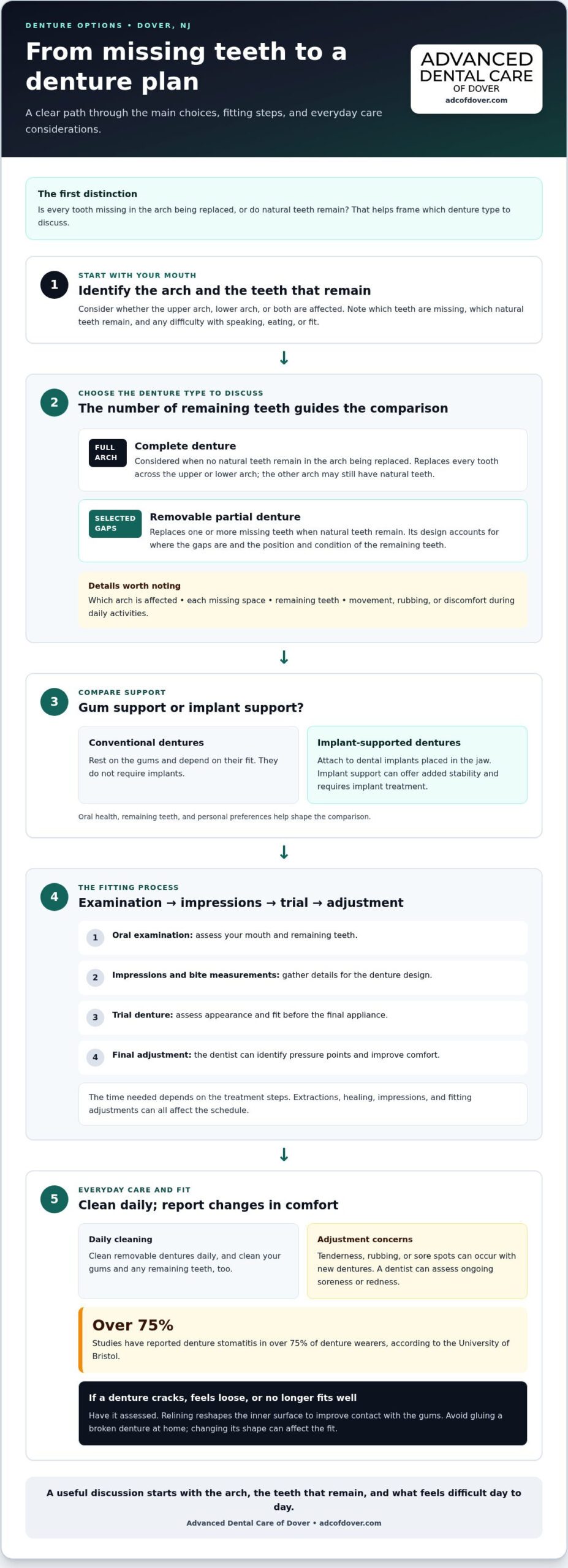
Modern dentures replace missing teeth and can support speaking and chewing when fitted to your mouth. Removable designs can be taken out for cleaning. Complete dentures replace every tooth in an arch, while partial dentures fill gaps when natural teeth remain. That distinction helps frame the choice for people considering dentures in Dover, NJ.
Implant-supported dentures attach to dental implants placed in the jaw. Conventional dentures rest on the gums and depend on their fit. Implant support can offer added stability but requires implant treatment. Conventional dentures don’t require implants. Your oral health, remaining teeth, and preferences help shape the comparison.
Dental insurance coverage in New Jersey depends on the policy’s written benefits. Review its denture coverage, replacement terms, and any authorization requirements. The time needed to get dentures from a Dover dentist depends on the treatment steps. Tooth extractions, healing, impressions, and fitting adjustments can all affect the schedule.
The process commonly starts with an oral examination, followed by impressions and bite measurements. A trial denture lets you assess its appearance and fit before the final appliance is adjusted. These steps help the dentist identify pressure points and improve comfort.
New dentures can cause tenderness, rubbing, or sore spots during adjustment. Studies have reported denture stomatitis in over 75% of denture wearers, according to the University of Bristol. Clean dentures daily, and clean your gums and remaining teeth, too. A dentist can assess ongoing soreness or redness.
If a denture cracks, feels loose, or no longer fits well near Dover, arrange an assessment to discuss repair or relining. Relining reshapes the denture’s inner surface to improve contact with the gums. Avoid gluing a broken denture at home, since changing its shape can affect the fit. A dentist can assess your dentures in Dover, NJ and explain the next step for your appliance.
Complete dentures for replacing a full arch
Denture options include complete dentures for a full upper or lower arch, removable partial dentures for selected gaps, and implant-supported dentures. Complete dentures are considered when no natural teeth remain in the arch being replaced. The choice depends on which teeth are missing and the condition of any remaining teeth.
A complete denture replaces the visible teeth across one arch. For example, someone missing all upper teeth may have an upper denture while natural teeth remain below. Replacing one arch at a time can address different needs in the upper and lower jaw. These details help make a conversation about dentures in Dover, NJ specific to your situation.
Conventional complete dentures rest against the gums. Their shape is made to fit your mouth, and the dentist assesses how they sit and meet when you bite. A stable, comfortable fit matters during daily activities such as speaking and eating. If the fit changes, a dentist can assess the denture and your mouth.
Consider these points when comparing options:
- Arch: Identify whether teeth are missing from the upper arch, lower arch, or both.
- Remaining teeth: Complete dentures replace all teeth in an arch; partial dentures are considered when some teeth remain.
- Support: Conventional dentures rest on the gums; implant-supported dentures use dental implants for support.
Think about which arch is affected, which teeth remain, and what feels difficult in daily life. For instance, note whether a denture shifts while you speak or feels uncomfortable during meals. These examples can focus a discussion about dentures in Dover, NJ on the fit and design you need.
Complete dentures differ from removable partial dentures, even though both replace missing teeth. A dental assessment considers your mouth and remaining teeth before discussing a suitable design. Advanced Dental Care of Dover offers dentures for missing teeth, giving you a local place to discuss full-arch replacement and fit.
Removable partial dentures
A removable partial denture replaces one or more missing teeth while natural teeth remain. For example, someone missing a back tooth but keeping nearby teeth may discuss a partial option. The appliance fills selected spaces rather than replacing every tooth in the arch. Its design accounts for the location of each gap and the teeth that remain.
Because a partial denture is removable, you can take it out for cleaning. It may use the remaining teeth and nearby gum areas for support. Fit matters: pressure in one spot, movement while speaking, or difficulty seating the denture can affect everyday comfort. Share specific examples with your dentist, such as trouble chewing on one side.
During an appointment, discuss the practical details that shape your choice:
- Missing teeth: Point out each gap, including spaces that affect your bite or smile.
- Remaining teeth: Discuss their positions and condition, since they influence the partial denture’s design.
- Daily routine: Consider when you’ll remove the appliance for cleaning and how it fits your schedule.
- Fit concerns: Describe any rubbing, looseness, or difficulty putting the denture in or taking it out.
A partial denture should be made for your mouth, not treated as a one-size-fits-all appliance. The size and position of a gap can affect how the denture needs to sit. For instance, replacing neighboring teeth differs from filling separate spaces. A dental assessment connects those details with a suitable design.
After receiving a partial denture, follow the dentist’s care instructions and mention any changes in fit. Don’t force the appliance into place if it feels wrong; describe what happens instead. If a clasp seems loose or the denture shifts during a meal, those details help explain the problem. A comfortable fit and clear cleaning routine are important parts of wearing a removable partial denture.
Dentists in Dover, NJ that offer dentures
A denture appointment should start with the specific gap or arch you want to address. Bring a clear example, such as difficulty chewing on one side or a denture that shifts while speaking. These details focus the conversation on your daily needs, remaining teeth, and whether a complete or partial denture is being considered.
The assessment can cover your mouth, existing teeth, and how your bite comes together. If you’re exploring a partial denture, the dentist considers the teeth around each space. For a full arch, the conversation centers on replacing all teeth in that arch. Ask how the proposed design relates to your situation and what fitting steps to expect.
Use the visit to discuss practical questions, including:
- Type: Which option suits the teeth you’ve lost and those that remain?
- Fit: How will the dentist assess pressure, movement, and comfort?
- Adjustments: What should you do if a sore spot or loose fit develops?
- Care: How should you clean the appliance and protect remaining teeth?
Specific answers can help you understand how the denture will fit into meals, conversations, and cleaning routines. For example, describe whether a current appliance rubs in one area or feels unstable during a meal. If teeth need attention before a denture is made, ask how that step affects the plan. A clear discussion connects the treatment steps with the concerns you raised.
Choosing dentures is a personal decision, and a focused dental conversation can make the options easier to compare. Bring notes about missing teeth, comfort concerns, and your priorities for speaking or eating. If you’re ready to discuss a denture evaluation in Dover, schedule a visit to discuss dentures.
Advanced Dental Care of Dover: Emergency dentistry
Advanced Dental Care of Dover offers emergency dentistry for urgent dental concerns that need prompt attention during clinic hours. If sudden tooth pain or a dental injury interrupts your plans to replace missing teeth, the team can address the urgent concern as part of your care. Once it’s addressed, you can discuss whether dentures or another tooth-replacement option fits your needs.
Dental implants may also be worth discussing as a way to replace missing teeth. If a damaged tooth needs removal, tooth extractions are another relevant service. These options depend on your oral health and the teeth involved, so explain what happened and what you hope to restore.
For a clear next step, contact Advanced Dental Care of Dover to discuss your dental concern.
Make your next dental conversation count
Choosing dentures in Dover, NJ is also a chance to clarify what matters most in your daily routine. You might prioritize a secure feel while eating, a natural-looking smile, or an appliance that’s straightforward to clean. Naming those priorities gives your dental conversation a personal focus instead of leaving you to compare options in the abstract.
Before your visit, jot down the questions you want answered. You could ask how the recommended denture fits your needs, what to expect as you adjust, and what to do if the fit changes. If you’re also considering clear aligners, Advanced Dental Care of Dover offers Invisalign. Keeping your questions together can make it easier to discuss the care that feels relevant to you.
A thoughtful next step doesn’t need to be complicated. Share your concerns, listen to the options, and take time to understand the path ahead. For a welcoming conversation about dentures, contact Advanced Dental Care of Dover. You can move forward at a pace that feels comfortable.