
A bridge replaces a missing tooth by relying on neighboring teeth. A dental implant is a titanium post placed in the jawbone, so it can replace a tooth without altering healthy teeth beside it. For people considering dental implants in Dover, NJ, the right option depends on oral health, goals, and which teeth need replacing. Implants, bridges, and dentures differ in how they’re supported, cared for, and priced.
It’s understandable to want a clear picture before choosing treatment. This guide compares implants with bridges and dentures, explains what affects the cost of a single implant, and outlines what to expect during treatment.
You’ll also learn how to care for implants over time, from daily cleaning to professional visits. These details can help you prepare for a conversation about your options and decide what may suit your smile.
Key Takeaways
- Compare implants, bridges, and dentures by how each replaces missing teeth and affects the surrounding teeth.
- Understand why the cost of a single implant depends on the treatment plan and what’s included, rather than one factor alone.
- See how implant treatment unfolds, including the time needed for the implant to bond with the jawbone.
- Learn which aspects of oral and overall health matter when considering implants, and what alternatives may fit different needs.
- Build a simple care routine and learn how ongoing dental visits can help protect your implant and surrounding oral health.
What is a dental implant, and why is it different from a bridge or denture?
A dental implant is a titanium post placed in the jawbone to replace a missing tooth. When comparing options in Dover and Randolph, consider how each replacement is supported and what care it requires.
When comparing implant dentists, review their credentials and experience, then read patient comments about explanations, comfort, and follow-up. These details can help you understand how a practice communicates each treatment step and supports patients through care.
Implants Compared With Bridges and Dentures
An implant replaces a missing tooth without altering neighboring healthy teeth, unlike a traditional bridge. It sits in the jawbone, while a bridge relies on nearby teeth for support. Dentures replace one or more missing teeth and rest in the mouth without an implant post. Compare how each option is supported and what daily care it involves.
Fit matters with dentures. A denture that shifts can feel less stable during meals or conversation, and changes in fit may affect comfort and speech. A well-fitting denture should feel secure during everyday activities. Discuss how each option addresses your specific gap, whether it involves one tooth or a larger span.
All-on-4 Compared With Dentures
All-on-4 uses implants to support a customized full dental bridge, while conventional dentures rest on the gums. The implant-supported bridge attaches directly to the jaw and is described as secure, stable, and comfortable. Its attachments don’t require adhesive and are easy to clean and maintain, creating a different daily routine from removable dentures.
For someone replacing a full upper or lower set, the All-on-4 approach fills every gap with a connected bridge. Conventional dentures remain an alternative for replacing a full set without implant attachments. Compare how each option stays in place, how it is cleaned, and how it feels when eating or speaking. A natural-looking result may also be part of the discussion.
Some treatment plans include temporary dentures while implants bond with the jawbone. A soft diet may be recommended during this healing period, so you can plan meals around foods that are easier to chew. The temporary denture provides teeth during healing, while treatment progresses toward the implant-supported replacement.
Implant-retained dentures combine a removable denture with implant support. Attachments help hold the denture in place instead of relying only on its fit against the gums. This may suit people seeking more stability than a conventional denture while still preferring a removable appliance. In Dover and Randolph, compare options based on the number of missing teeth and your daily needs.
How much does a single dental implant cost in Dover, NJ?
Dental implant treatment involves assessment, imaging, placement, and restoration planning. The price of a single implant depends on the case and is provided after a quote request.
Treatment Planning and Personalization
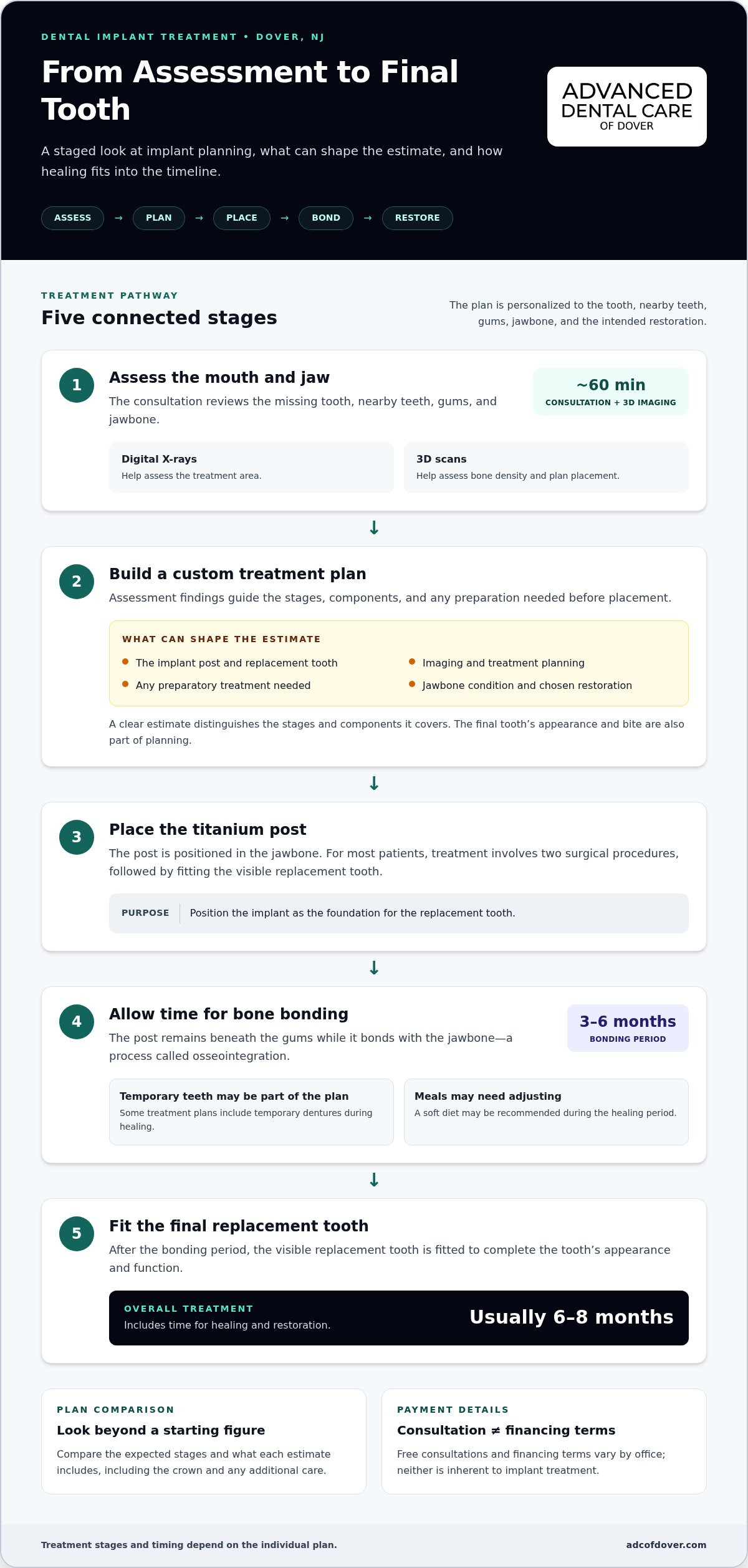
A consultation starts by assessing the missing tooth, nearby teeth, gums, and jawbone. In Dover, the consultation and 3D imaging appointment takes about 60 minutes. Digital X-rays and 3D scans help assess bone density and plan implant placement.
The findings inform a custom treatment plan. It accounts for the implant post and replacement tooth, as well as any preparation needed before placement. For example, bone density can affect whether the jaw is ready for an implant or needs additional preparation.
Ask how the treatment plan addresses the final tooth’s appearance and bite. Replacing a front tooth may require attention to how its crown fits with nearby teeth and the natural facial profile. A back tooth may have different biting needs. These details connect the plan to everyday comfort.
The main cost factors are the implant and replacement tooth, imaging and planning, and any preparatory treatment. Jawbone condition and the chosen restoration also affect what the plan includes. A clear estimate should distinguish the stages and components so you can understand what the total covers.
Consultations and Financing
A consultation assesses your mouth and outlines proposed treatment; financing concerns how treatment is paid for. Free consultations and financing terms vary by office and aren’t inherent parts of implant treatment. The appointment is for reviewing your needs, imaging, and treatment steps, not for assuming particular payment arrangements.
To compare options, look for a plan that explains the expected stages and what each includes. Ask how the estimate accounts for the crown and any additional care. This makes it easier to compare plans consistently instead of judging them only by a starting figure.
After implant placement, the post remains beneath the gums for three to six months while it bonds with the jawbone. This process, called osseointegration, creates the foundation for the replacement tooth. The full implant procedure usually takes six to eight months, allowing time for healing and restoration.
Treatment timing follows the healing process, not just the appointment schedule. Your plan maps the placement, bonding period, and final restoration into clear stages. Understanding the sequence can help you plan around meals, work, and follow-up visits while the missing tooth is replaced.
For a closer look at dental implant care, explore the treatment information available through the practice.
How dental implants work
Dental implant treatment replaces a missing tooth through planned stages. For most patients, placement involves two surgical procedures, followed by fitting the visible replacement tooth. Each stage has a purpose, from positioning the titanium post to attaching a crown that completes the tooth’s appearance and function.
The first step is planning where the implant will sit. The jawbone and the space between neighboring teeth help guide placement. During surgery, the titanium post is placed in the jawbone to serve as the replacement tooth’s foundation. Local anesthesia is used for implant placement.
After placement, the implant stays beneath the gums as it bonds with the jawbone. This process, called osseointegration, helps secure the post. The dentist monitors healing before proceeding to the next surgical step. If a temporary denture is part of the plan, it can provide a tooth replacement during this period.
The second procedure prepares the implant for its restoration. The post is uncovered, and an abutment is attached. This small connector links the implant to the crown. Once the surrounding tissue and implant are ready, the crown is fitted to complete the replacement.
Each component has a distinct role:
- Implant post: The titanium base placed in the jawbone where a tooth is missing.
- Abutment: The connector that joins the post to the replacement tooth.
- Crown: The visible tooth-shaped restoration fitted above the gumline.
For example, replacing one missing front tooth uses a single post, connector, and crown. Replacing several teeth may require a different restoration plan, since the number and position of missing teeth affect how the final teeth are supported. The dentist considers the bite and neighboring teeth when planning each component.
The schedule depends on healing and the planned restoration. Follow-up visits let the dental team assess the implant site and determine when it’s ready for the next step. Keeping those appointments helps treatment progress through its planned stages, whether you live in Dover or Randolph.
Understanding the sequence can make implant treatment easier to follow. Ask what happens at each visit, which component is being placed, and how the restoration will fit into daily eating and cleaning. These practical details can help you follow the plan from the first procedure through the finished crown.
Implant candidacy and alternatives
Implant candidacy depends on jawbone development, bone density, and overall health. An evaluation also helps compare implants with bridges or dentures.
Candidacy Evaluation
The evaluation includes a dental and radiographic examination, along with a review of your health history. These steps help assess your teeth, gums, and jaw before planning surgery. Bone density matters because the implant needs support from the jawbone.
A fully developed jawbone and adequate bone density are important candidacy considerations. If bone density is insufficient, the ability to receive a bone graft is also considered. Good overall oral and systemic health matters too, so share relevant health information during the evaluation.
Use the appointment to understand how each finding relates to your plan. For example, ask what imaging shows about the bone near the missing tooth and how that affects placement. A clear explanation connects the examination, radiographs, and health history to the next treatment step.
Alternatives to Implants
Bridges and dentures are alternatives for replacing missing teeth. A bridge relies on neighboring teeth for support, while a denture rests in the mouth as a removable replacement. Implants use a post in the jawbone, so the options differ in support and daily care.
For a single missing tooth, compare an implant with a bridge by considering how each uses neighboring teeth. For several missing teeth, a denture may replace a larger span. The number and position of missing teeth help frame the comparison.
Function is another practical consideration. Think about which teeth are missing, how the replacement will fit alongside the remaining teeth, and whether you prefer a removable option. These details can clarify whether an implant, bridge, or denture aligns with your needs.
Bring questions about each option to your discussion. Ask what the proposed replacement includes, how it’s supported, and what care it requires. For example, if you’re weighing a bridge against an implant, ask how each approach affects the teeth beside the gap.
Bone grafting may be considered when bone density needs support for implant treatment. The key candidacy question is whether the jaw has adequate bone or can receive a graft. The examination and radiographs provide information for this assessment.
An implant plan should account for oral and systemic health, not only the visible gap. Sharing your health history gives the dental team context for planning. Together, these considerations help you understand the procedure and compare alternatives with clearer expectations.
Benefits and care of dental implants
An implant can replace a missing tooth while helping preserve the jaw and facial shape. Dental implants are designed to function like natural teeth, and long-term studies put implant survival at 95 percent after 10 years. That benefit depends on maintaining the implant and the surrounding mouth after surgery.
Care starts with familiar daily habits. Dental implants don’t decay or get cavities, but the crown and nearby gum tissue still need attention. Brush normally, including around the crown where it meets the gumline. The implant and its restoration both need care, so include the whole area in your routine.
Professional visits are part of that routine. Schedule a professional cleaning every 6 months to help care for dental implants. During a cleaning appointment, the dental team can assess the implant area and the condition of the crown. Regular appointments also give you a chance to mention changes in comfort, chewing, or how the restoration feels.
The crown is durable, but it isn’t permanent. A porcelain crown on an implant typically lasts 10 to 20 years before wear or chipping requires replacement. Avoid treating the crown as indestructible; if it feels damaged or changes when you bite, bring that detail to a dental appointment. The implant post and crown are different parts, so an issue with the visible tooth deserves attention.
Everyday care is straightforward: brush regularly, keep professional cleanings on schedule, and notice changes in your bite or crown. For example, a crown that feels newly loose or uncomfortable is a reason to arrange an assessment. Routine visits help track the restoration over time, while daily brushing supports a clean implant area.
With proper care, dental implants can last a lifetime. That describes the implant’s potential, while the porcelain crown may need replacement sooner. The practical takeaway is to care for both the implant site and visible restoration. Regular cleaning and timely attention to changes help protect the function of your replacement tooth.
If you’re considering an implant or want guidance on caring for one already placed, discuss dental implant care with Advanced Dental Care of Dover.
Advanced Dental Care of Dover: Emergency dentistry
Advanced Dental Care of Dover offers dental implants and emergency dentistry during clinic hours. If you’re weighing implant treatment, the dental team can help you understand the next steps for replacing a missing tooth. For a sudden dental concern, emergency dentistry is available during those hours.
Implant care is planned, while an urgent dental problem may need attention sooner. Sharing what changed, when it began, and which tooth is affected can help the team understand your concern. If you’re unsure whether you need urgent attention or a planned implant visit, describe the issue when you get in touch.
For support with a dental concern or implant questions, you’re welcome to contact Advanced Dental Care of Dover.
Take the Next Step Toward a Confident Choice
Choosing dental implants in Dover, NJ, is a personal decision. A useful next step is a conversation centered on your priorities. Think about how you want your replacement tooth to feel in everyday life, what questions you still have, and what concerns would help you feel comfortable moving forward. Sharing these openly gives your dental team a clearer starting point.
Advanced Dental Care of Dover provides dental implant care, so you can bring your questions to a team that offers this treatment. You don’t need to have every detail settled before reaching out. A thoughtful discussion can help you understand your options and decide what feels right for your smile.
Contact Advanced Dental Care of Dover to talk about your dental implant questions. Take things one step at a time, with a plan that reflects your needs.
Frequently Asked Questions
Can I get multiple implants at once?
Multiple implants can be included in one treatment plan, but the placement schedule depends on the number and position of missing teeth, jawbone condition, and planned restorations. For example, replacing teeth on opposite sides of the mouth involves different placement sites than replacing neighboring teeth. The consultation and imaging help map those sites and sequence treatment. Ask how the proposed schedule fits your daily routine and healing stages.
Does dental insurance cover implants?
Dental insurance coverage for implants depends on the terms of your specific plan. Review the written benefits for the implant, crown, and related treatment separately, since each may be addressed differently. For example, a plan document might describe benefits for restorative procedures without treating every part of implant treatment alike. Before budgeting, identify the covered services, exclusions, and any limits stated in your policy.
How Is All-on-4 Different From Dentures?
All-on-4 uses implants to support a customized full dental bridge, while conventional dentures rest on the gums. The implant-supported bridge attaches to the jaw and doesn’t require adhesive to stay in place. Conventional dentures are removable, which affects how patients handle and clean them. Compare the options by considering whether you prefer a fixed restoration or a removable denture, and how each fits your daily routine.
How long does the full dental implant process take?
The full implant procedure usually takes six to eight months. That schedule includes treatment stages and healing, not simply a series of appointments close together. Your plan should show which visits involve assessment, placement, healing review, and restoration. Keeping the stages clear can help you arrange work and daily commitments, especially while the implant bonds with the jawbone.
What happens if I do not replace a missing tooth?
A missing tooth leaves a gap, and its location affects your bite and replacement choices. For example, a gap beside remaining teeth raises different planning questions than several missing teeth in one area. The practical next step is to have the space assessed and discuss whether a bridge, denture, or implant suits your needs. This helps you make an informed decision about the gap.
How much do dental implants cost in Dover, NJ?
The price depends on the case and is provided after a quote request. Cost factors include the implant and crown, imaging and treatment planning, jawbone condition, and any preparation included in the plan. For a useful comparison, look at what each estimate includes rather than focusing only on a starting figure. A written breakdown can clarify which stages and components account for the proposed total.
Does dental insurance cover dental implants in New Jersey?
Coverage in New Jersey depends on the benefits and exclusions in your individual dental plan. The state alone doesn’t determine whether your policy contributes toward an implant or its crown. Read the sections describing major restorative care and implant treatment, then compare them with the proposed treatment components. This can help you understand your policy’s terms and plan your budget without assuming every component receives the same benefit.
What are the steps and timeline for getting a dental implant?
The process begins with a dental and radiographic evaluation, followed by planning and implant placement. For most patients, placement involves two surgical procedures. After surgery, the implant remains beneath the gums for three to six months as it bonds with the jawbone; the replacement tooth follows as treatment progresses. The full procedure usually takes six to eight months. A stage-by-stage schedule helps you understand the purpose of each visit.